
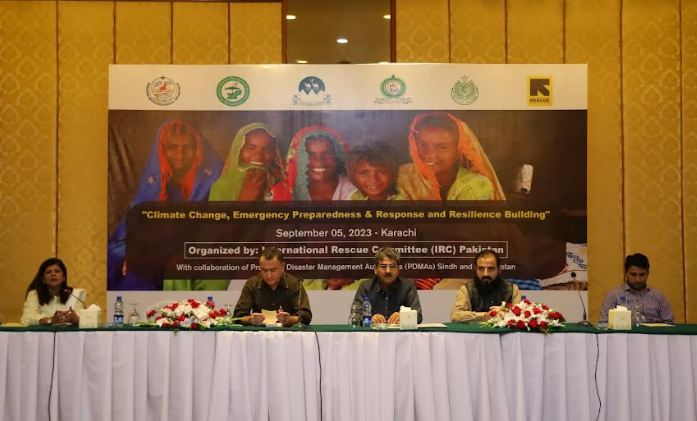
Karachi, /DNA/ – To strengthen of climate resilience initiative, the Provincial Disaster Management Authorities (PDMAs) of Sindh and Balochistan are proud to announce their collaborative initiative with the International Rescue Committee to promote resilience in the aftermath of floods. This groundbreaking endeavor is set to drive climate action and preparedness to new heights, reinforcing collective commitment to building a resilient and disaster-resilient future.
The International Rescue Committee (IRC) is spearheading this collaborative effort, in partnership with the PDMAs of Sindh and Balochistan. The event served as a platform for experts, officials, and stakeholders to discuss vital topics related to climate change, emergency preparedness, and response.
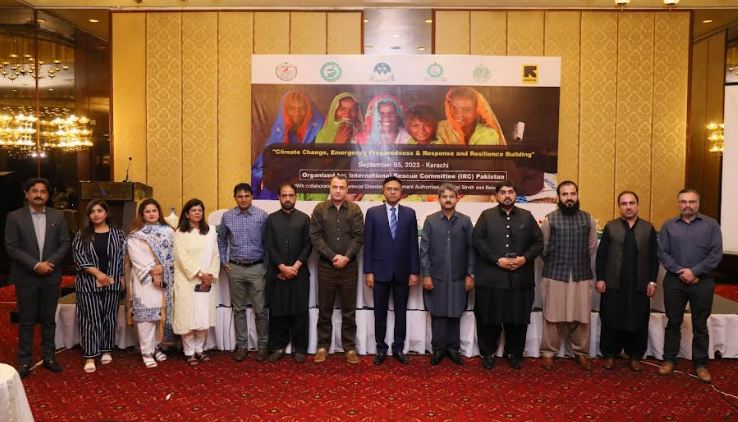
Shabnam Baloch, Country Director, International Rescue Committee, delivered the opening remarks, setting the stage for a day of insightful discussions. In her address, Shabnam Baloch underscored a pressing reality that resonates across the globe: the urgency of investing in climate-resilient interventions. She explained the unprecedented challenges Pakistan faces due to the ever-escalating threat of climate change. She termed this threat as an immediate and tangible concern. She emphasized that the battle against climate change necessitates a collective effort, both nationally and globally. She stressed on the need of unity, cooperation, and concerted action to combat the challenges that lie ahead.
The event featured a panel discussion that delves into the needs and priorities within the provinces and districts, exploring strategies for resilience building and charting a way forward.
Mr. Jahanzeb Khan, DG PDMA Balochistan, remarked, “This collaborative initiative is a testament to the power of working together to address the challenges posed by climate change and disasters. It’s inspiring to see NDMA, PDMAs, and the IRC coming together to find solutions that will protect our communities.” He further added, “A crucial lesson can be learned through the PDMA’s experiences: the need to prioritize infrastructure in contingency planning. Climate change is a dynamic phenomenon, and its effects are becoming increasingly unpredictable and severe with each passing year. As a result, it is imperative to adapt contingency plans to account for these changing dynamics. Infrastructure, including resilient buildings, transportation systems, and communication networks, plays a vital role in ensuring the safety and well-being of communities during disasters.”
Mr. Abdul Qadir, the Additional Deputy Commissioner (ADC) Qambar, brought to light the critical necessity of relief activities in rural areas, particularly in the context of floods. His statement underscores the importance of addressing the unique challenges faced by rural communities during and after such natural disasters. He emphasized Incorporating alternative livelihood strategies into flood relief activities not only addresses the immediate needs of affected communities but also contributes to their long-term resilience and sustainability.
Basheer Ahmed Bangulzai, Commissioner Naseerabad, Government of Balochistan shared, “In the context of flood relief activities in rural areas, considering alternative livelihoods is a crucial component. Promoting sustainable agriculture practices, such as crop rotation, organic farming, and drought-resistant crop varieties, can contribute to more reliable and resilient agricultural livelihoods. These practices can help communities bounce back more quickly after a flood.”
Mr. Imdad Hussain Siddiqui, Director Operations, PDMA Sindh, insights echo the broader global recognition of the importance of community engagement and adaptation strategies in the face of climate change. He added, “I believe this collaborative endeavor will enhance our ability to respond effectively to emergencies. The insights shared today will undoubtedly guide us in our efforts to protect the people of Sindh.”
These testimonials underscore the significance of collaborative initiative in addressing climate-related challenges and strengthening disaster preparedness and response efforts.
This collaborative effort between PDMAs and the IRC marks a significant step toward addressing climate change and its associated risks. By joining forces, these organizations aim to enhance disaster preparedness and response mechanisms and resilience, ultimately ensuring the safety and well-being of the communities they serve.













 of)