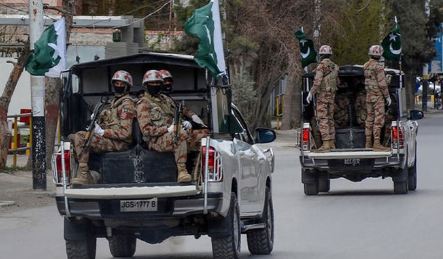
ISLAMABAD, DEC 2 /DNA/ – During the first eleven months of 2025, Pakistan witnessed an over 25% surge in overall violence in its security landscape, recording at least 3187 violence-linked fatalities (compared to the entire tally of 2024 i.e. 2546), and 1981 injuries- among civilians, security personnel, and outlaws, according to the Center for Research and Security Studies (CRSS).These casualties resulted from as many as 1188 incidents of violence, including terrorist attacks and counter-terrorism operations.
The violence was overwhelmingly concentrated in the country’s northwestern Khyber Pakhtunkhwa (KP) and southwestern Balochistan provinces, where both these regions, together, accounted for over 96% of all fatalities and 92% of all incidents of violence recorded through January to November 2025.
KP was the worst-hit region, suffering nearly 68% (2165) of the total violence-linked fatalities, and over 62% (732) of the incidents of violence, followed by Balochistan, accounting for over 28% of the total fatalities (896) and over 30% of the incidents (366) of violence.
The remaining regions – Sindh, Punjab, Azad Jammu and Kashmir (AJK), Islamabad Capital Territory (ICT), and Gilgit-Baltistan (GB) – collectively experienced 90 incidents, with 126 lives lost, constituting just 4% of all fatalities.
The scale of the violence marks a sharp increase from the previous year. The 3187 fatalities recorded in just eleven months of 2025 are 25% higher than the total fatalities for the entire year of 2024. On average, this equated to approximately 15 casualties per day throughout the reporting period.
A comparative analysis of fatalities reveals distinct operational dynamics between terrorism and state-led counter-terrorism efforts.
The security forces’ operations proved particularly impactful during the first eleven months of 2025, resulting in 1795 militant fatalities – approximately 30% more than the 1392 lives lost in terrorist attacks. This indicates that, overall, security forces maintained significant offensive momentum against armed groups.
However, the provincial breakdown reveals a stark contrast:
In KP, security forces dominated the operational landscape. Fatalities inflicted during security operations (1370) exceeded those from terrorist attacks (795) by 72%, underscoring aggressive and large-scale counter-terrorism campaigns as the primary driver of casualties in the province.
In Balochistan, the dynamic is reversed. Terrorist attacks were responsible for 517 fatalities among security forces personnel and civilians, outnumbering the 379 fatalities from security operations by 36%. This suggests militant groups in the province have retained a higher degree of offensive initiative, posing a persistent and formidable challenge to security forces.
This divergence underscores that while national data reflects an assertive counter-terrorism posture, the situation in Balochistan remains especially volatile, with militant activity inflicting greater losses – an alarming indicator of sustained insurgent pressure in the region.
While fatalities from terror attacks were numerically lower than those from security operations, this statistic offered little respite for the country’s overall security environment. A pervasive campaign of non-lethal violence inflicted serious harm on public safety and state authority, as documented by data from the Center for Research and Security Studies (CRSS).
Beyond the stark death toll, provinces endured a relentless onslaught of sabotage (458 incidents), kidnapping (228 incidents), and sectarian violence (277 incidents). These acts were designed not merely to kill, but to destabilize governance, terrorize communities, and cripple economic and social infrastructure.
The nature of this coercive campaign varied sharply by region, revealing distinct threat patterns:
Balochistan emerged as the epicenter of sabotage (255 incidents), with frequent attacks targeting government facilities, security posts, and public property. The province also reported a unique tactic: 22 incidents of “Insurgents’ Control”, where armed groups blockaded major highways for hours to search vehicles and abduct targeted passengers.
Khyber Pakhtunkhwa (KP) recorded the highest number of kidnappings (142), focusing on government officials, politicians, security personnel, and civilians – a clear strategy of intimidation and ransom. The province also suffered significant sabotage.
Punjab witnessed a different form of violence, driven by sectarian hatred. Nearly 195 incidents involved the vandalism of graves, worship places, and properties belonging to the Ahmadi community, highlighting a severe threat to communal cohesion.
This widespread pattern of non-fatal attacks illustrates that the security crisis extends far beyond direct armed clashes. It represents a sustained, multi-faceted assault on the rule of law, social harmony, and economic stability, fostering an environment of pervasive fear and disruption.
In conclusion, the full scope of violence in 2025 cannot be understood through fatalities alone. The prevalence of sabotage, kidnapping, and sectarian aggression reveals the underlying tactics of instability – systematic coercion, intimidation, and societal division – that sustained the conflict and imposed a heavy burden on both the civilian population and state institutions across Pakistan.