
BY MUHAMMAD MOHSIN IQBAL
From its earliest days, journalism has striven to preserve an identity grounded in authenticity, responsibility, and truth. Across the world, including Pakistan, those committed to this noble craft laboured to ensure that the news reaching the public remained uncoloured by personal motives or sensational distortions. It was a profession that demanded integrity, patience, and respect for facts. For decades, it remained rare that journalists felt compelled to embellish or cloak their work in unrealistic hues merely to attract attention. The craft stood firmly upon the pillars of credibility and public trust.
However, as technology advanced with unprecedented speed, doubts gradually arose about the very foundation upon which journalism was built. The emergence of digital manipulation and artificial intelligence brought with it a crisis that the world had never before experienced in such magnitude. The old lines that separated truth from falsehood became blurred, not due to the failure of journalism itself, but due to tools that enabled falsehood to travel faster than truth and to appear more convincing than reality. Voices could be mimicked with startling precision, images altered without detection, and entire incidents fabricated by a few strokes of digital ingenuity.
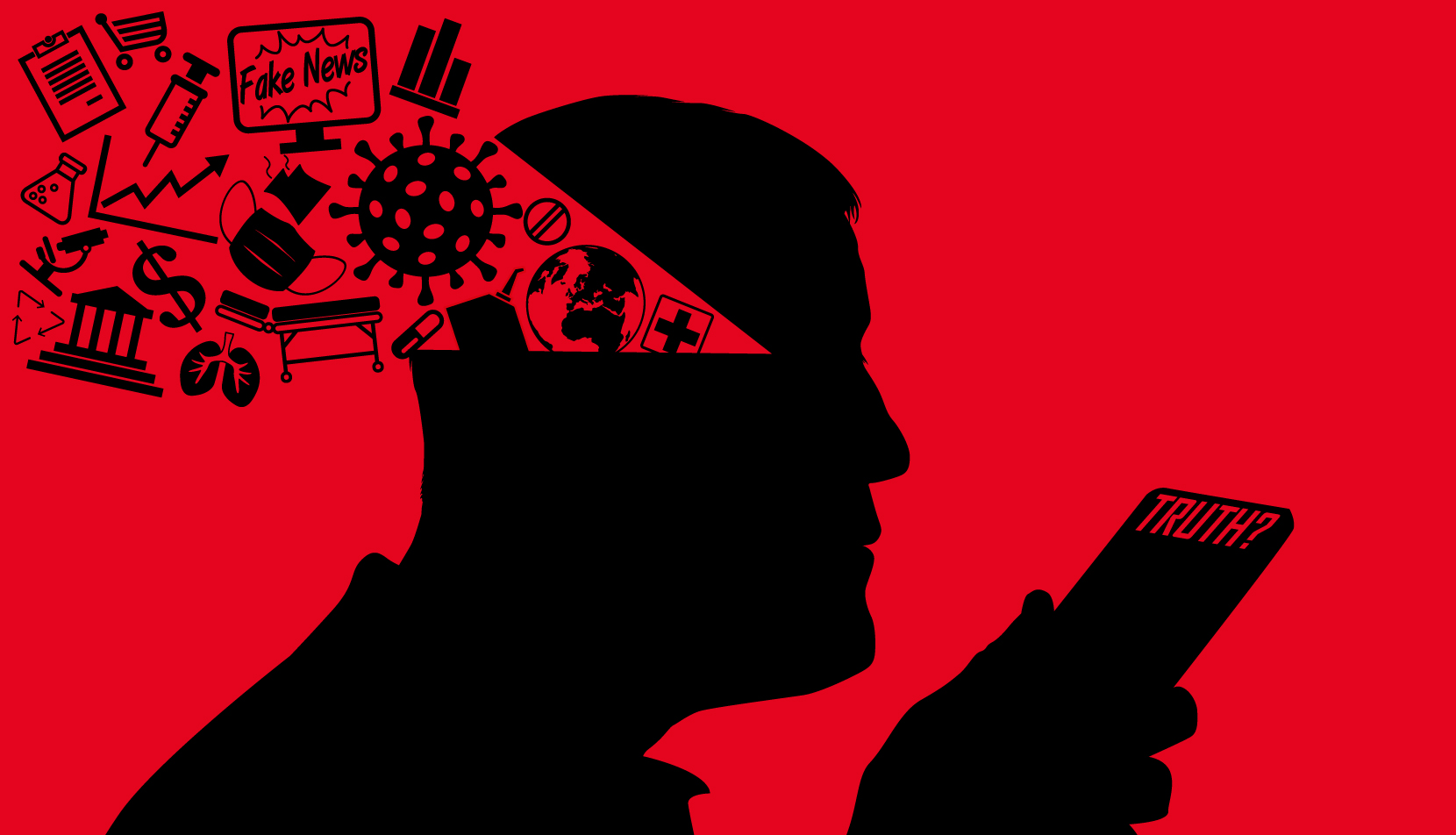
The age of fake news dawned quietly at first, but soon its echoes were heard across continents. In the beginning, it led to severe blunders. False reports spread like wildfire, shaping public opinion before the facts could even surface. It was exploited to launch negative trends, destroy reputations, and weaken social harmony. Personalities found themselves accused of actions and statements with which they had no connection, yet the public—bewildered and overwhelmed—struggled to separate the genuine from the fraudulent. Deepfakes intensified this crisis further, creating confusion between states, fuelling misunderstandings, and widening diplomatic and social rifts.
A recent and telling example was the attempt to link the Sydney terror attack to Pakistan. Within hours, a wave of accusations and outrage emerged, particularly from India, Afghanistan, and Israel, even though no credible investigation had yet established the identity or origin of the attackers. The narrative spread rapidly, reinforcing long-held prejudices and political biases. It was only later revealed that the perpetrators were, in fact, from India. By then, the damage had already been done. The initial falsehood had travelled far and wide, while the correction struggled to receive comparable attention. One is compelled to ask whether the silence from these three countries that followed was born of embarrassment, or whether facts themselves had become inconvenient in an age driven by instant outrage rather than patient inquiry.
Even state institutions, once considered immune to such distortions, became targets of fabricated material designed to erode public confidence. But perhaps nowhere did this scourge strike more severely than in the realm of politics. There, the misuse of technology became rampant, not for constructive criticism or healthy debate, but for defamation, humiliation, and the systematic dismantling of opposing viewpoints. The very essence of tolerance, once a hallmark of political discourse, began to disintegrate. Respect for dissent faded, replaced by hostility shaped not by facts but by manipulated narratives.
It would not be an exaggeration to call this the greatest tribulation of our time—one that threatens not only journalism but societal stability itself. The Holy Prophet (Peace Be Upon Him) warned of such times near the Day of Judgment, when falsehood would spread rapidly, truth would be suppressed, and people would believe lies as readily as they once believed facts. In one Hadith, the Prophet (PBUH) said that a time would come when “the liar will be believed and the truthful will be rejected; the deceiver will be trusted and the trustworthy will be considered treacherous.” This description mirrors the very challenges we witness today, where manipulated voices, forged images, and fabricated reports sow chaos and discord.
The Holy Qur’an also cautions believers about accepting information without verification. In Surah Al-Hujurat (49:6), Allah commands: “O you who believe! If a wicked person comes to you with news, verify it, lest you harm people in ignorance and later become regretful for what you have done.” This divine instruction forms the very foundation upon which responsible journalism must stand today. Verification, cross-checking, and patience are no longer optional; they have become essential tools of survival.
The question then arises; how should journalism combat this tribulation, and how can countries, institutions, and individuals be protected from its consequences? The answer lies in a return to the core values that once defined journalism. Newsrooms must cultivate rigorous verification systems and embrace transparency in their methods. Journalists must be trained to recognise digital manipulation and armed with tools to detect falsehood. Media organisations should develop ethical codes that clearly reject sensationalism and prioritise accuracy over speed.
On a national scale, countries must establish regulatory frameworks that address the misuse of artificial intelligence without stifling innovation. Public awareness campaigns are vital to educate citizens about identifying fake news, verifying sources, and resisting the impulse to share unverified information. State institutions, too, must strengthen their communication channels so that official information remains clear, timely, and accessible.
Individuals carry a responsibility as well. In an age where every person with a smartphone can amplify news, each citizen must become a guardian of truth rather than an unintentional spreader of falsehood. The principles found in the Qur’an and Sunnah—verification, justice, patience, and fairness—should guide the behaviour of every individual consuming or sharing information.
Journalism stands today at a crossroads. The tools of deception may be powerful, but the commitment to truth, supported by timeless divine teachings and human conscience, remains stronger. If journalism, state institutions, and individuals unite to uphold authenticity, this tribulation—formidable though it is—can be confronted with clarity, discipline, and faith. Truth has always prevailed over falsehood, and in this technological age, it must do so once again through wisdom, vigilance, and unwavering adherence to principles.