
Many of the affected allottees are retired government employees who invested their life savings with the hope of securing a home in the federal capital. As delays dragged on, several allottees approached the Islamabad High Court (IHC) and even the Supreme Court, seeking justice, transparency, and a clear timeline for the resolution of their cases
By Saifullah Ansar
ISLAMABAD: More than two decades after its launch, Islamabad’s Sector G-14 continues to be mired in disputes, with Sub-Sector G-14/1 emerging as a symbol of administrative paralysis, illegal encroachments, and prolonged injustice faced by genuine allottees.
Sector G-14 was launched in 2004 by the Federal Government Employees Housing Authority (FGEHA) in collaboration with the Capital Development Authority (CDA) to provide affordable and planned housing to federal government employees. Spread over four sub-sectors—G-14/1, G-14/2, G-14/3, and G-14/4—the project offered a total of 5,486 residential plots of various sizes, ranging from 25×40 feet to 50×90 feet. While the vision promised a modern residential community, the reality for many allottees has been years of frustration and uncertainty.
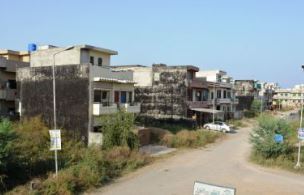
Among all sub-sectors, G-14/1 remains the most problematic. Despite the passage of over 15 years, a vast majority of genuine allottees have yet to receive possession of their plots. Illegal encroachments, disputed built-up properties, and unresolved claims have brought development to a near standstill. According to official sources, only around one percent of the area in G-14/1 has been cleared so far, leaving the rest under occupation or dispute.
Many of the affected allottees are retired government employees who invested their life savings with the hope of securing a home in the federal capital. As delays dragged on, several allottees approached the Islamabad High Court (IHC) and even the Supreme Court, seeking justice, transparency, and a clear timeline for the resolution of their cases. Courts have repeatedly emphasized the need for lawful action, but tangible progress on the ground remains elusive.
The IHC, in one of its directives, instructed authorities to first complete the measurement of built-up properties (BUP) in G-14/2. While this step was aimed at addressing legal complexities, it inadvertently left G-14/1 in a state of limbo. No comprehensive eviction or clearance operation has yet been initiated in the sub-sector, further compounding the grievances of allottees.
Sources within the administration reveal that powerful local groups are allegedly backing illegal occupants, making enforcement a daunting task for CDA and FGEHA. Political interference, coupled with weak implementation of court orders, has further stalled the process. Despite repeated assurances by concerned authorities, the ground situation remains largely unchanged.
The prolonged delay has taken a heavy toll on allottees. Many have suffered financial losses due to rising construction costs and prolonged uncertainty, while others have endured emotional distress after years of waiting. Tragically, several original allottees have passed away without ever seeing their dream of owning a home fulfilled. Their families continue to pursue the cases, hoping that justice delayed will not become justice denied.
The contrast between G-14/1 and neighboring sub-sectors is striking. G-14/2, G-14/3, and G-14/4 have witnessed gradual development, with infrastructure slowly taking shape and residents beginning to settle. In comparison, G-14/1 appears frozen in time, reflecting a failure of governance and accountability.
Urban planning experts warn that continued inaction could further erode public trust in housing authorities and government-backed schemes. They stress the need for transparent identification of genuine claims, strict action against illegal encroachments, and coordinated implementation of court directives.
Unless CDA and FGEHA act decisively to clear encroachments, resolve disputes fairly, and restore confidence among allottees, the promise of Sector G-14 risks turning into a broken dream. For now, G-14/1 stands as a stark reminder of how bureaucratic inertia, political pressure, and unlawful occupation can derail a project meant to serve hardworking citizens of Pakistan.=DNA