
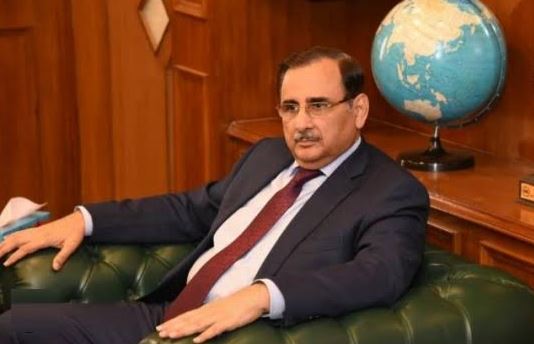
ISLAMABAD, DEC 21 /DNA/ – The Federation of Pakistan Chambers of Commerce & Industry’s Businessmen Panel (BMP), has welcomed the federal government’s initiative to formulate a credible post-IMF exit strategy but cautioned that without urgent, practical and export-focused reforms, Pakistan risks falling back into yet another International Monetary Fund programme.
FPCCI former president and BMP Chairman Mian Anjum Nisar said that the discussion initiated at the highest level must now translate into concrete, time-bound actions driven by strong coordination between the public and private sectors.
Mian Anjum Nisar stated that Pakistan’s economic history clearly shows that stabilisation without structural transformation only provides temporary relief. Unless exports are expanded aggressively, value chains are strengthened and foreign exchange buffers are built, the country will continue to face recurring balance-of-payments crises. He stressed that the warning issued by the Planning Commission regarding the possibility of slipping into another IMF programme should be taken as a serious national alarm.
The BMP Chairman strongly endorsed the Planning Commission’s assessment that Pakistan must raise its exports to at least $63 billion by 2029 if it wants to make the current IMF programme its last. He said this target is ambitious but achievable if industrial policy, taxation, energy pricing and trade facilitation are aligned around a single objective: making Pakistani exports competitive in global markets.
Mian Anjum Nisar pointed out that Pakistan’s exports have grown only marginally over the past two decades, while regional competitors such as Vietnam have multiplied their exports many times over. This gap, he said, reflects not a lack of potential but weak policy execution, inconsistent reforms and the absence of a long-term export vision. He emphasised that industry-specific strategies, particularly for textiles, engineering goods, pharmaceuticals, IT services and agro-based products, must be developed and implemented with measurable outcomes.
Referring to projections that Pakistan may face an external financing requirement exceeding $12 billion during the 2028–31 period, Mian Anjum Nisar said the country cannot rely indefinitely on emergency financing. He supported the view that export growth, increased remittances, foreign direct investment and agriculture-based import substitution must collectively fill this gap.
He also backed the proposal to convert short-term bilateral loans into long-term financing, calling it a sensible step to ease immediate external pressure. However, he cautioned that debt restructuring alone will not solve Pakistan’s problems unless accompanied by productivity-enhancing reforms and improved investor confidence.
The BMP Chairman expressed serious concern over Pakistan’s high tax rates and complex tax regime, which he said discourage formalisation and investment. He noted that with a top income tax rate significantly higher than those in neighbouring countries, Pakistan is unintentionally pushing businesses towards informality or relocation. Rationalising taxes, broadening the base and reducing reliance on a narrow segment of documented taxpayers are essential to revive economic activity.
Mian Anjum Nisar further highlighted the decline in public and private investment, particularly in productive sectors. He said that sustainable economic growth requires investment levels exceeding 20 percent of GDP, while Pakistan remains stuck at around 14 percent. Without reversing this trend, achieving growth above 6 percent and creating jobs for a growing population will remain unrealistic.
Commenting on the Planning Commission’s emphasis on “whole-of-government reform ownership,” the BMP Chairman said that economic revival cannot be achieved by ministries working in isolation. He stressed that federal and provincial governments must work in harmony, especially after devolution, to reduce regional disparities and ensure that development spending translates into productivity gains.
He also called for genuine engagement with the private sector in policy formulation and implementation. According to Mian Anjum Nisar, businesses are not merely stakeholders but partners in economic recovery, and their on-ground experience should inform reform design.
Mian Anjum Nisar expressed deep concern over Pakistan’s low ranking on the Human Development Index and the rising unemployment figures. He said that an export-driven economy cannot be sustained without skilled human capital, modern education systems and targeted vocational training aligned with industry needs.
He also underscored the importance of governance reforms to plug fiscal leakages, improve service delivery and restore trust in public institutions. Weak governance, he said, remains one of the biggest deterrents to investment and long-term planning.
While appreciating long-term plans such as Uraan Pakistan, the BMP Chairman echoed concerns about the lack of clear implementation roadmaps. He welcomed Prime Minister Shehbaz Sharif’s directive to develop a result-based strategy and urged that performance indicators, accountability mechanisms and regular progress reviews be built into all economic plans.
Mian Anjum Nisar concluded by stating that Pakistan stands at a critical crossroads. The current IMF programme should be treated not as a comfort zone but as a final opportunity to correct structural weaknesses. With political will, policy consistency and an unwavering focus on exports, Pakistan can achieve economic sovereignty and free itself permanently from repeated IMF dependence.