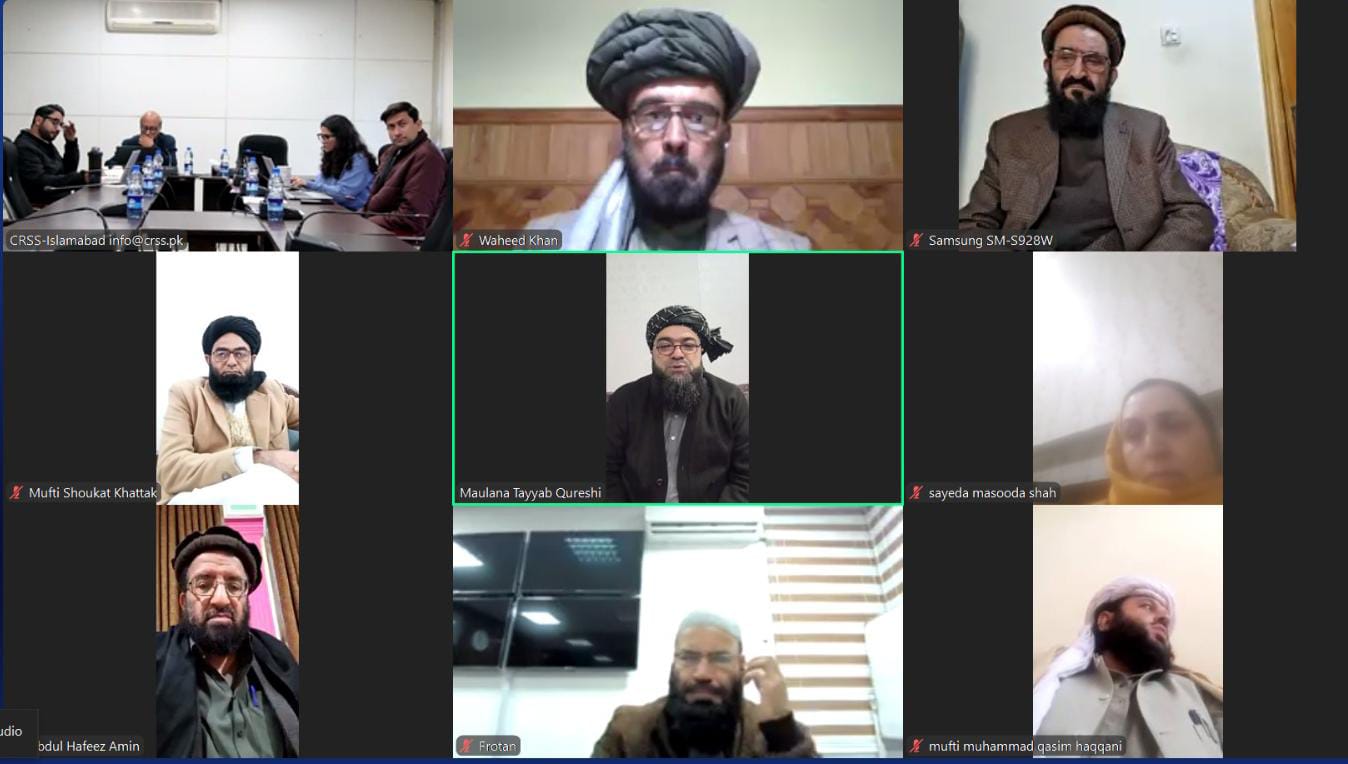
ISLAMABAD, JAN 1 /DNA/: Religious scholars, tribal elders, and policy experts from Pakistan and Afghanistan called for an urgent revival of dialogue, practical confidence-building measures, and humanitarian easing of border restrictions during the Beyond Boundaries dialogue on Exploring Pathways to Peace, Security and Stability in the Pakistan-Afghanistan Region, organised by the Centre for Research and Security Studies (CRSS).
Participants noted that border communities, patients, students, traders, and wage earners continue to bear the heaviest burden of prolonged closures. They stressed that despite political strains, the peoples of both countries largely wish for stability and normalcy, and that sustained restrictions risk creating an environment conducive to misperception and exploitation by destabilising elements.
Former Afghan Envoy Abdul Hakim Mujahid stated that recent gatherings of religious scholars in Kabul and Islamabad demonstrated broad support for dialogue and mutual understanding. He emphasised that such platforms provide an opportunity to rebuild trust and should be strengthened rather than disrupted by political tensions.
Afghan scholar Abdul Waheed Waheed observed that the primary victims of border closures are ordinary citizens who rely on routine mobility for health, education, and livelihoods. He said that public sentiment in Afghanistan continues to favour improved relations with Pakistan, and cautioned that economic strain and prolonged bottlenecks risk giving space to actors who thrive on hardship and grievance.
Dr Samia Raheel Qazi said it remained encouraging that religious and tribal stakeholders on both sides consistently supported engagement. She stressed that this spirit of cordiality should not be allowed to erode due to unrest driven by certain groups and called for enhancing the involvement of track II actors.
Professor Dr Rashid Ahmad of Peshawar University argued that delays in addressing contentious matters between Pakistan and Afghanistan tend to complicate them further. He called for timely institutional communication to prevent deterioration in bilateral relations.
Tribal leader Malik Khan Marjan highlighted the need for cross-border tribal leaders to convene and jointly explore solutions. He noted that unified tribal efforts against destabilising elements could contribute to restoring stability.
Dr Mozammil Shinwari, Executive Director of the Organisation for Economic Studies and Peace, noted that prolonged shutdowns deepen economic deprivation and may inadvertently strengthen groups seeking to exploit socioeconomic grievances on both sides.
Chief Khateeb KP Maulana Tayyab Qureshi stressed that polarization and social unrest could only be tackled through social cohesion and inclusive dialogue. He underscored that mistrust and the influence of proxy elements have strained the bilateral relations. The true potential of both countries can only be realised by establishing robust communication channels and fostering sustained, constructive engagement.
Imtiaz Gul, Executive Director of CRSS, noted that the CRSS Annual Security Report 2025 indicated a decline in cross-border militant incidents over the last three months following the closure, with a corresponding reduction in fatalities. He added that while the figures reflect a positive short-term trend, addressing the underlying factors driving militancy requires a comprehensive, multi-pronged approach beyond border management.
Participants concluded that restoring structured dialogue, easing humanitarian restrictions, strengthening people-to-people linkages, and countering divisive narratives were essential for regional stability. They also underscored the importance of tribal and religious leadership in fostering peace and preventing further escalation.