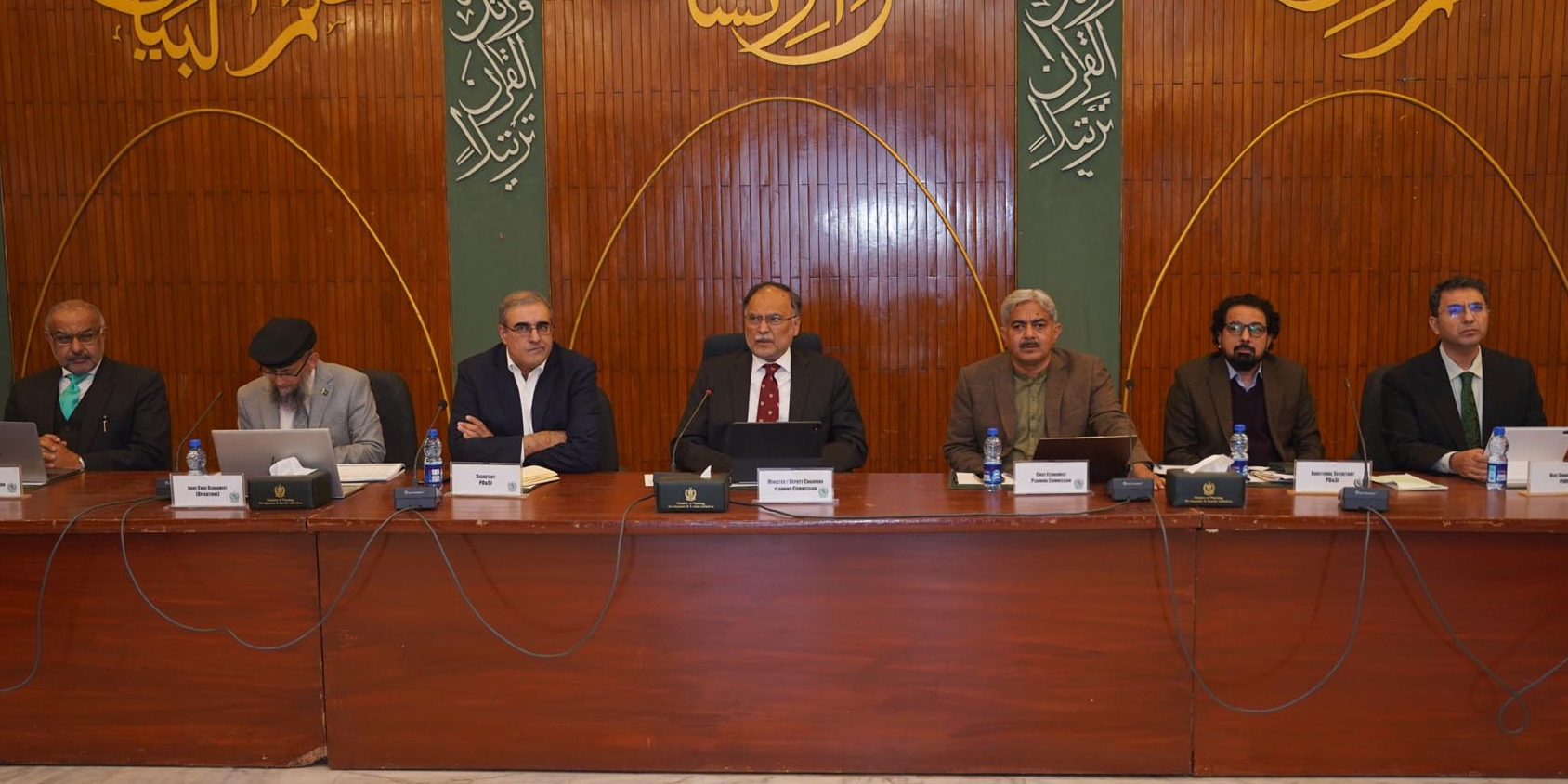
ISLAMABAD: JAN 15 /DNA/: Federal Minister for Planning, Development & Special Initiatives and Deputy Chairman Planning Commission, Ahsan Iqbal, chaired the Central Development Working Party (CDWP) and approved five transformative health projects. These initiatives under the Uraan Pakistan Social Sector drive prioritize people-centric development, delivering affordable healthcare, cutting catastrophic costs, and shielding vulnerable families from financial ruin.
Federal Minister for National Health Services, Regulation and Coordination, Mr. Mustafa Kamal, personally attended the forum to support and justify the projects of his Ministry.
The forum reviewed key development initiatives and cleared five important projects related to the health sector, addressing needs of the national economy.
During the meeting, the CDWP approved three projects with a total cost of Rs. 12.524 billion. In addition, two major projects worth Rs. 56.823 billion were recommended to the Executive Committee of the National Economic Council (ECNEC) for further consideration.
Minister Ahsan Iqbal spotlighted health as a cornerstone: “Uraan Pakistan puts people first.
The Central Development Working Party (CDWP), chaired by Federal Minister for Planning, Development & Special Initiatives and Deputy Chairman Planning Commission, Ahsan Iqbal, on Thursday reviewed and approved a revised health sector project titled “ Sehat Sahulat Program ” at a cost of Rs. 40,188.216 million , and recommended it to the Executive Committee of the National Economic Council (ECNEC) for final consideration.
The project is a key component of the URAAN Pakistan Social Sector Initiative , reflecting the Government of Pakistan’s strong commitment to ensuring equitable access to quality healthcare services for all citizens, particularly the poor, vulnerable, and underserved segments of society.
Under the revised framework, the Sehat Sahulat Program is being implemented through the development budget on a universal basis in Islamabad Capital Territory, Azad Jammu & Kashmir, and Gilgit-Baltistan , with the objective of improving overall public health outcomes by expanding coverage of secondary and priority inpatient treatments.
The program, operating under the Social Health Protection Initiative , aims to provide health insurance coverage for indoor healthcare services to all permanent resident families in the covered districts as per NADRA records. A major goal of the initiative is to reduce out-of-pocket expenses and catastrophic health expenditures related to hospitalization by up to 60 percent , thereby strengthening social protection mechanisms for low-income households.
Chairman CDWP Ahsan Iqbal underscored that the Sehat Sahulat Program fully aligns with the URAAN Pakistan vision, which prioritizes human development, social protection, and inclusive growth as pillars of national progress. He reaffirmed the government’s resolve to deliver accessible, affordable, and quality healthcare as a fundamental right of citizens.
While recalling the origins of the scheme, the Minister informed the forum that the program was initially launched in 2015 by former *Prime Minister Muhammad Nawaz Sharif as the Prime Minister National Health Program, with the core objective of providing 100 percent health coverage exclusively to poor and deserving families. He noted that the subsequent renaming and expansion of the program to affluent segments in certain regions led to misuse of resources and restricted access for genuinely deserving households. In this context, Ahsan Iqbal directed that the program be restored to its original name, emphasizing that public resources must remain focused on protecting vulnerable populations and strengthening the social safety net envisioned under URAAN Pakistan.
The approval and referral of the revised Sehat Sahulat Program to ECNEC reaffirm the government’s unwavering commitment to people-centric development, ensuring that no citizen is left behind in accessing essential healthcare services under the broader reform agenda of URAAN Pakistan.
Deputy Chairman Planning Commission Ahsan Iqbal, approved a revised health sector project titled “Establishment of Jinnah Hospital (Polyclinic (PGMI)-II) at G-11/3, Islamabad,” at a total cost of Rs. 15,948.070 million , and recommended it to the Executive Committee of the National Economic Council (ECNEC) for final approval.
The project is a significant component of the URAAN Pakistan Social Sector Initiative , reflecting the Government of Pakistan’s firm commitment to strengthening public healthcare infrastructure and ensuring equitable access to quality medical services for citizens, particularly the poor and vulnerable segments of society.
Under the revised scope, the hospital’s bed capacity has been increased from 311 to 400 to better meet growing healthcare needs in the federal capital. The project also includes the induction of modern IT systems, enhanced building and external development works, a substantial increase in biomedical equipment and furniture, and escalation provisions to address cost adjustments, including the imposition of GST on equipment. Additional components such as solar power systems, HVAC operation and maintenance, and comprehensive risk mitigation measures have been incorporated to ensure sustainability, operational efficiency, and uninterrupted healthcare services. The project’s gestation period has been extended up to June 2027 to facilitate effective implementation.
While reviewing the project, Chairman CDWP Ahsan Iqbal expressed serious concern over the significant escalation in project cost and emphasized the need for realistic, evidence-based costing at the PC-I stage. He observed that frequent revisions in scope and cost point towards inadequate due diligence during initial planning, which must be addressed to ensure efficient utilization of public funds.
The Minister directed the Ministry of National Health Services, Regulation and Coordination to include the construction of a mosque within the approved project cost, stressing that essential facilities should be integrated at the planning stage without imposing additional financial burden .
Reaffirming the URAAN Pakistan vision, Ahsan Iqbal emphasized that public health facilities are fundamentally meant to provide accessible, timely, and free healthcare services to underprivileged populations. He stressed that government investment in health infrastructure must translate into immediate operational readiness upon project completion, warning that delays in functionality undermine the very objective of serving the poor. The approval and referral of the revised Jinnah Hospital (Polyclinic-II) project to ECNEC underscore the government’s unwavering resolve under URAAN Pakistan to modernize healthcare infrastructure, improve service delivery, and ensure that public sector health projects effectively contribute to human development and social well-being.
Two revised projects were approved by the forum, including “Development of Integrated Disease Surveillance and Response System (IDSRS) with Public Health Laboratories Network (PHLN) and Workforce Development for Transition of Field Epidemiology Training & Laboratory Program (FELTP)” worth Rs. 7,484.251 million, and “Strengthening Points of Entry and Border Health Services Pakistan, Karachi (Earlier Directorate of Central Health Establishments)” worth Rs. 2,864.982 million. While deliberating on the IDSRS project, Deputy Chairman Planning Commission Ahsan Iqbal categorically directed the Ministry of Health that this approval constituted the final revision and that no further revisions would be entertained by the forum.
Another health sector project titled “Strengthening and Upgradation of Cardiology Department and Others at Federal Government Polyclinic (PGMI) Hospital, Islamabad,” worth Rs. 2,174.930 million, was also approved by the CDWP after detailed discussion.