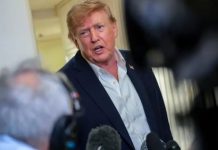
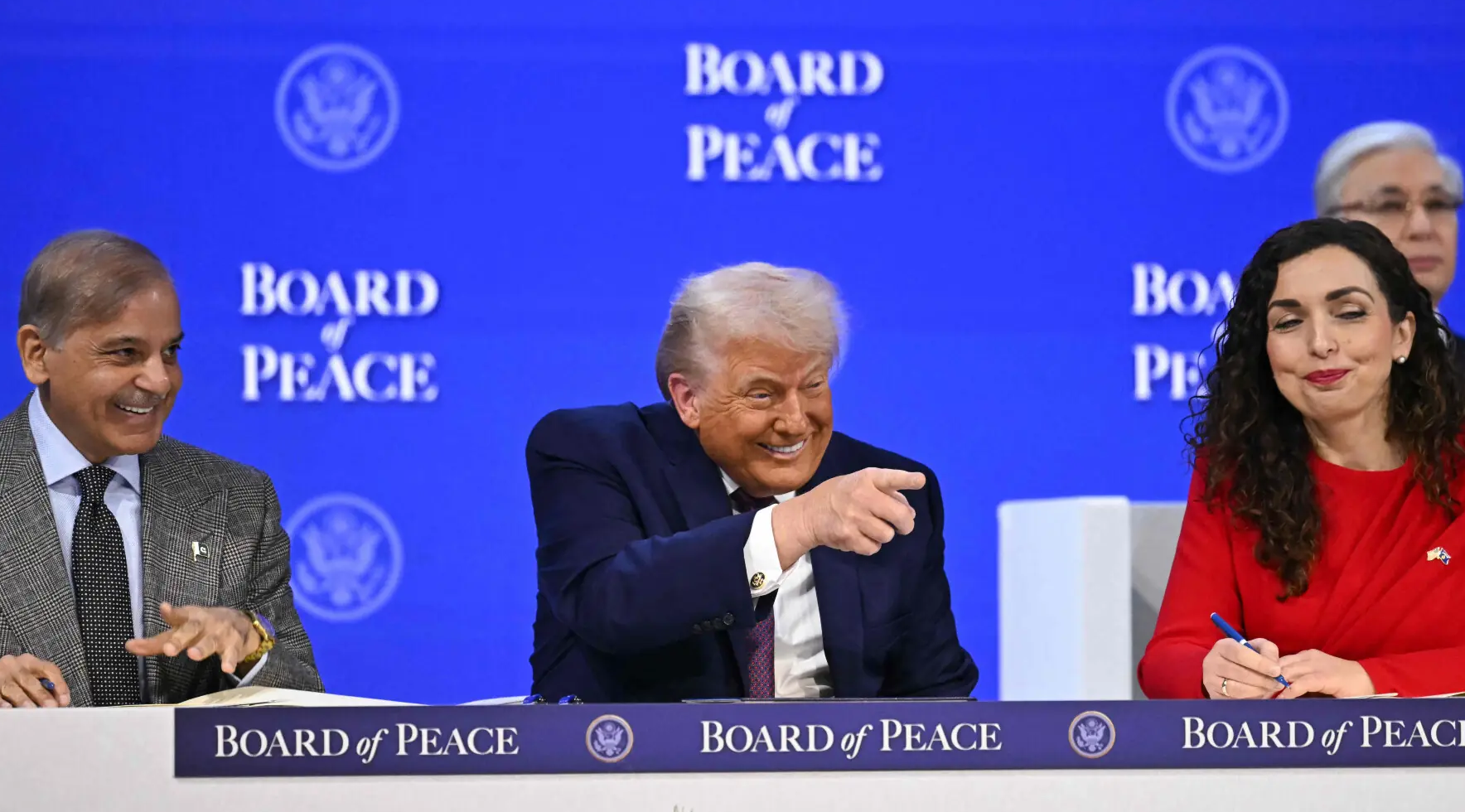
WASHINGTON, JAN 22 /DNA/: Prime Minister Shehbaz Sharif and other world leaders on Thursday signed the charter for the “Board of Peace” headed by United States President Donald Trump, who has billed the body as a platform for resolving international conflicts.
Originally meant to oversee peace in Gaza after Israel’s two-year war on the enclave, the board’s charter envisions a wider role in resolving international conflicts.
A group of leaders and senior officials from 19 countries — including Pakistan — gathered on stage with Trump at a signing ceremony in Davos, Switzerland to put their names to the founding charter of the body.
Trump — who is the chairman of the Board of Peace — said they were “in most cases very popular leaders, some cases not so popular. That’s the way it goes in life.”
“Congratulations President Trump, the charter is now in full force, and the Board of Peace is now an official international organisation,” White House Press Secretary Karoline Leavitt said.
“Every one of them are friends of mine. I like every single one of them,” Trump said about the signatories.
“Just about every country wants to be a part of it. We sent out the letters a couple of days ago and countries that are here just happened to be in Davos,” he said.
The US president declared, “Everybody in this room is a star […] There’s a reason that you’re here. When you use that inspired genius for peace, the opposite of peace has no chance.”
After Trump’s address, the heads of various countries took turns to sign the board’s charter. Permanent members must also pay $1 billion to join, leading to criticisms that the board could become a “pay to play” version of the UN Security Council.
While Trump’s plan had sparked concerns that he wants the board to rival the United Nations (UN), the US president said the body will work “in conjunction” with the UN.
Referring to the signatories at the outset of his speech, Trump said, “Each and every one of you, we are truly honoured by your presence today. Leaders of countries, in most cases, very popular leaders; in some cases, not so popular.”
Among those seated in the audience was PM Shehbaz, after Pakistan on Wednesday accepted Trump’s invitation to join the Board of Peace.
Earlier in the day, Deputy PM Ishaq Dar had posted on X that he was also in Davos to attend the signing ceremony.
Key US allies, including France and Britain, have expressed scepticism, with the United Kingdom saying it would not attend the ceremony.
Officials from Argentina, Armenia, Azerbaijan, Bahrain, Bulgaria, Hungary, Indonesia, Jordan, Kazakhstan, Kosovo, Mongolia, Morocco, Paraguay, Qatar, Saudi Arabia, Turkiye, the United Arab Emirates and Uzbekistan also signed the document with Trump.
However, the Board of Peace’s potential membership has been controversial, with Trump inviting Israel’s PM Benjamin Netanyahu, who faces an International Criminal Court (ICC) arrest warrant for alleged war crimes in Gaza.
Netanyahu has said Israel will join the board, but he was not at the ceremony.
Trump had also invited Russian President Vladimir Putin, who invaded Ukraine four years ago. While the US president said Putin had agreed to join, the Russian leader said he was still studying the invitation.
‘End’ of Hamas if it doesn’t disarm: Trump
During his speech, the US president also said that Hamas must disarm under the Gaza ceasefire deal or it will be the “end” of the Palestinian movement.
“They have to give up their weapons, and if they don’t do that, it’s going to be the end of them,” Trump said.
“We’re committed to ensuring Gaza is demilitarised, properly governed and beautifully rebuilt,” he affirmed, adding that “we can spread out to other things as we succeed with Gaza”.
“Once this board is completely formed, we can do pretty much whatever we want to do, and we’ll do it in conjunction with the UN,” the US president said, adding that the combination of the Board of Peace and the UN could be “very, very unique for the world”.
Trump recalled that under Phase 1 of the ceasefire plan, “we have painstakingly […] maintained the Gaza ceasefire, delivered record levels of humanitarian aid”.
“We’ve given aid, you know, you used to hear that all the people were starving and it was terrible. You don’t hear that anymore,” he insisted, highlighting the release of 20 Israeli captives and the bodies of most of the deceased ones.
The US president asserted: “The first steps toward a brighter day for the Middle East and a much safer future for the world are unfolding before your very eyes.
“Together we are in a position to have an incredible chance — I don’t even call it a chance, it’s gonna happen — to end decades of suffering, stop generations of hatred and bloodshed and forge a beautiful, everlasting and glorious peace for that region, and for the whole region of the world, because I’m calling the world a region.”
Trump also claimed that Iran wants to hold talks with the US, and that Washington was willing to do so. “And Iran does want to talk, and we’ll talk.”
He also recalled the US strikes on Iran’s uranium enrichment sites in June 2025.“Can’t let that happen,” he said, referring to the US’s stance that Tehran plans to build nuclear weapons.
Focus right now on Gaza: Rubio
US Secretary of State Marco Rubio, Middle East envoy Steve Witkoff and Trump’s son-in-law Jared Kushner also spoke on the occasion.
In his speech, Rubio highlighted that Trump was “willing to talk to or engage with anyone in the interest of peace”.
He stressed, “Now we have this Board of Peace … [its] possibilities are endless. Obviously, with a focus first and foremost on making sure this peace deal in Gaza becomes enduring.
“I know this president has it as his highest priority and will give everything that he has to make sure that this is successful.”
The US secretary of state asserted: “This is not just a Board of Peace but a board of action, just like President Trump is a president of action.”
Rubio emphasised that the “focus is right now on Gaza and making sure that the […] vision for the future of Gaza […] of the region, is not just possible and promising, but it is our destiny”.
He further said it would serve as an example of “what’s possible for other places and other conflicts that seem impossible to solve right now”.
“Many others who are going to join … are not in town today or they have to go through some procedure internally in their own country because of constitutional limitations, but others will join,” Rubio added.