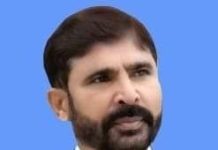
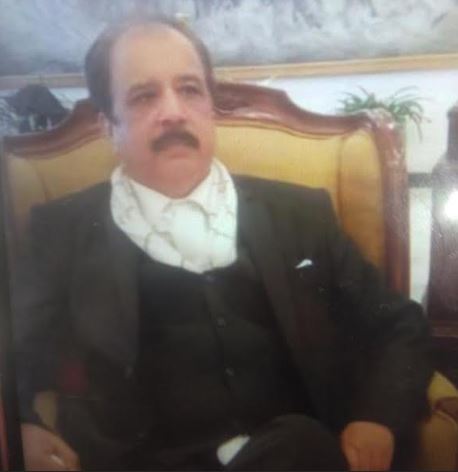
Hashim Raza Adv/Peshawar, LLM (UK) Raza
For more than four decades, Afghanistan has remained a bleeding wound—surviving, but never truly recovering. From monarchy and semi-monarchy to revolutionary upheavals and proxy wars, every political experiment has left deep scars. While earlier systems preserved relative peace, particularly in urban centers, they failed to reform outdated dogmas. Conversely, leftist revolutionaries pursued economic change without sufficient regard for Afghanistan’s socio-cultural fabric or its complex geography. This imbalance turned the country into a global choke point—contested by Western capitalism, Arab petro-politics, and Islamist movements alike.
In the name of jihad, billions of dollars were funneled into Afghanistan, transforming it into a battlefield for competing global interests. As documented by German writer Ian Johnson, even mosques in Europe—such as those in Munich—became hubs of radical mobilization. A society that was once comparatively liberal, at least in its cities, was gradually pushed toward fanaticism. As John Cooley notes, some of the most tacit support for Afghan mujahideen even came from unlikely quarters, including Israel. Among these factions, Gulbuddin Hekmatyar emerged as a favored figure, despite the immense destruction he inflicted on Afghanistan—arguably surpassing even his rival, Ahmad Shah Massoud.
Within the Afghan communist leadership, figures such as Dr. Najibullah stood out as nationalists first and communists second. Najibullah was notably opposed to the Soviet invasion. Ajmal Khattak, a staunch Pashtun nationalist, later acknowledged that both he and Najibullah made it clear to Moscow that they would never support the doctrine of “hot pursuit.” This understanding eventually contributed to the Soviet withdrawal, though it also forced leaders like Najibullah and Khattak to seek protection in Moscow.
Pakistan, meanwhile, opened its doors to Afghan refugees—particularly in Khyber Pakhtunkhwa—despite never being a signatory to the international refugee convention. Nearly four million Afghans crossed the border. While many benefited from petro-dollars and the shadow economy of the Afghan jihad, Pakistan paid a heavy price. Crime rates soared, kidnappings and land grabbing became rampant, and demographic pressures intensified. The population exploded from around 100 million to nearly 250 million. Slogans glorifying jihad appeared on walls, but the economic and social burden proved overwhelming, especially during the Musharraf era, when limited resources had to sustain a rapidly growing population.
A new and deadlier form of terrorism also emerged. As Brigadier Mohammad Yousaf recounts in *The Bear Trap*, suicide bombing—a grim innovation introduced by Arab extremists—became a defining feature of conflict in the region. When this still failed to satisfy imperial ambitions, the Taliban were brought to power. Though their rule was centered in Afghanistan, their roots extended deep into neighboring Pakistan. At the same time, sectarianism intensified within Pakistan itself, a trend well documented by journalists and scholars such as Ahmed Rashid and researchers like Dr. Mujahid, author of *Punjabi Taliban*.
The Taliban’s first major act was the public hanging of Dr. Najibullah and his brother—an event that sent shockwaves through Afghanistan and deeply affected sympathizers across the border. Najibullah had earlier urged regional consensus among Pakistan, Iran, India, China, and Russia—a vision that threatened American strategic interests and was therefore fiercely resisted.
The legacy of the Afghan jihad continues to destabilize both Afghanistan and Pakistan. Seminaries and mosques—many funded by Saudi Arabia, as revealed in *Ghost Wars*—along with sponsorship from various sectarian groups, have entrenched ideological militancy. With an estimated 2,500 madrassas in Afghanistan and around 30,000 in Pakistan, the ideological bond between militant groups on both sides of the border remains strong. Whether labeled Taliban, TTP, or “Pakistani Taliban,” the differences are largely nominal; ideologically and culturally, they are cut from the same cloth.
Recent attempts at peace, including mediation efforts framed in Islamic terms, have been undermined by competing interests—particularly those of Turkey and Qatar. From the outset, Qatar has invested heavily in Taliban ideology, not merely as a political strategy but as a long-term belief system. Alongside the UAE, Qatar has often served broader US and Israeli interests, while also competing with Saudi Arabia. Energy ambitions—such as gas pipelines through Iran and Turkey—have further complicated regional calculations, making Afghanistan an arena of continued interference.
The Taliban must recognize that they are approaching a point of no return. In Pakistan, political forces have lost leaders and workers to Taliban violence; whatever sympathy or religious-political support once existed is rapidly eroding. In Afghanistan, secular, progressive, and nationalist forces—along with Tajiks, Uzbeks, and Hazaras—have suffered immensely under Taliban brutality. Women, children, artists, and musicians remain especially vulnerable. Governing through the lens of a single rigid school of thought cannot ensure stability.
The Taliban are not merely required to change policies, but to transform their entire ethos. They must respect women’s rights, protect children, and allow space for culture, music, and art. Above all, they must avoid becoming proxies in a new neo-economic war over minerals and resources. Afghanistan must confront new realities and abandon obsolete dogmas.
At the very outset of this discussion, it is also essential to recall how the true nature of jihadist groups was laid bare by Amir Mir in *The True Face of Jihadis*, including the role of their sister organizations operating in Pakistan. Ignoring these truths will only allow the wound to fester.
Unless the international community—and regional actors—address this history with honesty and responsibility, Afghanistan’s wound will continue to bleed. Left unattended, it risks becoming a global infection, a parasitic conflict feeding endlessly on human suffering. Hashim Raza Adv/Peshawar, LLM (UK) Raza