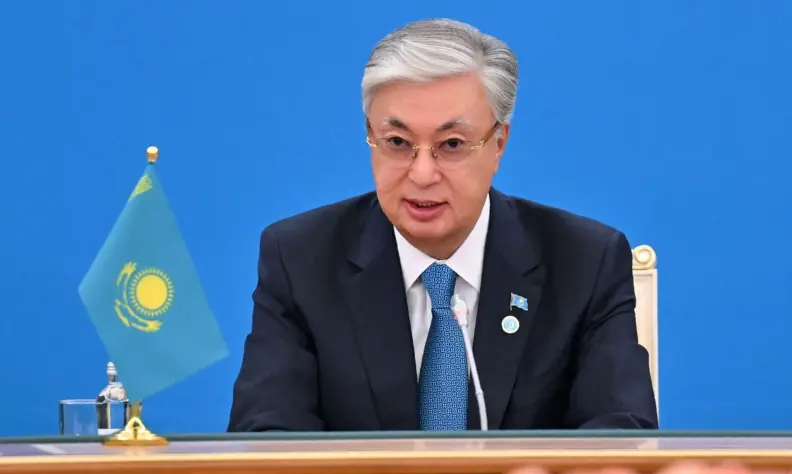
ASTANA: Kazakhstan President Kassym-Jomart Tokayev will undertake a two-day official visit to Pakistan on February 3–4, according to a statement from the Ministry of Foreign Affairs.
The two countries maintain friendly diplomatic relations, with Kazakhstan being Pakistan’s top export destination among Central Asian countries.
During the visit, which he will undertake at the invitation of Prime Minister Shehbaz Sharif, the Kazakh president will be accompanied by a high-level delegation comprising senior cabinet ministers and other high-ranking officials.
“President Tokayev is expected to meet with the President of Pakistan, hold talks with the prime minister, and address the Pakistan-Kazakhstan Business Forum.”
Having a unique geographical location, Kazakhstan offers an excellent opportunity for Pakistan to connect to Russian, Central Asian, and Eastern European markets. Kazakhstan, by landmass and resources, is the largest economy of Central Asia.
The foreign ministry said President Tokayev’s visit will provide Islamabad and Astana “an important and timely opportunity to undertake a comprehensive review” of bilateral relations.
The statement added that the two sides will also discuss new avenues for broadening cooperation, particularly in trade, logistics, regional connectivity, people-to-people contacts, and explore collaboration at regional and international forums.
“The forthcoming visit reflects the strengthening bonds between Pakistan and Kazakhstan, their mutual commitment to transforming historic and cultural affinities into robust cooperation, and their common desire for peace and progress in the region,” read the statement.
This visit is seen as a win-win situation by both countries. For Pakistan, it will help Islamabad position itself as a land bridge between Central and South Asia and beyond. For Kazakhstan, it will help diversify its international trade amid turbulence in Eurasia in the wake of the Russia-Ukraine war.
In September, when then-Kazakh deputy premier Murat Nurtleu visited Pakistan, the two sides signed the Action Plan of Cooperation to boost bilateral ties.