Anjum Nisar criticises youth schemes and loan initiatives that lack scale and continuity
ISLAMABAD, FEB 8: /DNA/ – The Federation of Pakistan Chambers of Commerce and Industry’s Businessmen Panel (BMP) has warned that Pakistan is heading towards a severe employment crisis as government inaction, policy inconsistency and anti-industry measures continue to suffocate the productive economy, leaving millions of young people without viable job opportunities.
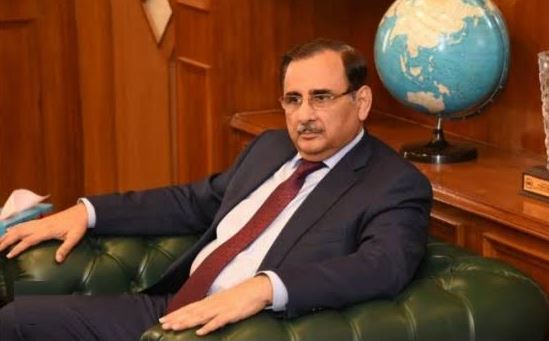
In a strongly worded statement, former FPCCI President and Chairman of the Businessmen Panel, Mian Anjum Nisar, said that while policymakers remain preoccupied with short-term stabilisation and political survival, the country is quietly losing its most valuable asset — its workforce. He said Pakistan’s economy is failing to generate sufficient jobs not because of a lack of entrepreneurial capacity, but because the state has made it increasingly difficult for industry to operate, expand and invest.
Anjum Nisar said Pakistan needs to create millions of jobs every year simply to absorb new entrants into the labour market, yet industrial output has stagnated, private investment has collapsed and manufacturing units are either operating far below capacity or shutting down altogether. He warned that without a radical shift towards industry-friendly policies, the unemployment challenge could spiral into social instability.
He criticised the government for repeatedly announcing youth schemes, skill programmes and loan initiatives that lack scale, continuity and linkage with real economic activity. “Jobs are not created by slogans or schemes announced at press conferences. Jobs are created when factories run at full capacity, when exporters receive competitive energy tariffs, when businesses are confident that policies will not change overnight,” he said.
According to the BMP chairman, the government has placed the entire burden of adjustment on the formal economy through excessive taxation, unpredictable regulatory actions and some of the highest energy costs in the region. He said these policies have eroded Pakistan’s competitiveness and pushed many businesses into the informal sector or out of the country altogether, directly shrinking employment opportunities.
Nisar pointed out that industrialists are willing and able to create jobs if the environment allows it. “Industry is not asking for subsidies; it is asking for survival,” he said, adding that power tariffs, gas shortages, advance taxation and delayed refunds have turned job creation into an uphill battle. He noted that neighbouring countries are actively courting manufacturers with stable policies and lower costs, while Pakistan continues to lose investment.
He said the government’s economic approach remains narrowly focused on meeting IMF targets without considering the employment fallout. While fiscal discipline is important, he said, it should not come at the cost of strangling productive sectors. “An economy cannot stabilise itself by shrinking,” he remarked. “When businesses close, jobs disappear, exports fall and revenues decline — forcing the government to impose even more taxes. This is a vicious cycle.”
The BMP chairman said Pakistan’s youth are paying the price for this policy paralysis. With limited formal job creation, many educated young people are either underemployed, forced into informal work or seeking opportunities abroad through legal and illegal channels. He warned that rising frustration among the youth could fuel brain drain, social unrest and long-term economic damage.
Nisar stressed that industry-led growth remains the only realistic path to large-scale employment. Manufacturing, construction, agro-processing, engineering goods and export-oriented sectors have the capacity to absorb millions of workers if allowed to grow. However, he said frequent policy reversals, sudden tax measures and inconsistent energy pricing have destroyed long-term planning.
He also criticised the absence of a coherent industrial policy, noting that Pakistan has failed to develop new labour-intensive sectors or move up the value chain. “Our exports remain narrow and low value-added because there is no serious effort to support diversification,” he said, adding that without value addition, job creation will remain limited and vulnerable to external shocks.
The former FPCCI president said the services sector alone cannot absorb Pakistan’s expanding labour force, particularly low- and semi-skilled workers. He stressed that ignoring manufacturing and agriculture-linked industries would only deepen inequality and unemployment. He called for urgent reforms in energy pricing, taxation, labour laws and access to finance to restore investor confidence.
Nisar also highlighted the disconnect between education and market needs, but said this mismatch cannot be resolved without active industrial expansion. “Training young people without creating jobs for them is a recipe for disappointment,” he said, adding that skills development must be aligned with real demand generated by a growing industrial base.
Concluding his remarks, Nisar said job creation must become the central metric of economic policy rather than an afterthought. He urged the government to engage meaningfully with trade bodies, listen to ground realities and commit to long-term, predictable policies that survive political cycles. “Pakistan does not have a youth problem; it has a policy problem,” he said. “If the state continues to do nothing meaningful for industry, the employment crisis will only worsen — and the consequences will be borne by the entire country.”