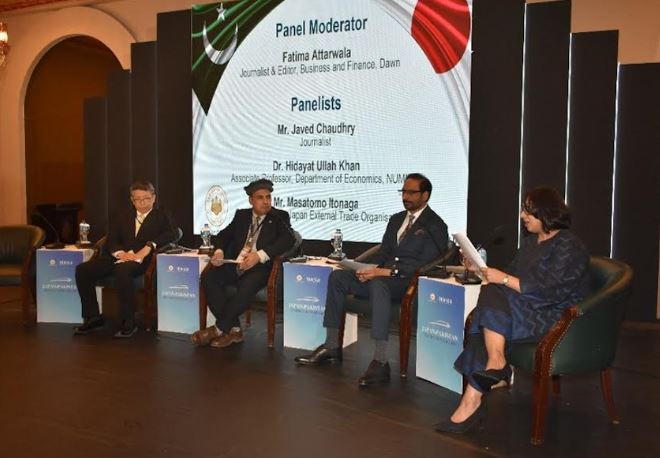
ISLAMABAD, FEB 10 /DNA/ – Akamatsu Shuichi, Ambassador Extraordinary and Plenipotentiary of Japan to Pakistan, hosted the “Japan-Pakistan Business Seminar 2026” at the Senena Hotel in Islamabad. Attended by approximately 100 individuals, including H.E. Mr. Haroon Akhtar Khan, Special Assistant to the Prime Minister for Industries & Production, Pakistani government officials, business representatives, relevant institutions and universities, Japanese companies such as members of the Japan Chamber of Commerce and Industry in Pakistan, the Japan International Cooperation Agency (JICA), and the Japan External Trade Organization (JETRO), the meeting featured fruitful discussions expected to promote future business between Japan and Pakistan.
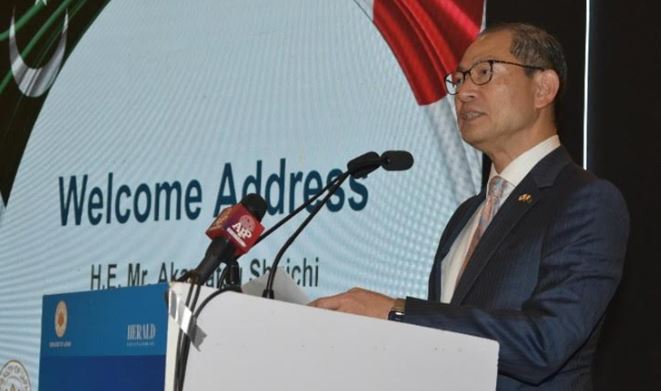
Ambassador Akamatsu stated in his remarks as follows: “Japanese automotive companies have created more than 100,000 jobs in Pakistan and have established domestic supply chains to localize automotive components. All companies’ localization rate for parts by far exceeds 60%. Furthermore, they continue to invest in new technologies to advance industrial upgrading and reduce the negative impacts towards the environment. Indeed, those countries which can manufacture automobiles are quite limited in the world. Their contribution to Pakistan’s economy is substantial and will remain so in the future.”
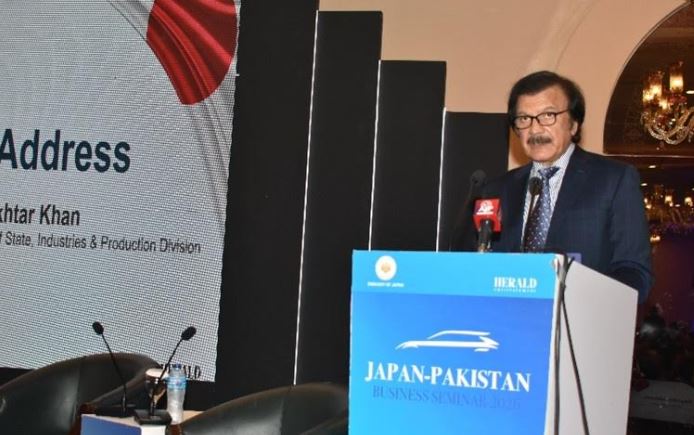
The event witnessed the presence of distinguished figures including H.E. Mr. Haroon Akhtar Khan, Special Assistant to the Prime Minister for Industries & Production as Chief guest, and representatives from leading Japanese and Pakistani organizations. Mr. Haroon Akhtar Khan, Special Assistant to the Prime Minister emphasized his gratitude for Japan’s contributions to Pakistan’s economy to date and his hope for the continued strengthening of bilateral relations.
In Session 1, panelists from both countries discussed the secrets behind Japan’s economic growth to date and the history of business relations between the two nations. One panelist noted that Japan possesses a culture which priorities investing in educating people over chasing immediate profits, as this yields significant future benefits. The session featured lively debate on the path Pakistan should take for its own growth, learning from Japan’s experience.
In Session 2, Japanese automotive companies investing and continuing business in Pakistan, along with Pakistani automotive parts suppliers, participated as speakers. Representatives from Japanese companies addressed the key to achieving stable mass production of high-quality, durable products, highlighting Kaizen, 5S, and employee training. Furthermore, there was lively discussion on how Japanese automotive companies have long contributed not only to selling vehicles in Pakistan but also to developing Pakistani automotive industry suppliers. Additionally, there was discussion on future aims for promoting hybrid vehicles, investment in biogas fuel production to reduce petrol consumption, and further improvements in safety.