BY ISHTIAQ AHMAD
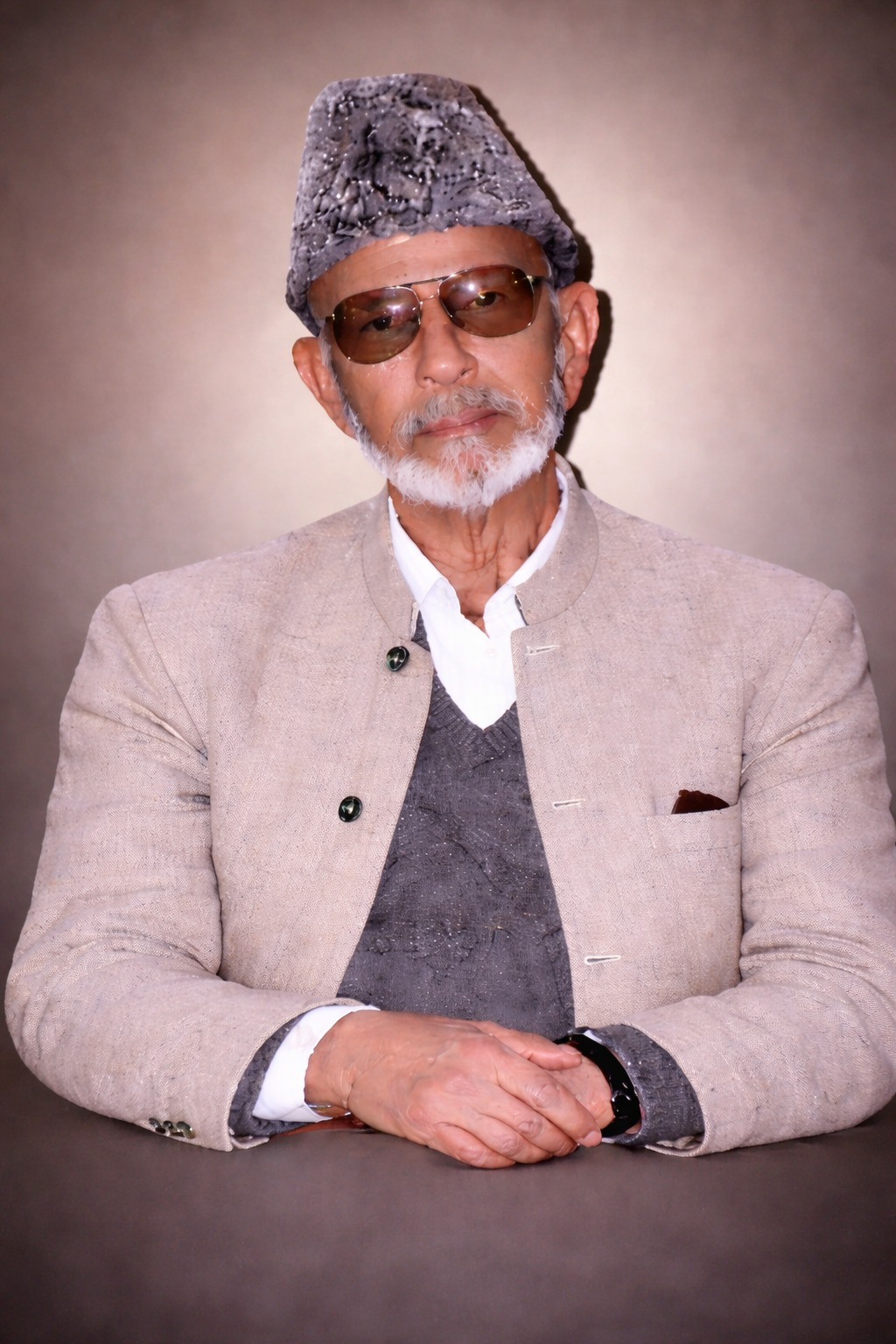
This tribute is written in memory of my father, Chaudhry Fazal Muhammad, whose life was defined by quiet and sustained service to others. Over several decades, he worked selflessly for the welfare of the people of the Seraiki belt, with a particular focus on combating tuberculosis in one of Pakistan’s most deprived regions. He passed away on 8 February 1999 in Bhakkar, our hometown, at the age of 86.
Chaudhry Fazal belonged to the pre-Partition generation that had lived through the political struggle, displacement and sacrifice that led to the creation of Pakistan. His worldview was shaped by the ideals of the Pakistan Movement and by the leadership of Quaid-i-Azam Muhammad Ali Jinnah. He often recalled, with pride and conviction, seeing the Quaid from close quarters at a Muslim League rally in Faisalabad and listening to his speech—a memory that remained vivid until the end of his life.
He was born in 1913 in the Hoshiarpur district of East Punjab into a modest Punjabi family. He received his early education there and later migrated to Layalpur, now Faisalabad. He completed his matriculation from Gogera in 1933 and was appointed Assistant Manager at a Cooperative Commission outlet in Chak Jhumra, beginning a professional life grounded in discipline and public-facing work.
In 1940, he helped establish Anjuman-e-Islamia and served as its General Secretary, with Zaheer Niaz Beigi—later Provincial Propaganda Secretary of the Punjab Muslim League—as Vice President. The organisation actively supported the Pakistan Movement in the region. In 1943, it organised a Pakistan Conference that contributed to political awareness and mobilisation at a crucial moment in the independence struggle.
Among the prominent figures of that period was Dr Muhammad Azeem Khan Niazi, a respected physician (and also the grandfather of Imran Khan). Dr Niazi’s sons, Zafarullah and Faizullah, were close friends of Chaudhry Fazal and they encouraged him to migrate to Bhakkar—then a remote tehsil of Mianwali district. In 1951, after resigning from his cooperative post, he moved there, purchased agricultural land, and co-invested in the local petroleum business. He always spoke with respect of Dr Niazi’s integrity and medical service before and after Partition.
Chaudhry Fazal entered local politics and, in 1959, won a city council seat in the Basic Democracies elections, defeating a local feudal lord. This marked his emergence in a political environment traditionally dominated by landed elites. He stood firmly with his close friend Maulana Abdul Sattar Khan Niazi against the powerful Nawab of Kalabagh and later became Punjab President of the Pakistan Democratic Party led by Nawabzada Nasrullah Khan. One of my clearest childhood memories is from the 1970 election campaign, when he addressed a public gathering in Bhakkar alongside Nawabzada Nasrullah and Maulana Niazi, presenting counter-arguments to Sheikh Mujib’s Six Points.
Differences within the PDP later led him to step back from mainstream party politics. In 1969, he helped establish the Thal Kissan Party and served as its Vice President, advocating for the rights of the people of the Thal desert, particularly regarding irrigation and water access. This engagement continued until declining health in the late 1970s forced him to withdraw from active politics, though he remained closely connected with public figures, including Muhammad Hamza, PML-N Member of the National Assembly from Gogera.
Beyond politics, he remained deeply involved in Bhakkar’s social and cultural life. He organised the annual city fair, inviting well-known Seraiki singers such as Surriya Multaneegar. He was an accomplished tennis player and a regular at the Railway Club, believing that community life depended as much on social and cultural interaction as on politics.
From the mid-1980s onward, he entered what he considered the most meaningful phase of his life. After serving for many years as Chairman of the Zakat and Ushr Committee, he devoted himself fully to philanthropy, particularly the fight against tuberculosis. In April 1985, he established a branch of the Punjab Anti-Tuberculosis Association. Founded in 1955 with Fatima Jinnah as its first Patron-in-Chief, the organisation already had a strong reputation. He was encouraged in this effort by Mian Fazal-e-Ahmed, who had earlier set up the association’s branch in Faisalabad.
Elected President of the Bhakkar PATA branch in 1986, he remained associated with the organisation until his death. He personally mobilised funds, beginning with his own family. His eldest son in London contributed annually, supplemented by support from the district administration and the association’s headquarters in Lahore. His office was located in the old Civil Hospital, where medicines, X-rays, and treatment were provided free of cost. A hall was later built to provide sewing machines and shared workspace for poor women, enabling them to earn a livelihood.
Between 1985 and 1999, approximately 3,000 tuberculosis patients were fully cured at the clinic. By the end of 1998, around 150 patients were receiving ongoing treatment. In recognition of his work, he was appointed Vice President of the PATA Sargodha Division in 1994 and received the Best Social Activist Award from the All Pakistan Artists Academy in 1996.
Each day, from morning until afternoon, he sat in his modest office beneath portraits of the Quaid-i-Azam and Allama Iqbal, reviewing files, discussing patient cases, and arranging funds. He worked without seeking recognition. On his final day, he was still clearing files and signing cheques. As he returned home that afternoon, he collapsed at his doorstep and passed away.
Like Chaudhry Fazal Muhammad, many individuals in this country serve public causes quietly and with integrity. Their contributions often go unnoticed, yet their impact endures. It is through such lives of steady, unassuming service that Pakistan has shown resilience in the face of repeated crises. Both of his philanthropic initiatives continue to operate in Bhakkar to this day. This tribute is written so that a life devoted to service may be remembered and honoured.
The author is Professor Emeritus at the School of Politics and International Relations, Quaid-e-Azam University, Islamabad—and a former Member of the Planning Commission, Vice Chancellor of Sargodha University, and Quaid-e-Azam Fellow at the University of Oxford. He can be reached on X @ahmadishtiaq.