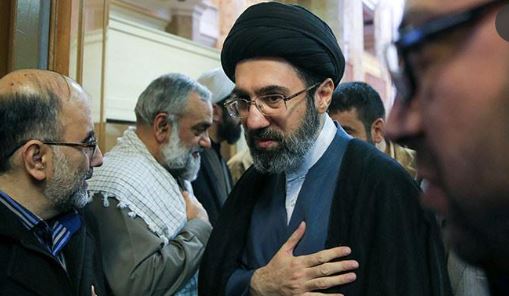
Khamenei says “The vengeance we have in mind is not limited to the martyrdom of the great leader of the revolution; rather, every member of the nation who is martyred by the enemy constitutes an independent subject in the file of vengeance.”
DNA
TEHEAN: Iran’s Supreme Leader, Mojtaba Khamenei, said Iran will seek compensation from enemies or destroy their assets accordingly.
In his first message after assuming the office as supreme leader, he said that the ‘resistance front’ is an inseparable part of the Islamic revolution’s values. Iranian supreme leader Mojtaba Khamenei has said that Tehran is “is fully prepared for unity and warm, cordial mutual relations with all its neighbours”, adding that it is not seeking to establish domination or colonialism in the region. “I assure everyone that we will not forgo vengeance for the blood of your martyrs,” he has been quoted as saying on X.
“The vengeance we have in mind is not limited to the martyrdom of the great leader of the revolution; rather, every member of the nation who is martyred by the enemy constitutes an independent subject in the file of vengeance.” The supreme leader also expressed gratitude to the allied armed groups across the region, including Hezbollah in Lebanon, Houthis in Yemen and allied groups in Iraq.
“We consider the countries of the Resistance Front our best friends, and the cause of resistance and the Resistance Front are an inseparable part of the values of the Islamic Revolution,” he said.
He also called on regional countries to shut down any US bases that they host.
“I recommend that they close those bases as soon as possible, because they must have realised by now that the claim of establishing security and peace by America was nothing more than a lie,” Khamenei said.
Meanwhile, On the 13th day of the US-Israel war against Iran, the conflict appeared to be entering a more volatile phase in which the battlefield could gradually extend beyond conventional air and missile exchanges into attempts to weaken Iran from within; the maritime confrontation in the Gulf continued to tighten pressure on global energy markets and reinforce the centrality of oil flows in shaping the strategic calculations of the belligerents.
Reports circulating among Iranian observers and security analysts suggested that Washington and Tel Aviv may now be testing a strategy aimed at fomenting internal dissent while maintaining external military pressure, with recent drone strikes on Basij security infrastructure inside Tehran. This was widely interpreted as an attempt to erode the regime’s internal control mechanisms and probe whether domestic instability could complement the ongoing military campaign.
The approach bears resemblance to the strategy pursued during the 12-day war of June 2025 when provoking an internal uprising formed a core pillar of Israeli planning, with precision strikes and coordinated information operations designed to fracture regime cohesion and trigger street-level dissent. That attempt had then failed to generate the expected cascade of unrest.
In another development, US President Donald Trump has said that stopping Iran from getting nuclear weapons was more important to him than controlling oil prices.
“The United States is the largest oil Producer in the world, by far, so when oil prices go up, we make a lot of money. But, of far greater interest and importance to me, as president, is [stopping] an evil Empire, Iran, from having nuclear weapons, and destroying the Middle East and, indeed, the world,” said Trump in a post on his Truth Social platform.