

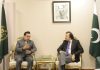
On March 19, 2026, the Head of the Pakistan EPS Center, held a meeting with OEC regarding the Employment Permit System (EPS) and the points-based selection system.
The main topic of the meeting was the efforts of both institutions to expand the dispatch of Pakistani workers in the future. During the meeting, the Center Head responded to questions frequently raised by job seekers as follows.
1. Low Referral Ratio for Pakistani Job Seekers
Under the Employment Permit System (EPS), employers receive referrals of job seekers through the computerized system operated by the competent local employment center for each workplace. Based on employers’ labor demand, three times the number of workers to be hired are recommended, and the employer makes the final selection of workers with whom to conclude labor contracts. No other institution or individual is involved in this process.
Workplaces in Korea tend to prefer workers with a higher level of Korean language proficiency in order to facilitate early adaptation, improve productivity, and prevent industrial accidents.
The Pakistan EPS Center expects that if more Pakistani job seekers with strong Korean language ability are sent to Korea, the excellence of Pakistani workers will become more widely recognized over time, thereby helping establish a virtuous cycle of entry in the long term.
2. Long-Term Non-Referral on the Job Seeker Roster
Job seeker rosters are recommended through the computerized system according to employers’ labor demand, with three times the number requested being referred, and no other institution or individual can intervene in this process.
In addition, among candidates who meet employers’ demand, those who have been on the roster for a longer period are given priority for recommendation.
3. Selection Process and System Operation
Under the Points-Based Selection System, successful candidates are determined strictly in order of highest scores within the final quota, based on the results of the first-stage Korean Language Test and the second-stage Skills Competency Assessment. No other factors are involved.
In addition, starting this year, the cut-off score for the Korean Language Test in the manufacturing sector will be raised to 60 points. While the basic skills component of the Skills Competency Assessment will be simplified, the interview component and its weighting will be expanded in order to strengthen interview-based evaluation.
4. Addition of New Job Seekers While Existing Rosters Remain Unadmitted
Since the COVID-19 pandemic, a large number of workers have already been sent to Korea, and the pace has recently shown signs of temporary moderation.
Accordingly, the Foreign Workforce Policy Committee of the Republic of Korea has adjusted the entry quota, and the Ministry of Employment and Labor and the Human Resources Development Service of Korea plan to reduce the selection quota.
5. Differences in Selection Policy or Management Standards by Country
Except for differences in the industries subject to selection, all other standards and procedures are applied equally.















 and the points-)