The channel runs through Islamabad
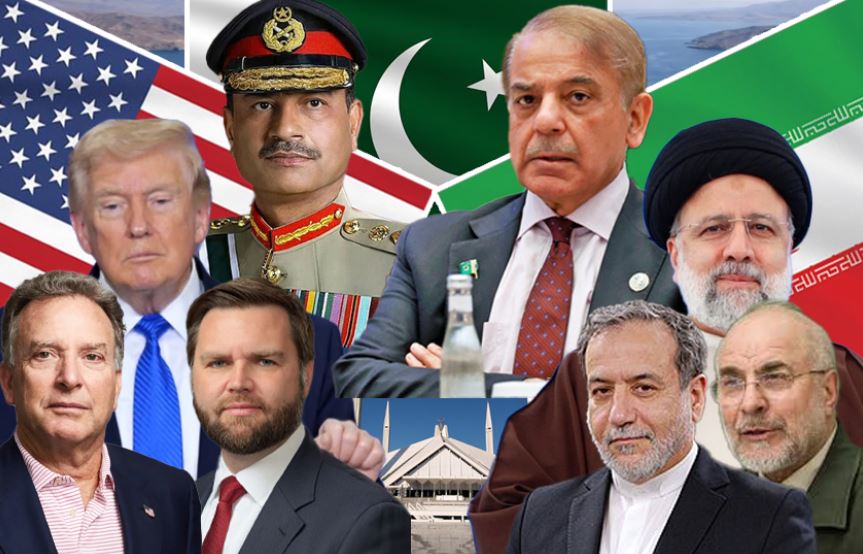
Pakistan has been chosen to lead the most sensitive communication between the United States and Iran while both remain locked in an active military confrontation. This single fact speaks more about Pakistan’s current strategic weight than any diplomatic statement ever could. Islamabad has rightly seized the peace initiative, that too at a critical juncture, and positioned itself as the indispensable bridge between Washington and Tehran. While some would see it as opportunism, it is in fact the logical outcome of Pakistan’s unique geopolitical assets, executed with precision under the leadership of Prime Minister Shehbaz Sharif and Chief of Defence Forces Field Marshal Syed Asim Munir.
This week, all eyes will be on Pakistan, as it prepares to host senior American and Iranian officials for a peace summit to end the conflict in the Middle East that has shaken the entire world over the past month. White House Special Envoys Steve Witkoff and Jared Kushner, along with US Vice President JD Vance will be in Islamabad, holding talks with Iranian officials, including Parliament Speaker Mohammad Bagher Ghalibaf.
US President Donald Trump has repeatedly referred to CDF Asim Munir as his favourite field marshal, and he will be the central figure driving Pakistan’s mediation in order to steer negotiations toward reopening the Strait of Hormuz, through which 20 percent of global oil and 25 percent of seaborne petroleum transit daily. His strategic leadership positions him to deliver the important diplomatic breakthrough required to end the conflict that began on February 28.
But choosing Islamabad as a neutral venue for peace talks was not something out of the blue. The country hosts the world’s second-largest Shia population after Iran, maintains the Strategic Mutual Defence Agreement with Saudi Arabia, has established ties with Iran, and is the only major US partner without American bases on its soil. This proves Pakistan’s neutrality as well as credibility.
Moreover, Islamabad maintained its backchannel diplomatic engagement devoid of any ostentation ever since day one of the Iran war. To date, senior Pakistani officials have been relaying messages between Washington and Tehran, and discussing developments with regional countries simultaneously. Both PM Shehbaz Sharif and Deputy Prime Minister Senator Ishaq Dar are in direct communication with Iranian leadership and senior officials from Turkiye, Iraq, Saudi Arabia, UAE, and a host of other countries.
Parallel to this, Field Marshal Munir held direct talks with President Trump this past week, and even visited Oman for a meeting with Witkoff and Kushner, creating a dual-layered structure where both the civilian and military arms of the state are operating in sync. This wasn’t improvised diplomacy but part of a structured engagement designed for a conflict where timing, discretion, and credibility are equally important, and this is how high-intensity conflicts are managed in their early phases.
Tehran has already acknowledged receiving messages through “friendly states,” which is the only language that matters at this stage. No state under sustained military pressure publicly confirms talks that could be interpreted as concession. What matters is whether communication exists. In this case, it clearly does, and Pakistan is central to it. This outreach has already produced results, as just hours after a conversation with Field Marshal Munir, President Trump announced a five-day pause in strikes on Iranian energy infrastructure, citing “very good and productive” discussions.
No matter how contradictory these statements from Iran and the US may seem, these are consistent indicators of a channel being tested without either side committing publicly, and that channel runs through Pakistan. The country is not viewed as hostile by either side, and retains sufficient leverage to be taken seriously. That is a rare position in a conflict where nations have been forced to choose sides.
Interestingly, while a majority of nations welcomed the move, the development has ignited a firestorm of criticism in India, particularly from the opposition Congress party and its ecosystem. They describe Pakistan’s prominent mediation role as a “severe setback” and “rebuff” to India’s global standing, calling it proof that the self-styled “Vishwaguru”, or global teacher, has been sidelined. Prominent voices like Jairam Ramesh, Supriya Shrinate, Muralidharan Gopal, and Ashok Swain have mocked Narendra Modi’s timing and accused the government of “huglomacy” failure, as the Indian prime minister is notorious for using ‘hugging’ as a diplomatic tool when meeting heads of state.
Nevertheless, one thing is clear that the offer to host talks in Islamabad adds another layer to Pakistan’s position… and the military establishment remains the steel spine of this diplomatic manoeuvre. After decades of engagement across hostile frontiers, its institutional networks and operational discipline confer credibility that few civilian channels can match in such a high-tension environment. Moreover, considering the nature of this conflict, the venue itself carries strategic importance.
There is also a direct national interest at play. Pakistan’s economic stability is closely tied to energy flows from the Gulf, which means that any prolonged disruption in the Strait of Hormuz can cause immediate financial strain. If these backchannels evolve into a formal process, even a limited de-escalation will mark a significant shift in Pakistan’s global standing.
That being said, there is no room for doubt that this mediatory role constitutes a decisive strategic masterstroke, as Pakistan continues to demonstrate with quiet confidence that it not only can sustain robust, productive relationships with world powers while maintaining a balance but also leveraging its relationships with nations to work toward shared goals. In this case, that goal is the end of war. Islamabad is all set to transform this dangerous conflict into an opening for negotiated peace.