
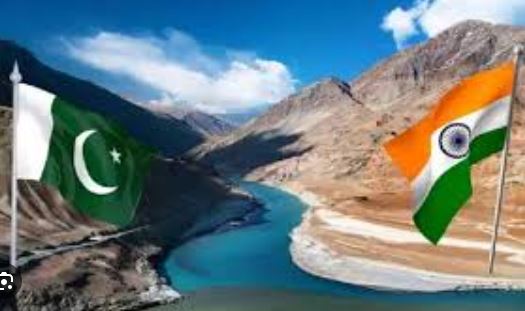
ISLAMABAD, Apr 26 (DNA): Water experts have warned that Pakistan may face future water shortages following India’s “illegal” suspension of the Indus Waters Treaty, (IWT) cautioning that the move could also hit the agricultural sector hard.
Experts noted that India’s decision to suspend the treaty could have long-term implications, even if immediate impacts have so far remained limited.
Former Indus Water Commissioner Syed Jamaat Ali Shah, in an interview with international media, said that if any party withdraws from an agreement, it reflects a lack of seriousness. He observed that over the past year, India’s actions have not caused significant damage to Pakistan so far, but their long-term effects could emerge in the future.
He added that if one party keeps a decades-old agreement suspended or attempts to terminate it, it naturally heightens concerns for the other party. This, he said, is why Pakistan has approached the United Nations Security Council on the matter.
Jamaat Ali Shah emphasized that the treaty is not a concession to Pakistan; rather, under its terms, Pakistan agreed to allocate three rivers to India. He stressed that every agreement carries a certain sanctity and must be upheld, adding that the Indus Waters Treaty is of critical importance for Pakistan.
He further stated that he does not believe India currently has the capacity to completely stop Pakistan’s water, but any such attempt in the future could have serious consequences. He warned that if India violates the treaty by constructing projects that obstruct water flows, it could disrupt the natural flow toward Pakistan. This may result in water shortages when needed and excess water when demand is low.
He added that if India initiates such projects in violation of the treaty today, Pakistan could begin to feel their impact within the next five to ten years. He also alleged that during last winter and the preceding flood period, India attempted to manipulate water releases.
Former Punjab Irrigation Minister and senior water policy expert with UNDP Pakistan’s National Governance Programme, Mohsin Leghari said that strict implementation of the Indus Waters Treaty is essential. Referring to the Chenab River, he claimed that India sometimes fills its dams abruptly, reducing water flow to Pakistan, and later releases water suddenly, causing a surge that can lead to flooding.
Leghari explained that Pakistan’s agricultural system operates under a “warabandi” (rotational water distribution) mechanism, under which farmers receive water according to a fixed schedule. If water is not available at the designated time, farmers miss their turn, negatively affecting crop cultivation.
He further noted that, in the past, officials from both countries remained in contact regarding water flow data under the treaty. However, over the past year, this coordination has ceased, and such data is no longer being shared.
Leghari stressed that timing is crucial for crops, and any delay in water supply can result in losses for farmers. He warned that if Pakistan is not informed about water flows from India, it will disrupt planning, leading to either shortages during critical periods or excessive water that increases the risk of flooding.