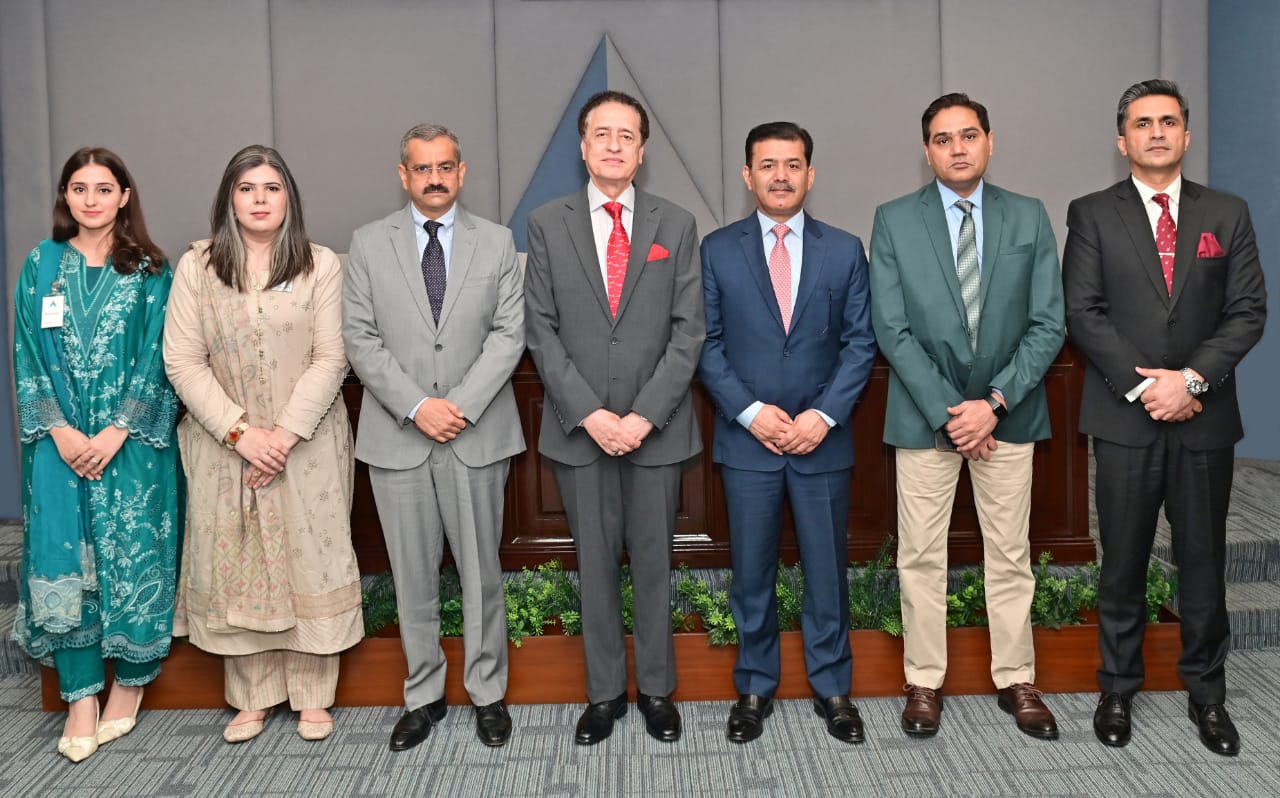
The Centre for Aerospace and Security Studies Lahore organised a seminar titled “Air Power and the Changing Character of Conflicts” on 30 April 2026. The event was attended by academics, intellectuals, senior officers, and domain experts. Ms Nidaa Shahid, Associate Director, CASS Lahore, delivered the opening address.
Mr Amir Rana, President PIPS highlighted the global evolution of non-state drone warfare from early experimentation to the advancements of today. Armed groups across multiple theatres are integrating these systems into sustained campaigns for surveillance, coercion, and kinetic effects. Pakistan is entering this same trajectory, with weaponised quadcopters transitioning from sporadic and unattributed incidents to a geographically dispersed and operationally routine tool by non-state actors. This raises risks for escalation stability, requiring a coordinated response.
AVM Tariq Ghazi, DG Projects, AHQ, emphasises that air power remains the foundational prerequisite for success in modern conventional warfare and freedom to manoeuvre across land and maritime domains. He emphasised that contemporary conflicts have shifted from platform-centric operations to a network-centric, multi-layered and effect-based combat architecture, where manned aircraft, unmanned systems, and precision missiles operate as integrated nodes. Additionally, space, cyber, and the electromagnetic spectrum are becoming decisive factors in this contested environment. AVM Ghazi stressed that success now depends on the effective integration of systems rather than isolated platform superiority, with airpower increasingly shaping the tempo, depth, and outcome of conflict.
Brig Zahir Kazmi (Retd), Advisor Arms Control, SPD analysed how dual-capable missiles, hypersonic systems, and compressed decision timelines affect nuclear signalling and escalation risks in South Asia. Drawing lessons from recent conflicts, he emphasised that victory no longer depends on individual platforms but on a system-of-systems approach. At the strategic level, he warned that the increasing ambiguity surrounding payloads and intent are eroding traditional boundaries between conventional and nuclear signalling, particularly in South Asia. He emphasised that airspace has become the most direct pathway from tactical action to strategic consequence, making clarity in signalling, and robust command and control essential for maintaining stability.
In his concluding remarks, Air Marshal Asim Suleiman (Retd), President, CASS Lahore, emphasised that the character of warfare is changing, with air domain as the primary arena where tactical actions can lead to operational and strategic results. Advances in drones, smart weapons, and live surveillance have shortened the gap between spotting, deciding, and striking, while the integration of multi-domain operations across air, cyber, space, and electronic warfare is now critical. Drawing on recent conflicts, including the May 2025 Pakistan-India war, the President highlighted that numbers and hi-tech systems alone cannot overwhelm a well-orchestrated campaign such as the one undertaken by Pakistan Air Force under the visionary leadership of ACM Zaheer Ahmed Baber Sidhu. The key to success, thus, lies in strong doctrine, multi-domain operations, and credible escalation management.
The seminar concluded with a lively, interactive session highlighting the centrality of airspace as a shared operational domain across different levels of conflict. The participants appreciated CASS Lahore’s initiative in hosting an engaging and thought-provoking discussion.