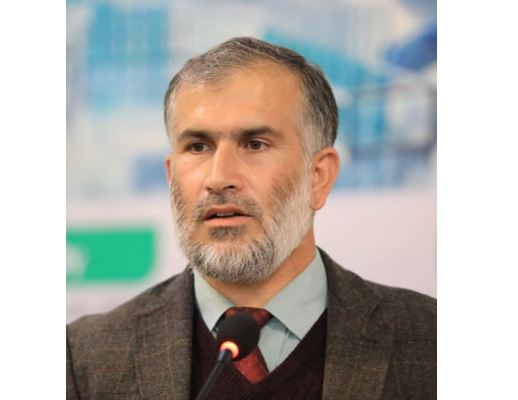
Prof Dr Shujaul Mulk Khan
Every year, the arrival of 1st May brings speeches, rallies, official holidays, and public recognition of workers across the globe. Known as Labor Day or International Workers’ Day, it is meant to celebrate the dignity of work and honor those whose labor sustains societies and economies. Yet beyond the celebrations, an important question remains: Does Labor Day truly change the lives of workers, or has it gradually become a symbolic event that reminds us more of unfinished responsibilities than completed achievements?
Labor Day emerged from struggle rather than ceremony. In the late nineteenth century, industrial workers protested exhausting working hours, unsafe conditions, and extremely low wages. The demand for an eight-hour workday became a global movement that reshaped labor laws and forced governments to recognize workers as central to economic development. The rights many workers enjoy today – weekly holidays, workplace safety regulations, minimum wages, and social protections – are rooted in those historic sacrifices. Labor Day, therefore, represents a victory for human dignity. However, the realities faced by millions of workers today suggest that the struggle is far from over. For many laborers, especially in developing countries, Labor Day offers recognition but little immediate relief.
A daily wage worker who depends on each day’s income may not experience the holiday as celebration but as lost earnings. Ceremonial speeches rarely translate into improved working conditions or stronger social protection systems. The true value of Labor Day lies not in public events but in whether it inspires governments, employers, and societies to renew their commitment to justice and fairness in the workplace.
Despite technological progress and economic globalization, labor exploitation still exists in different forms. Across South Asia, construction workers, factory employees, agricultural laborers, and domestic workers often work long hours with minimal job security. Informal employment remains widespread, leaving workers without contracts, insurance, or legal protection. Economic growth has expanded industries, yet many workers remain trapped in cycles of poverty.
In Africa, miners extracting valuable minerals essential for modern electronics frequently operate in dangerous environments. Their labor supports global technological advancement, yet they often receive low wages and limited safety protection. The situation reflects a global contradiction: the modern world depends on workers whose own living conditions remain fragile. The experience of migrant workers in Gulf countries further illustrates these challenges. Millions leave their homes in South Asia and Africa seeking better livelihoods. While many succeed in improving their families’ economic conditions, others face delayed salaries, recruitment debts, restricted mobility, or crowded living arrangements. Reforms introduced in countries such as Saudi Arabia and other Gulf states have aimed to improve wage protection and labor rights, but implementation gaps still affect workers’ daily realities.
Migration offers opportunity, yet it also exposes workers to vulnerability when oversight is weak. The issue of wages remains at the heart of labor dignity. Around the world, workers struggle not only with low salaries but also with irregular or delayed payments. During the COVID-19 pandemic, the world witnessed migrant laborers walking long distances after losing jobs overnight, revealing how fragile economic systems can be for those living without savings or social security. Even in wealthier economies, gig-economy workers face uncertain incomes and lack long-term protection such as pensions or healthcare benefits. Employment exists, but stability does not always follow.
History shows that meaningful improvement occurs when governments enact strong labor laws and ensure their enforcement. Legal frameworks protecting minimum wages, occupational safety, collective bargaining rights, and social welfare programs have transformed working conditions in many parts of the world. Yet laws alone are insufficient unless supported by transparent governance, effective inspection systems, and accountability. Governments must treat labor protection not as charity but as a cornerstone of sustainable development. There is also significant room for improvement in preparing workers for future challenges.
Automation, artificial intelligence, and climate change are reshaping labor markets. Workers displaced by technological change require access to education, vocational training, and reskilling opportunities. Formalizing informal employment sectors can extend legal protection to millions who currently remain invisible in economic statistics. Expanding digital payment systems, worker registration, and social protection coverage can help ensure that no worker is excluded from national development.
Another overlooked dimension of labor welfare is the impact of wars and conflicts. Throughout history, workers have borne the heaviest burden of instability. Armed conflicts destroy factories, disrupt agriculture, and collapse local economies, leaving workers unemployed and displaced.
Families lose livelihoods overnight, and migration becomes a necessity rather than a choice. Reconstruction after wars again depends on laborers, highlighting the deep connection between peace and economic security. Protecting workers therefore requires not only economic policies but also political stability and international cooperation. The deeper message of Labor Day is profoundly human. Every building constructed, every road paved, every harvest gathered, and every service delivered reflects human effort and perseverance. Workers are not merely economic units; they are individuals supporting families, nurturing communities, and sustaining nations. Economic growth that ignores worker welfare ultimately weakens social stability and moral responsibility.
The take-home message from 1st May is clear: celebrating workers once a year is not enough. True respect for labor must appear in fair wages paid on time, safe workplaces, equal opportunities, and social protection systems that safeguard dignity during hardship. Labor Day should serve as a yearly reflection – a reminder that progress must be measured not only by economic indicators but by the well-being of those who make development possible.
When societies move beyond symbolic celebration toward genuine commitment, Labor Day becomes more than a historical remembrance. It becomes a living promise that work will always be connected with dignity, justice, and hope for a better future.
Prof Dr Shujaul Mulk Khan
Department Plant Science, Quaid-i-Azam University Islamabad – qau.edu.pk/profile.php?id=804024 – [email protected]