Opinion
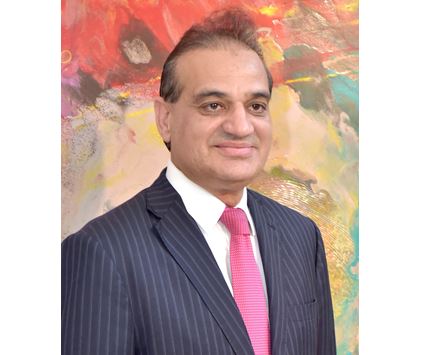
Ansar Mahmood Bhatti
Interestingly, Pakistan has consistently found itself at a critical crossroads, regardless of which government is in power. The country continues to grapple with political uncertainty, economic instability, institutional weaknesses, rising poverty, and growing public frustration. Yet amid all these crises, very few people are addressing the real causes behind Pakistan’s decline. Public debate revolves around roads, motorways, underpasses, transport systems, and infrastructure projects. No doubt such developments are important for a modern state, but nations are not built merely with highways and concrete structures. Nations are built on justice, rule of law, constitutional supremacy, honesty, and equal opportunities for all citizens.
Unfortunately, these foundational principles have long been neglected in Pakistan. The Constitution, which should serve as the guiding document for governance and national direction, is often interpreted according to political convenience. Institutions that should protect justice and accountability remain under pressure, while ordinary citizens continue to suffer without relief. The absence of rule of law has created a dangerous environment where influence and wealth often matter more than merit and fairness.
Pakistan’s economic condition reflects the same structural weaknesses. The country survives largely on loans, aid packages, and financial assistance from friendly nations. Every new IMF agreement is celebrated as a diplomatic or economic victory, when in reality it should be a matter of national concern and introspection. A self-respecting nation cannot continue surviving indefinitely on borrowed money. Loans may temporarily stabilize the economy, but they cannot create sustainable growth without reforms, productivity, and transparent governance.
The comparison with India is uncomfortable but necessary. Pakistan recently demonstrated courage and capability in defending itself against a much larger adversary. Militarily and strategically, Pakistan proved that size alone does not determine strength. However, economic realities present a different picture altogether. India, despite its own challenges, has transformed itself into a global economic force. It no longer seeks bailouts from international financial institutions; rather, it contributes financially to them. This contrast raises an important question: when will Pakistan shift from dependency to self-reliance?
The answer lies not in slogans but in reforms. Pakistan’s foreign exchange reserves are often sustained through deposits and support from friendly countries rather than through strong exports and industrial growth. Exports remain stagnant, industries struggle, and investors hesitate because of inconsistent policies and political uncertainty. Pakistan received the European Union’s GSP Plus trade status, which offered enormous opportunities to expand exports and strengthen the economy. Yet the stakeholders were not able to fully capitalize on this facility. Now even the continuation of this status faces uncertainty, though it may still survive due to geopolitical considerations rather than merit-based performance.
This is another harsh reality Pakistan must understand. Whether it is IMF assistance or international trade concessions, many such decisions are influenced by global politics and strategic interests. They are not always rewards for good governance or economic excellence. Relying on political considerations instead of strengthening internal capacity is a dangerous strategy for the future.
Among all the challenges facing Pakistan, corruption remains perhaps the biggest and most destructive. Yet strangely, corruption is no longer discussed with seriousness or urgency. It has become normalized within society. From small offices to major institutions, the system often rewards connections and money instead of honesty and competence. In Pakistan, it increasingly appears that money can make almost anything possible. This culture destroys merit, discourages hardworking citizens, and weakens national institutions.
As a result, whatever Pakistan earns or receives through loans fails to benefit the common people. Resources are consumed by inefficiency, misuse, corruption, and elite capture. The burden eventually falls on ordinary citizens through inflation, unemployment, higher taxes, and declining public services and these days inflated fuel bills.
The social consequences are alarming. A significant portion of the population now lives below the poverty line. Millions struggle daily to secure food, shelter, and basic necessities. Education, which should be the backbone of national progress, remains inaccessible for many children. Countless young Pakistanis are deprived of quality schooling, limiting their ability to compete in the modern world. Healthcare has become another privilege reserved largely for the wealthy, while the poor are left helpless in overcrowded hospitals with limited facilities.
Those who hold power whether political leaders, policymakers, or influential stakeholders must remember one fundamental truth: power without moral authority has little meaning. Authority imposed without justice, transparency, and public trust cannot provide lasting stability. History repeatedly shows that nations survive not merely through force or political control, but through legitimacy, fairness, and the confidence of their people.
Pakistan still possesses enormous potential. It has talented youth, strategic importance, natural resources, and resilient citizens who continue to endure hardship with remarkable patience. But patience alone cannot guarantee a better future. The country urgently needs institutional reforms, economic discipline, accountability, and a renewed commitment to constitutional governance.
Pakistan cannot continue moving from one crisis to another while ignoring the root causes of its problems. Cosmetic development projects and temporary financial arrangements cannot substitute for structural reform. If corruption continues unchecked, if justice remains weak, if education and healthcare stay neglected, and if economic dependency deepens further, then the future will become increasingly uncertain.
Pakistan must decide what kind of nation it wants to become. A country permanently dependent on loans and political compromises, or a confident and self-reliant state built on merit, justice, and the rule of law. The choices made today will determine whether future generations inherit stability and hope or more crises and disappointment.
If the country continues on its current path without meaningful change, Pakistan risks losing not only economic opportunities but also the trust and aspirations of its own people.
The writer is the newspaper editor.