MEXICO: A record eight Arab nations competed at the 2026 FIFA World Cup, delivering historic victories and memorable individual performances across the United States, Canada and Mexico.
Morocco once again led the way, advancing to the quarter-finals after knockout victories over the Netherlands and Canada, while Egypt reached the Round of 16 and came close to eliminating defending champion Argentina. Algeria also progressed beyond the group stage, while Saudi Arabia, Iraq, Jordan, Qatar and Tunisia each produced players who made an impression despite earlier exits.
For all the latest headlines, follow our Google News channel online or via the app.
After Morocco’s quarter-final exit to France, Al Arabiya English selects its best XI of Arab players who impressed at the World Cup in North America.
GK: Mostafa Shobeir (Egypt)
Seizing his opportunity in the Egypt goal and emerging as one of the Pharaohs’ most dependable performers, Al Ahly goalkeeper Shobeir produced several important saves as Egypt collected five points in the group stage before defeating Australia on penalties in the Round of 32. Saving a spot-kick from the great Lionel Messi provided Shobeir with an instant career highlight in the first half of Egypt’s Round of 16 clash with Argentina, though his side was unable to hold on for a famous win.
DEF: Achraf Hakimi (Morocco)
Morocco’s captain provided leadership, defensive assurance and a regular attacking outlet as the Atlas Lions advanced further than any other Arab nation. Hakimi’s speed and willingness to push forward remained central to Morocco’s approach, while the Paris Saint-Germain star’s experience proved particularly valuable during the knockout victories over the Netherlands and Canada.
DEF: Noussair Mazraoui (Morocco)
Demonstrating a versatility that can see him used anywhere across the backline, Morocco used him in several defensive roles across the tournament. Comfortable both in possession and without the ball, the Manchester United defender brought composure to Morocco, helping the Atlas Lions reach the quarter-finals and compete against some of the tournament’s most dangerous attacking teams.
DEF: Yasser Ibrahim (Egypt)
Combining committed defending with one of Egypt’s most memorable contributions of the tournament, Ibrahim helped the Pharaohs negotiate a difficult group and the Round of 32 before scoring against Argentina. The Al Ahly center-back rose highest to power home Marwan Attia’s corner against Argentina, giving Hossam Hassan’s side a shock lead against the defending champion in the Round of 16.
DEF: Abdulelah Al-Amri (Saudi Arabia)
Al-Nassr defender Al-Amri was one of Saudi Arabia’s most dependable performers at the World Cup. He scored the Green Falcons’ equalizer in the 1-1 draw with Uruguay, capitalizing on a goalkeeping error from a corner, and brought leadership and defensive resilience throughout the group stage despite Saudi Arabia’s early exit.
MID: Azzedine Ounahi (Morocco)
Ounahi produced one of the tournament’s defining performances by an Arab player in Morocco’s Round of 16 victory over Canada. Moved into a more advanced role by coach Mohamed Ouahbi, he opened the scoring by finishing a cleverly worked free-kick routine before adding a second late on to complete his brace and send the Atlas Lions into the quarter-finals.
MID: Ismael Saibari (Morocco)
Few Arab players made a bigger impact during the group stage than Ismael Saibari. The PSV midfielder scored in all three matches, striking against Brazil and Haiti as well as netting after just 71 seconds against Scotland – the fastest World Cup goal in Morocco’s history. Saibari repeatedly unsettled opponents with his powerful ball carrying and perfectly timed runs into the penalty area before injury curtailed his outstanding tournament.
MID: Brahim Diaz (Morocco)
Completing a trio of Moroccan midfield maestros is Diaz, who supplied much of Morocco’s invention in the final third, drifting between midfield and attack to find pockets of space and link play around the penalty area. The Real Madrid playmaker’s close control, quick combinations and willingness to take responsibility on the ball helped the Atlas Lions break down opponents throughout an impressive run to the quarter-finals.
FWD: Riyad Mahrez (Algeria)
At 35, Al Ahli ace Mahrez delivered the sort of memorable World Cup performance his distinguished international career had previously been missing. Algeria’s captain scored twice in the dramatic 3-3 draw with Austria that carried the Desert Foxes into the Round of 32. Mahrez rolled back the years to produce a vintage display of finishing when his team needed him most.
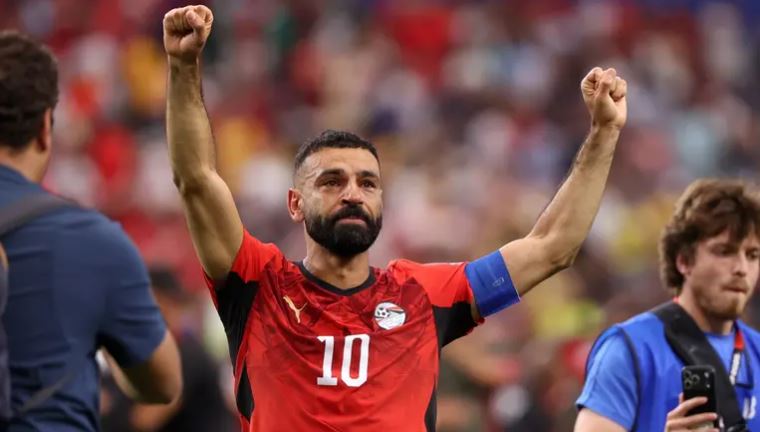
FWD: Mohamed Salah (Egypt)
Arguably the greatest Arab footballer of all time, Salah delivered the sort of World Cup campaign his remarkable career deserved. Egypt’s captain was – as always – central to the Pharaohs’ attacking play, scoring against New Zealand to help his country claim its first ever World Cup victory. He then led Egypt into the Round of 16 for the first time, too, where the Pharaohs came agonizingly close to eliminating Argentina.
FWD: Mousa Al-Tamari (Jordan)
Jordan’s talisman produced an influential World Cup campaign, scoring his country’s goal against defending champion Argentina to become the first player to breach La Albiceleste’s defense at the tournament. The Rennes winger also set up Nizar Al-Rashdan’s goal against Algeria and was his team’s principal attacking threat throughout its historic World Cup debut – using his pace, direct running and creativity to trouble some of the world’s strongest defenses.
Honorable mentions
Ibrahim Maza announced himself on the World Cup stage with a series of mature performances for Algeria, showcasing the technical quality that has seen him evolve into one of the country’s brightest young talents. Saudi Arabia captain Salem Al-Dawsari once again proved the heartbeat of the Green Falcons’ attack, while Iraq skipper Aymen Hussein also deserves recognition after leading the line superbly and scoring against Norway – the Lions of Mesopotamia’s first World Cup goal in 40 years.