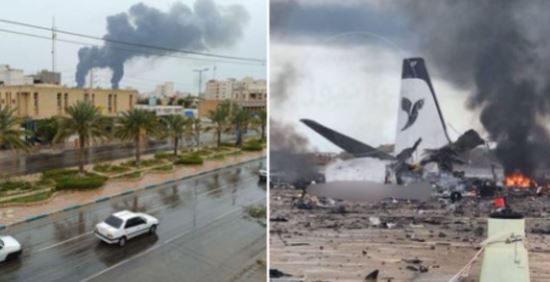
ISLAMABAD, 28 JULY (DNA) — Iran’s government has confirmed that Bushehr Airport remains “out of order” following the latest round of US strikes, underscoring the growing impact of the conflict on the country’s infrastructure. A government spokesperson revealed that Iran has lost nearly 230 million cubic metres of gas production capacity due to the war, a setback that is expected to further strain its economy and energy sector.
The spokesperson stressed that the damage to Bushehr Airport highlights the vulnerability of civilian infrastructure in times of escalating hostilities. The loss of gas production capacity, she added, is not only a blow to Iran’s domestic energy supply but also to its export potential, which has long been a critical source of revenue for the country. Meanwhile, diplomatic sources disclosed that Oman has presented a proposal to Iran for a regional mechanism to manage the Strait of Hormuz, one of the world’s most vital waterways for global oil and gas shipments.
Under the proposal, which reportedly enjoys regional backing, Iran would no longer exercise sole control over the strait. Instead, a cooperative framework involving multiple regional stakeholders would be established to ensure stability, security, and uninterrupted maritime traffic.
The Strait of Hormuz has long been a flashpoint in regional tensions, with Iran asserting its strategic dominance over the passage. Oman’s initiative, if accepted, could mark a significant shift in regional security arrangements, reducing the risk of unilateral actions and potential confrontations. The dual developments — Iran’s infrastructure losses and Oman’s diplomatic overture — highlight the complex interplay of war, energy security, and geopolitics in the Middle East.
For Iran, the strikes have not only weakened its energy sector but also raised questions about its ability to sustain prolonged conflict. For regional states, the Hormuz proposal reflects a growing desire to prevent instability from spiraling into a broader crisis that could disrupt global energy supplies. Observers note that Iran’s response to Oman’s proposal will be closely watched, as it could signal whether Tehran is willing to compromise on its long-held position of dominance over the strait. — DNA