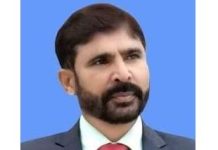
by Muhammad Mohsin Iqbal
Pakistan was achieved on the fourteenth of August in the year nineteen hundred and forty-seven, after sacrifices of a magnitude that still stir the soul and a struggle whose tirelessness remains an enduring lesson. Millions crossed borders in those turbulent months, leaving behind ancestral homes, familial graves, and the familiar soil of generations, so that a new homeland might rise where Muslims could live according to their faith and their free will. We stand now upon the threshold of the eighth decade of that hard-won independence. I, a Pakistani by birth and by conviction, have myself lived nearly fifty-eight years within the borders of this free land.
This country conferred upon me an identity that no foreign power could erase, furnished me with the means of an independent existence—schools in which to learn, roads upon which to travel, markets in which to earn my bread—bestowed a measure of respect in the eyes of the world, and, in some degree, granted me a name among my fellows. Yet the question returns, quietly and persistently, like a debt long deferred; what have I given in return? Have I ever paused long enough, in the press of daily concerns, to weigh that debt with honesty?
The same inquiry must be put, with equal seriousness and without partiality, to the institutions that were meant to serve as the pillars of the state, and to the rulers and authorities who have held power through these eighty years. What account can they render of their stewardship? Parliament was intended as the voice of the people; the courts as the guardians of justice; the civil service as the steady hand of administration; the universities as the nurseries of thought and character. Have these bodies discharged their duties with fidelity, or have they at times become arenas of personal ambition, partisan calculation, and the slow corrosion of public trust?
The rulers who succeeded one another, whether civilian or military, received the same inheritance of soil, of people, and of hope. What have they added to the national store of justice, of prosperity, of self-respect, and of unity? The record is mixed, and the gaps are painful to contemplate. Have we, as a people, ever undertaken a true reckoning of our collective performance—not the ritual of speeches on national days, but a sober examination of conscience? And if such an accounting was made, did it lead to any genuine reformation of our ways, or did we merely resume the old habits once the anniversary had passed?
Where, in truth, does Pakistan stand as a state at this present hour? We possess a land rich in rivers and fertile plains, a people endowed with resilience and talent, a strategic position that nature itself seems to have marked for consequence. Yet we continue to wrestle with the burdens of poverty that still touch too many homes, with the lingering shadows of disorder in parts of the country, with the uneasy balance between institutions that ought to complement one another, and with the persistent temptation to place private gain above the common good. Have we preserved, or have we frittered away, the sacred trust that our ancestors placed in our hands when they bequeathed us this country? That trust was not lightly given. It demanded vigilance against tyranny, honesty in public dealing, a willingness to educate the young in both knowledge and character, and a readiness to place the welfare of the whole above the advantage of the few. Looking back across the decades, one is compelled to ask whether that demand has been met in full measure.
I do not exempt myself from this examination. For nearly six decades I have drawn from the well of national life—the protection of law, the opportunity to work and to speak, the simple privilege of calling myself a citizen of a free land. Have my contributions matched the gifts received? Have I laboured, in whatever sphere was allotted me, to strengthen rather than weaken the fabric of the republic? Have I spoken truth when silence was easier, practised fairness when partiality promised profit, and taught the rising generation that freedom is not a birthright to be consumed but a responsibility to be renewed? Honesty requires that each of us answer such questions in the solitude of his own heart, without the convenient shield of collective excuses or the comfortable habit of blaming those who came before.
Enough, then, of evasion. The hour has come for every citizen, high or low, including the writer of these lines, to conduct a personal audit. Let each examine what he has taken and what he has returned. Let the institutions examine their fidelity to the purposes for which they were created. Let those who hold authority examine whether their decisions have served the enduring interests of the state or the fleeting interests of the moment. Only through such unsparing self-examination, followed by the hard work of reform, can the trust of the founders be renewed and the promise of Pakistan still be fulfilled for those who will inherit what we leave behind.