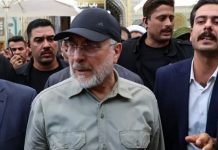
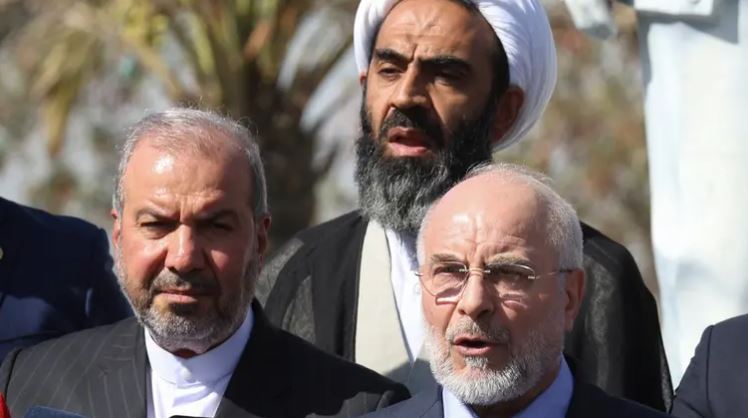
TEHRAN, AUG 19: Iranian Parliament Speaker Mohammad Bagher Ghalibaf arrived in the Iraqi capital Baghdad on Wednesday for a three-day visit, saying Tehran would take practical steps to strengthen relations with Iraq.
Ghalibaf described Iraq as an important country in the region.
Speaking to reporters after laying a wreath at a memorial for Abu Mahdi al-Muhandis and Qassem Soleimani near Baghdad International Airport, Ghalibaf said his visit comes amid the current regional situation and the need to accelerate bilateral cooperation without foreign interference.
“We will meet with senior government officials,” he added.
Ghalibaf also said Iran was ready to deepen cooperation with countries across the region.
Ahead of his arrival, Ghalibaf said in a post on X that Iraq and Iran would take “practical and significant steps” during the visit toward strengthening the security of both countries and their shared security.
He also stressed what he described as the deep historical ties between the Iranian and Iraqi peoples.
“The relationship between the Iranian and Iraqi peoples is a historic and inseparable one,” Ghalibaf said.
“Our neighborly relationship was built on brotherhood during the most difficult times, resistance to foreign interference and a belief in the shared destiny of both countries. The lessons of this history will serve as a guide for the future,” he added.
Secret mediation and drone attacks
Ghalibaf’s visit comes after the Kurdistan Region’s Counter-Terrorism Service said two explosive-laden Hadid-110 drones were launched early Monday from the direction of the Iranian border toward the private office of the Kurdistan Regional Government prime minister and the residence of the head of the Protection Agency in the Pirmam district of Erbil province.
No casualties were reported.
The visit also comes after several informed sources said Kurdistan Region President Nechirvan Barzani had led secret mediation efforts between the US administration and Iran’s Revolutionary Guard Corps (IRGC).
It also coincides with efforts by Iraqi authorities to bring all weapons under state control, including those held by Iran-aligned armed groups.
Since the war involving the US and Israel on one side and Iran on the other erupted in late February, Iraq’s Kurdistan Region has been struck more than 1,000 times, according to local authorities.
The attacks have included strikes claimed by Iraqi armed factions against US interests, as well as Iranian strikes targeting positions belonging to armed Iranian Kurdish opposition groups that have been based in northern Iraq for years.