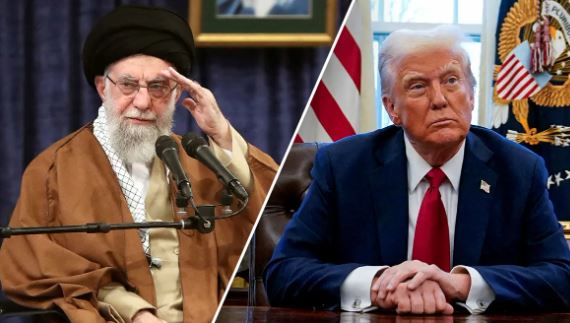
DUBAI, 30 AUG (DNA) — After six months of war, Iran’s leadership has coalesced around a hard core of military generals and clerics long entrenched in the ruling theocracy. They are ready for a potentially long confrontation with the US and determined to prevent any unrest at home. It’s a far cry from US President Donald Trump’s initial hopes of toppling the Islamic Republic and his subsequent claims that “regime change” had brought more compromising officials to the fore.
Iran’s new leaders evince little faith in any agreement with Trump — after coming under attack twice while holding talks — and they may be bracing for another assault once the US replenishes its supplies of interceptors. They have also threatened to escalate the war as a continuing American blockade and Trump’s plans for new sanctions threaten to suffocate Iran’s already worsening economy.
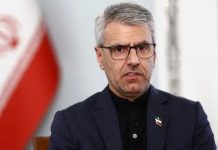
“If (Trump) wants to do something, we will retaliate in a seismic manner,” the new secretary of Iran’s Supreme National Security Council, Mohsen Rezaei, said last weekend. In a post on X, he said that “if the economic war continues, not a single drop of oil will be exported” from the Arabian Gulf.
Iran is determined to smother any internal unrest Rezaei’s appointment came in a recent set of decrees by the supreme leader, Ayatollah Mojtaba Khamenei, that formally set Iran’s new senior leadership, including top military posts. Khamenei’s father and much of the highest echelons were killed in the bombing campaign launched by the US and Israel on Feb. 28.
Perhaps most telling was the newly named head of the Basij, the Revolutionary Guard’s volunteer street force, which played a major role in crushing January’s nationwide protests, when thousands were killed. That post went to Hossein Taeb, a hard-line cleric and longtime intelligence chief who led one of the first major crackdowns on protests, in 2009.
His appointment is seen as a sign that the leadership is intent on preventing any new unrest as discontent over the economy spreads. The 56-year-old Khamenei has not been seen in public, or even appeared in video or audio, since Israeli strikes killed his father, Ayatollah Ali Khamenei, who had been Iran’s supreme leader for some 37 years. The younger Khamenei is believed to have been wounded in the strikes.
His public absence could reflect the depth of security surrounding him, since he is likely in Israel’s sights, or the extent of his wounds. The supreme leader surrounds himself with hard-line allies With the appointments announced Aug. 11 and 12, he has surrounded himself with longtime personal allies, like Rezaei and Taeb.
They are “a clique of older senior officers who’ve served together over the last decades,” said Sascha Bruchmann, an analyst with the International Institute for Strategic Studies’ Middle East office in Bahrain. Rezaei, 71, led the paramilitary Revolutionary Guard during its formative years, through the entire 1980-1988 war with Iraq and until 1997. He has run for president as a hard-line candidate multiple times since 2009. — DNA