DNA
Deputy Prime Minister and Foreign Minister Senator Ishaq Dar has stressed the need for concrete and verifiable action to prevent Afghan soil from being used for terrorism against neighbouring countries, particularly Pakistan.
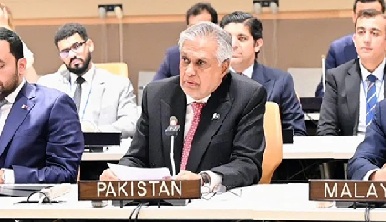
He was addressing the meeting of the Organisation of Islamic Cooperation (OIC) Contact Group on Afghanistan on Tuesday on the sidelines of the 81st session of the United Nations General Assembly (UNGA).
DPM Dar expressed serious concern over the presence of terrorist groups inside Afghanistan and recalled the sacrifices rendered by Pakistan in combating terrorism.
He highlighted the recent terrorist attack in Khyber Pakhtunkhwa’s Kohat, which claimed innocent lives and left scores of others injured, terming it a stark reminder of the grave threat posed by terrorism emanating from the region.
He said such attacks underscored the urgent need for concrete action against terrorist groups and their sanctuaries.
The deputy prime minister urged the Afghan Taliban to honour Afghanistan’s international obligations and commitments, end patronage of terrorist groups, and lift restrictions on women and girls that are contrary to Islamic principles and the norms of Muslim society.
He also called upon the Afghan authorities to promote politically inclusive governance and facilitate the resettlement and integration of Afghan returnees.
DPM Dar further called for adequate international funding to meet Afghanistan’s humanitarian requirements and support its socio-economic development.
Reiterating Pakistan’s consistent policy, he affirmed the country’s support for a stable and prosperous Afghanistan that is at peace with itself and its neighbours.
Dar is in New York as part of Prime Minister Shehbaz Sharif’s delegation for the 81st session of the United Nations General Assembly.
The prime minister arrived in the US city late Monday and is scheduled to address the General Assembly on September 25, accompanied by Dar, federal ministers and senior government officials.
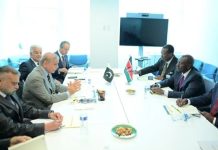
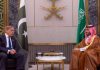
The Pakistani delegation has also held a series of meetings on the sidelines of the UNGA, covering bilateral ties, regional security and other diplomatic matters.
Dar also addressed the OIC Contact Group on Jammu and Kashmir, thanking the group and the organisation’s Independent Permanent Human Rights Commission for their continued support for the Kashmiri people.
He said Kashmiris have been waiting for nearly eight decades to exercise their right to self-determination under the UN framework.
The DPM accused India of seeking to alter the demographic composition of Indian Illegally Occupied Jammu and Kashmir (IIOJC) through measures introduced after August 5, 2019.
He said Kashmiri leaders and young people were being targeted under stringent laws, while India was using various tactics to change the region’s demographic composition.
Dar further alleged that India was attempting to undermine the Muslim cultural and religious identity of IIOJK and that the voices of journalists were being suppressed.
He said international observers were also being denied access to the occupied valley.
DPM Dar also criticised India’s unilateral attempt to hold the Indus Waters Treaty (IWT) in abeyance, saying it had introduced another dangerous dimension to the situation.
He said the treaty was a binding international agreement and contained no provision permitting its unilateral suspension.
He noted that the Court of Arbitration had reaffirmed that unilateral action by one party could not deprive it of its competence and had underscored the continuing force of the treaty’s obligations, including those governing the Western Rivers.
He said international obligations could not be set aside when they became inconvenient, adding that India could not invoke domestic law to negate United Nations Security Council resolutions on Jammu and Kashmir or use unilateral measures to evade its binding obligations under the Indus Waters Treaty.
“Treaties and international commitments must be respected in good faith,” he said.
Referring to the Pakistan-India conflict in May 2025, the DPM said it served as a reminder that leaving the Kashmir dispute unresolved could have dangerous consequences.
He also said India levelled baseless allegations against Pakistan last year without conducting an investigation, while Pakistan had responded in a responsible and measured manner in self-defence.