by Muhammad Mohsin Iqbal
In Pakistan’s turbulent political landscape, Parliament remains the one institution where disagreement can be converted into dialogue and confrontation into compromise. It is the forum where competing political visions meet, debate and seek common ground. In such circumstances, the Speaker’s office assumes importance beyond routine parliamentary proceedings. The Speaker must protect the dignity of the House, ensure space for treasury and opposition benches and preserve channels for dialogue when tensions rise.
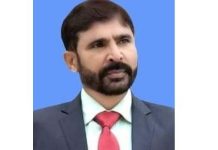
Sardar Ayaz Sadiq has once again assumed this demanding institutional responsibility. On October 2, 2026, representatives of the government, Pakistan Peoples Party and opposition held their first formal round of talks at Parliament House under his chairmanship. The participants presented their respective positions and agreed to continue discussions the following day. The National Assembly Secretariat described the meeting as constructive and cordial, stressing the importance of addressing national issues through dialogue.
The importance of the initiative lies also in the fact that rival political forces have again sat across the parliamentary table. At a time of hardened differences and confrontation, restoring communication is itself an institutional achievement. The second round began on October 3 under Sardar Ayaz Sadiq’s chairmanship, with the political sides continuing to exchange views.
Sardar Ayaz Sadiq’s political career has been closely associated with the Pakistan Muslim League-Nawaz, yet his responsibilities as Speaker have repeatedly required him to rise above partisan boundaries. National Assembly records show that he has served as Speaker during three periods: 2013-15, 2015-18 and, since March 2024, the present term. His parliamentary experience, procedural familiarity and measured demeanour have helped him command respect across the political divide.
His earlier tenure exposed him to intense political pressures. During the PTI resignation episode, questions concerning the status and procedure of members’ resignations came before the Speaker. Such episodes show that the Speaker’s responsibilities demand constitutional understanding, political sensitivity, procedural discipline and restraint.
Political parties may disagree profoundly over policies, personalities, institutions and the direction of governance, yet parliamentary democracy cannot function indefinitely on the assumption that every dispute must culminate in confrontation. The constitutional framework presupposes that differences will be managed through institutions, debate, consultation and engagement.
Speaker Ayaz Sadiq has repeatedly emphasised Parliament as the appropriate forum for resolving political questions. A Speaker can facilitate dialogue without becoming partisan in the substance of negotiations. The present talks illustrate this distinction. Neither side initially abandoned its stance, yet both agreed to continue talking. Mediation often begins here; not with settlement, but by keeping communication open.
Effective mediation requires patience, listening and understanding competing concerns while creating confidence for adversaries to remain at the table. Ayaz Sadiq’s long parliamentary experience gives him familiarity with the temperaments, procedures and sensitivities of Pakistan’s political class. His office provides a setting where leaders can articulate grievances, defend positions and explore accommodation without surrendering political identities.
The broader stakes are considerable. Pakistan faces economic pressures, security concerns, social divisions and a complicated regional environment. These challenges cannot be addressed if political energy remains consumed by confrontation. Economic policy requires continuity, foreign policy benefits from national coherence, security demands institutional cooperation, and democratic institutions depend upon public confidence. They do not require agreement on everything; they require recognition that national interest is greater than individual disputes or partisan advantage.
Against this background, the idea of a Parliamentary Reconciliation Committee, comprising representatives of major political parties and guided by the Speaker, deserves serious consideration. Such a mechanism could provide a forum for political grievances, economic questions and national matters away from daily rhetoric. Its purpose should not be to eliminate differences, but to ensure they are managed through dialogue.
Parliament is strongest not when every member speaks with one voice, but when different voices can be heard without damaging the institution that accommodates them. Sardar Ayaz Sadiq’s current effort to bring government and opposition representatives together is therefore larger than the immediate negotiations taking place under his chairmanship. It represents an attempt to reaffirm Parliament’s role as a place where political competition can coexist with institutional responsibility.
The two-day reconciliation initiative did not produce the breakthrough many had hoped for. Yet it achieved something important: it helped break the deadlock and brought government and opposition representatives to the same table. In an atmosphere marked by mistrust, creating room for dialogue is itself a significant parliamentary accomplishment. The Speaker has demonstrated resolve, political maturity and commitment to keeping communication open. It is now hoped that he will carry this process forward with patience and consistency.
Reconciliation will depend upon the willingness of all sides to listen, compromise and distinguish political contest from national interest. The Speaker cannot impose agreement; he can protect the environment in which agreement becomes possible.
Dialogue can restore trust, ease tensions and reduce political paralysis. Every durable settlement begins with conversation, and every meaningful conversation requires a place where adversaries can meet. By bringing opposing political forces back to the same table, the Speaker has reaffirmed an enduring principle of parliamentary democracy; differences may be deep, positions may remain firm, but the door to dialogue must never be closed. Parliament must remain the bridge, and the Speaker its custodian.