
Diplomatic News Agency/DNA
In the modern era, efficient public service delivery is a key indicator of good governance. Countries worldwide are adopting innovative administrative models to improve transparency, accessibility, and citizen satisfaction. Azerbaijan has emerged as a successful example through its ASAN Service and DOST Agency initiatives, which have transformed the relationship between citizens and government institutions. For Pakistan, a country striving to modernize public administration and enhance service delivery, the Azerbaijani experience offers valuable lessons and opportunities.
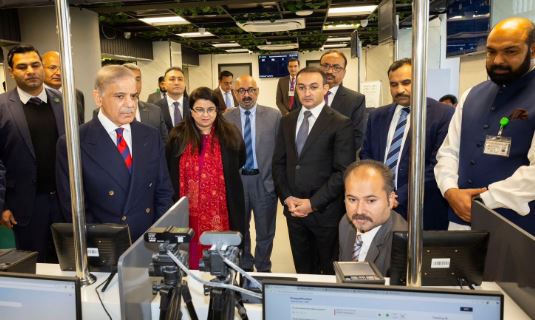
The ASAN Service, established in Azerbaijan in 2012, is a one-stop public service model designed to provide citizens with convenient access to a wide range of government services under a single roof. The term “ASAN” means “easy” in Azerbaijani, reflecting its objective of simplifying bureaucratic procedures. Citizens can access services related to identity documents, civil registration, property affairs, legal matters, taxation, immigration, and many other functions through integrated service centers. The system emphasizes transparency, efficiency, digitalization, and customer satisfaction.
One of the key strengths of ASAN Service is its citizen-centric approach. Traditional bureaucratic processes often involve multiple offices, lengthy procedures, and opportunities for corruption. ASAN minimizes these challenges by centralizing services, using digital technologies, and ensuring standardized procedures. As a result, it has significantly improved public trust in government institutions while reducing administrative burdens and costs.
In addition to ASAN, Azerbaijan introduced the DOST Agency in 2018 to enhance social welfare service delivery. DOST, which focuses on employment, social protection, labor relations, disability services, and welfare assistance, operates through integrated service centers similar to ASAN. The initiative aims to provide social services in a transparent, accessible, and efficient manner. By combining multiple services under a single system, DOST has improved the quality and accessibility of social support programs for vulnerable populations.
Pakistan faces several governance challenges, including bureaucratic inefficiencies, fragmented service delivery, limited digital integration, and public dissatisfaction with administrative procedures. Although the country has implemented significant reforms, such as digital governance projects, citizen facilitation centers, and e-government initiatives, many public services remain scattered across different departments. Citizens often encounter delays, lack of coordination, and procedural complexities when accessing essential services.
The adoption of elements from the ASAN and DOST models could greatly benefit Pakistan. First, establishing integrated one-stop service centers would simplify citizens’ interactions with government agencies. These centers could provide services such as national identity registration, passport applications, taxation support, land records, business registration, and utility services. By reducing the need to visit multiple offices, citizens would save time and resources while enjoying greater convenience.
Second, Pakistan can further strengthen digital governance by adopting the technological framework that supports ASAN. Online applications, digital document management, electronic payments, and service tracking systems can enhance transparency and reduce opportunities for corruption. Integrating federal, provincial, and local government databases would improve coordination and service efficiency.
Third, the DOST model presents a valuable opportunity for Pakistan’s social welfare sector. A unified social service platform could combine services related to employment, social protection, health assistance, disability support, and poverty alleviation programs. Such integration would improve accessibility for citizens while enabling more effective targeting of government assistance programs.
However, successful implementation would require addressing certain challenges. Pakistan’s larger population, administrative complexity, and resource constraints necessitate careful planning and gradual adaptation of the Azerbaijani model. Investment in digital infrastructure, staff training, legal reforms, and institutional coordination would be essential. Public awareness campaigns would also play a crucial role in encouraging the use of integrated service platforms.
Furthermore, cooperation between Azerbaijan and Pakistan can facilitate knowledge exchange and capacity building. Both countries enjoy strong diplomatic relations, providing a favorable environment for sharing best practices in governance and public administration. Study visits, technical assistance programs, and institutional partnerships could support Pakistan’s reform efforts.
In conclusion, Azerbaijan’s ASAN and DOST initiatives offer a successful model of citizen-focused governance and efficient public service delivery. Their emphasis on integration, transparency, and digitalization aligns closely with Pakistan’s development objectives. By adapting these experiences to local needs and conditions, Pakistan can improve public sector performance, strengthen citizen trust, and accelerate progress toward modern and responsive governance. The Azerbaijani example demonstrates that innovation in public administration can significantly enhance the quality of services and contribute to sustainable national development.