DNA
EHRAN: An Iranian official on Monday said that senior officials from Pakistan, Saudi Arabia and Turkiye will visit Tehran for talks over regional security, without specifying when the meeting would take place.
Saudi Defence Minister Khalid bin Salman and Turkish intelligence chief Ibrahim Kalin will participate in this meeting, said Ali Bagheri Kani, deputy secretary of Iran’s Supreme National Security Council.
He said the meeting will be held with Iran’s security chief Mohsen Rezaei.
“This four-party meeting in Tehran could represent an important and effective step towards building lasting regional security, and we hope this initiative will contribute to establishing a stable region,” said Kani in an interview with state television, without elaborating.
Meanwhile, MEDIA citing two people with knowledge of the matter, said senior officials from Islamabad, Riyadh and Ankara will meet Iranian officials in Tehran today (Monday) to discuss regional coordination.
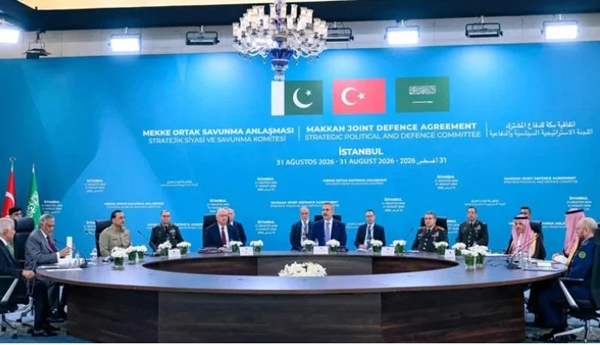
Pakistan, Saudi Arabia and Turkiye have a trilateral defence agreement, stipulating an armed attack on one member as an attack on all three nations.
The planned visit to Tehran by senior officials from the Makkah Alliance for Defense would be an important step at a critical moment. It highlights the value of collective diplomacy in sparing the region further conflict and opening practical paths to peace and stability.
The visit also shows close Saudi-Pakistani-Turkish coordination across several areas, and their ability to act together within a shared defense framework. The participation of Saudi Defense Minister Prince Khalid bin Salman sends a clear message from Riyadh.
Riyadh seeks to ease tensions, safeguard national and regional security, and support mediation. Iran’s leadership should seize this opportunity, engage constructively with Riyadh, Islamabad and Ankara, and advance a peaceful solution rather than obstruct it.
Signed in August, the agreement came amid a regional conflict that erupted in February when the United States and Israel launched surprise strikes on Iran during ongoing nuclear negotiations between Washington and Tehran.
An April ceasefire — brokered by Pakistan — brought an end to the initial phase of intense bombardment but the two sides have continued to vie for control over the Strait of Hormuz, through which around a fifth of the world’s oil and liquefied natural gas used to travel.
Iran has since claimed control over the strait and has regularly targeted vessels that attempt to cross without its authorisation, while the United States has imposed a naval counter-blockade on Iranian ports.
Diplomatic efforts with the US remain stalled, especially since the collapse of a June deal which laid out a pathway to a permanent settlement of the conflict.
The war has since spread across the region to include fighting between Saudi Arabia and Houthis in Yemen.