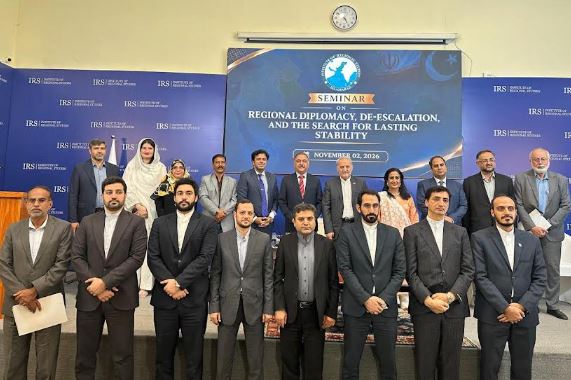
ISLAMABAD, NOV 3 /DNA/ – Islamabad: The Institute of Regional Studies (IRS), Islamabad, held a seminar titled “Regional Diplomacy, De-escalation, and the Search for Lasting Stability.” Senior diplomats, strategic affairs experts, and foreign policy analysts discussed evolving geopolitical developments, regional security challenges, and opportunities for diplomatic engagement. The seminar emphasized the importance of de-escalation, strategic restraint, and regional cooperation in preventing conflict and promoting sustainable stability.
The seminar highlighted the evolving regional geopolitical landscape, focusing on strategic competition, shifting political alignments, and ongoing security concerns. Participants stressed that lasting stability depends on sustained diplomatic engagement, effective crisis management, and a regional approach to shared security challenges.
Ambassador Jauhar Saleem, President of IRS, emphasized the importance of regional diplomacy in a complex geopolitical environment. He noted the impact of regional developments on political stability and security, and called for sustained dialogue, diplomatic restraint, and constructive engagement to manage differences and prevent escalation.
Dr. Bilal Zubair, Director of Research at the Center for International Strategic Studies (CISS), Islamabad, discussed the strategic implications of regional competition and shifting power dynamics. He explained how competing geopolitical interests and security perceptions influence regional interactions, and stressed the need for strategic understanding and informed policy responses to address emerging challenges.
Mr. Syed Baqir Sajjad, Foreign Policy Journalist and Analyst at Dawn News, addressed the impact of foreign policy narratives and strategic communication on regional diplomacy. He emphasized how political perceptions, competing narratives, and information flows shape diplomatic relations and influence the regional environment.
Major General (Retd) Zahid Mahmood, Principal of the NUST Institute of Peace and Conflict Studies, discussed the security aspects of regional tensions, including deterrence, security dilemmas, and crisis management. He emphasized the need for strategic restraint, effective communication, and confidence-building measures to prevent miscalculations and control escalation.
Ambassador Naela Chohan, former Ambassador of Pakistan to the Middle East, highlighted the role of diplomacy in conflict resolution and regional engagement. She emphasized the need for sustained diplomatic outreach, mutual understanding, and political commitment to bridge differences and foster lasting peace.
As Chief Guest, H.E. Dr. Reza Amiri Moghadam, Ambassador of the Islamic Republic of Iran to Pakistan, highlighted the significance of regional diplomacy and cooperative security in addressing current geopolitical challenges. He emphasized the importance of dialogue, mutual respect, and regional cooperation in managing tensions and promoting stability. His remarks provided a valuable diplomatic perspective, especially regarding the role of regional engagement in advancing peace and stability.
The seminar emphasized the need to move beyond crisis management toward sustained diplomatic engagement, strategic restraint, and cooperative regional security. IRS reaffirmed its commitment to supporting informed policy dialogue and promoting constructive solutions to regional and international challenges.