
DNA
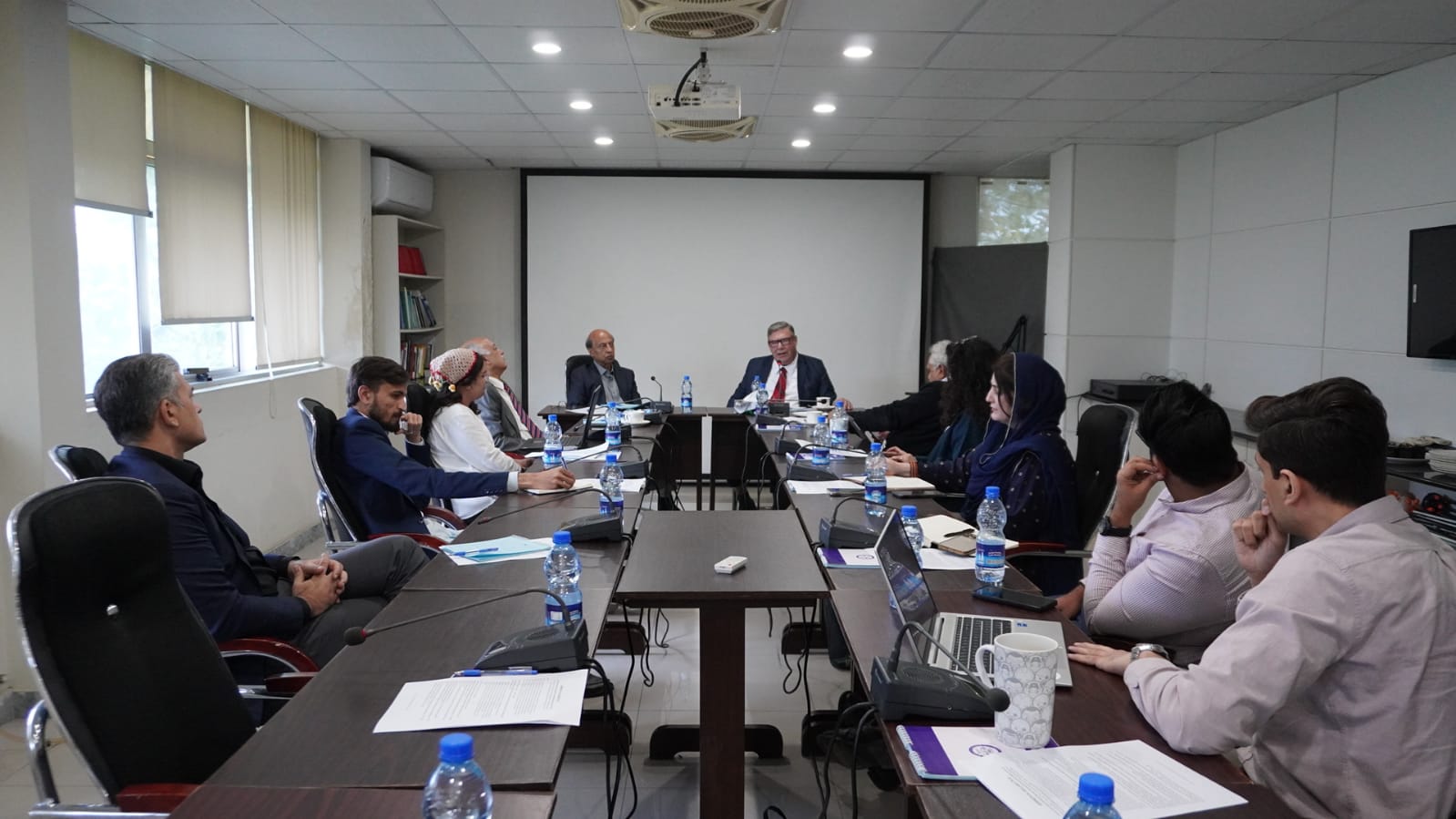
Islamabad: The United States is undergoing a significant political realignment that could
reshape its domestic and foreign policy priorities, although strategic competition with China will
remain a bipartisan concern, observed American scholar Dr Kenneth Holland during an
interactive discussion hosted by the Center for Research and Security Studies (CRSS) in
Islamabad.
The session brought together experts from defence, security, academia and policy circles to
examine evolving US foreign policy and its implications for Pakistan.
Dr Holland described recent electoral developments as a political earthquake, attributing
Republican setbacks largely to economic pressures, including rising consumer prices, inflation
and interest rates. He argued that President Donald Trump's protectionist policies, particularly
tariffs, had increased costs for American consumers, undermining the economic expectations
that helped secure his electoral victory.
Tracing America's political evolution, Dr Holland drew parallels between Franklin D. Roosevelt's
reshaping of the Democratic Party through the New Deal in the 1930s and Donald Trump's
transformation of the Republican Party since 2016. He argued that Trump's embrace of
economic nationalism, protectionism and an increasingly centralised exercise of executive
authority marked a significant departure from the free-market principles, limited-government
philosophy and internationalist outlook associated with the Republican Party under Ronald
Reagan
On China, Dr Holland stressed that containing Beijing's growing influence remains one of the
few areas of bipartisan consensus in Washington. He anticipated no softening under a
Democratic-controlled Congress, suggesting instead that Democrats might advocate redirecting
American military resources from Middle Eastern conflicts towards the Indo-Pacific.
Discussing Pakistan–US relations, he noted that Washington's strategic partnership with India
had traditionally been influenced by its concerns over China's rise. However, recent strains in
US–India relations had created opportunities for Pakistan, although he cautioned against
building bilateral ties around fluctuations in Washington's relationship with New Delhi.
He identified critical minerals, surgical instruments, information technology and artificial
intelligence-related services as promising avenues for economic cooperation. Pakistan's mineral
resources could help diversify American supply chains, while its skilled IT workforce offered
opportunities to serve American small and medium-sized enterprises.
He emphasised that Pakistan would largely remain responsible for ensuring the infrastructure
and security necessary to attract American investment in its mining sector.
He advocated strengthening trade, investment and educational exchanges to establish a more
durable bilateral relationship beyond its historically security-centric foundations.
The ensuing discussion explored the US–China relationship, India’s regional role, American
relations with Israel, executive war powers, regional strategic stability and prospects for
Pakistan–US cooperation. The dialogue formed part of CRSS's continued engagement with
international scholars and policy experts on evolving geopolitical developments.