
DNA
Pakistan has rejected India’s unilateral move to place the Indus Waters Treaty (IWT) in abeyance, warning that using shared water resources as a tool of political pressure could threaten regional peace and put millions of lives and livelihoods at risk.
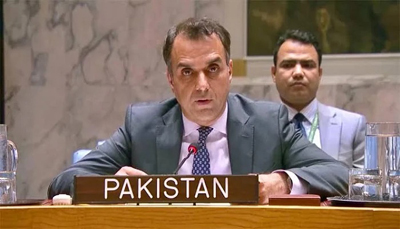
Speaking at a UN Security Council meeting in New York, Pakistan’s Deputy Permanent Representative Ambassador Usman Jadoon said on Wednesday that India had sought to “weaponise water” against Pakistan by unilaterally placing the treaty in abeyance and threatening to stop water flows.
He said such actions endangered the livelihoods and well-being of more than 240 million people and risked escalating tensions between the two neighbouring countries.
Jadoon said the Permanent Court of Arbitration, in its award of August 31, 2026, had reaffirmed that the treaty remained fully in force and that India continued to be bound by its obligations. He said no country should be allowed to use shared natural resources as instruments of coercion or political pressure in violation of international law and binding treaty obligations.
The envoy’s remarks come amid a dispute over India’s April 2025 decision to place the 1960 Indus Waters Treaty in abeyance following the killing of 26 people in Indian Illegally Occupied Jammu and Kashmir. New Delhi accused Islamabad of involvement in the attack, a charge Pakistan denied.
The treaty, brokered by the World Bank, allocates the eastern rivers Ravi, Beas and Sutlej to India and the western rivers Indus, Jhelum and Chenab largely to Pakistan. It contains no provision allowing either country to unilaterally suspend or terminate the agreement.
Jadoon stressed that cooperation between neighbouring countries and the peaceful settlement of disputes were essential to regional stability, particularly in the management of shared transboundary resources such as water.
Referring to UN Security Council Resolution 2788, he called for the use of peaceful dispute-settlement mechanisms under Article 33 of the UN Charter, saying respect for international law and mutually agreed arrangements was indispensable to regional peace.
The ambassador was speaking during an Arria-formula meeting on “Natural Resources and Conflict: Strengthening Cooperation for Prevention and Peace”, convened by Liberia. The broader discussion focused on preventing resource-related conflicts, curbing illicit resource exploitation and ensuring resource wealth benefits local populations.