
Moniba Iftikhar
ISLAMABAD, Nov 23: For a student in a distant corner of Pakistan, getting an educational certificate attested has often meant an early-morning journey, hours on the road, a visit to an unfamiliar city and, sometimes, another trip just to collect the
documents.
Behind every such journey lies a student racing against admission deadlines, scholarship opportunities and dreams of higher education.
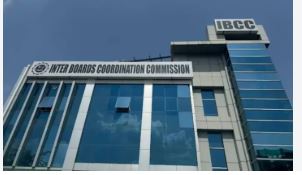
But the days of packing documents, arranging transport and making repeated visits to government offices may soon give way to a few clicks on a computer or mobile phone, as the Inter Boards Coordination Commission (IBCC) prepares to introduce a fully online attestation facility from January 1, 2027.
The initiative is set to change the way students access one of the essential services in their academic journey, bringing document attestation directly to their digital screens and removing the traditional dependence on physical submissions and courier arrangements.
Under the new arrangement, applicants will be able to upload their educational documents through the IBCC portal and after completion of the verification and approval process, download electronically attested certificates directly from their accounts.
The entire exercise will take place online, ending the need to visit IBCC offices or dispatch original documents through courier services.
For students living in far-flung areas, this change could mean the difference between spending an entire day travelling and completing an essential academic requirement from home.
Families already struggling with tuition fees, admission charges and other educational expenses will also be spared additional costs associated with transportation, accommodation and postal services.
The facility will cover qualifications issued by 29 examination boards across Pakistan, along with eligible credentials awarded by madaris, bringing students from different educational streams within the digital service network.
One of the most useful features will allow applicants to print multiple copies of the same electronically attested document without paying a separate IBCC attestation fee for every copy.
Students applying to several universities or institutions will therefore be able to use the same attested credentials for multiple submissions without repeating the payment process.
Those seeking educational opportunities abroad will also be able to submit the electronically attested documents to the Ministry of Foreign Affairs wherever required, subject to its applicable procedures.
Sharing his views with APP, IBCC Executive Director Dr Ghulam Ali Mallah said the initiative was aimed at reshaping the commission’s service delivery around students’ changing requirements and replacing conventional procedures with a more accessible digital mechanism.
Dr Mallah said the facility was expected to benefit approximately 400,000 to 500,000 students, saving them travelling expenses, courier charges and valuable hours previously consumed by office visits and document
collection.
He added that shifting to electronic processing would also reduce the commission’s administrative workload by eliminating much of the physical paperwork involved in receiving, handling and dispatching documents.
For students, the importance of this change goes far beyond the convenience of downloading a certificate. A university admission deadline waits for no one, a scholarship application cannot remain pending indefinitely and an overseas educational opportunity may slip away if essential documents are delayed.
A student from Rawalpindi said the proposed facility would save applicants considerable time and money, particularly those who previously had to travel to complete attestation formalities.
Zeeshan Bilal, a student at the National University of Modern Languages (NUML), said the facility to print multiple copies without an additional attestation fee would be particularly beneficial for students applying to several universities and scholarship programmes.
Students also emphasized that the success of the initiative would depend on a user-friendly portal, timely processing, secure electronic verification and an effective support mechanism for applicants facing technical
difficulties.
The initiative also reflects the evolution of IBCC, an institution that has remained an important part of Pakistan’s educational framework for more than five decades.
Established in 1972 as the Inter Board Committee of Chairmen, the organization initially served as a coordination platform for the country’s examination boards, providing a common forum to discuss academic matters and promote consistency in secondary and higher secondary education.
Over the years, its responsibilities expanded to include equivalence of local and foreign qualifications, authentication and verification of academic credentials, and improvements in examination and assessment
standards.
In April 2023, it was reconstituted as the Inter Boards Coordination Commission under the Inter-Boards Coordination Commission Act, 2023, establishing its statutory framework under the Ministry of Federal Education and Professional Training.
Its mandate includes strengthening coordination among examination boards, recognizing educational qualifications, determining equivalence of foreign credentials and promoting improvements in assessment systems. With its headquarters in Islamabad and regional offices in Karachi, Lahore, Bahawalpur, Peshawar and Quetta, the commission provides services to students across the country.
Moving attestation entirely online also reflects the federal government’s broader vision of digital governance, aimed at modernizing public institutions, reducing paperwork and bringing essential services closer to citizens.
The initiative aligns with the Digital Nation Pakistan agenda, translating the wider digitalisation drive into a practical facility for students.
The real test will be to ensure that technology does not replace one set of difficulties with another. An accessible portal, reliable verification, prompt decisions and assistance for applicants with limited digital access will be essential to making the facility work effectively.
With this digital transition, the familiar scenes of students carrying files through crowded streets, waiting outside offices and anxiously tracking courier parcels could gradually become a thing of the past. In their place will be a system where a certificate is only a few clicks away, distance loses its grip on access and valuable hours are returned to students.
For a young person chasing a university seat, a scholarship or an overseas academic dream, the significance is profound: less time spent navigating paperwork, fewer financial burdens on families and more opportunity to focus on building a future.