BY MUHAMMAD MOHSIN IQBAL
South Asia is a region where traditions are not only inherited but consciously preserved, protected, and honoured as living moral values. In societies such as Pakistan, Bangladesh and India, customs are deeply embedded in collective consciousness and continue to shape social behaviour even amid political turbulence. These traditions often rise above ideological divisions and state policies, reminding nations of their shared civilisational roots. In moments of happiness, old resentments may soften, and estranged individuals sometimes set aside bitterness to participate in one another’s joy. Yet there are occasions when differences run so deep that even celebrations fail to bridge the divide. Grief, however, tells a different story. Especially in the face of death, South Asian tradition demands humility, presence, and compassion, regardless of how severe past resentments may have been.
This powerful cultural instinct was vividly reflected recently upon the passing of former Prime Minister of Bangladesh, Begum Khaleda Zia. Her death was not merely a domestic loss but a moment that resonated across the region. In South Asia, the death of a national leader transcends political alignment and enters the realm of collective respect. Pakistan, in keeping with its longstanding tradition, has historically participated in funeral rites of heads of state and government in brotherly and neighbouring countries and, on many occasions, has also observed official mourning at home. Such gestures have always symbolised an understanding that shared sorrow carries greater moral weight than political disagreement.
Bangladesh, a brotherly Islamic country with which Pakistan shares history, faith, and deep human links, has experienced strained relations in recent years. These tensions, rooted in unresolved historical narratives and political developments, created distance and mistrust between the two states. However, recent times have witnessed a gradual re-evaluation of these differences. Both sides have begun to acknowledge past misunderstandings and recognise the need for engagement grounded in realism rather than rhetoric. Against this backdrop, Pakistan’s response to Bangladesh’s moment of national grief acquired particular diplomatic and emotional significance.
Instead of sending a member of the executive government, Pakistan chose to be represented by the Speaker of the National Assembly, Sardar Ayaz Sadiq. This decision was neither accidental nor merely procedural. In democratic traditions, parliaments represent the collective voice of the people, and parliamentary diplomacy often carries a depth that formal government representation may lack. The presence of the head of Pakistan’s Parliament conveyed a message of people-to-people solidarity rather than state-to-state formality. It underscored that Pakistan’s condolence was rooted in shared values, cultural respect, and democratic affiliation.
Sardar Ayaz Sadiq has, throughout his parliamentary career, cultivated a reputation for dignity, accessibility, and moderation. During his tenure as Speaker, he has effectively connected Pakistan with the international community through parliamentary forums, dialogues, and exchanges. His style of politics reflects the human dimension of leadership, a quality evident in his consistent participation in moments of joy and sorrow within his own constituency. Rarely has there been an occasion of grief or celebration among his constituents where his presence was absent. This personal character lends authenticity to his public role and enhances his credibility beyond borders.
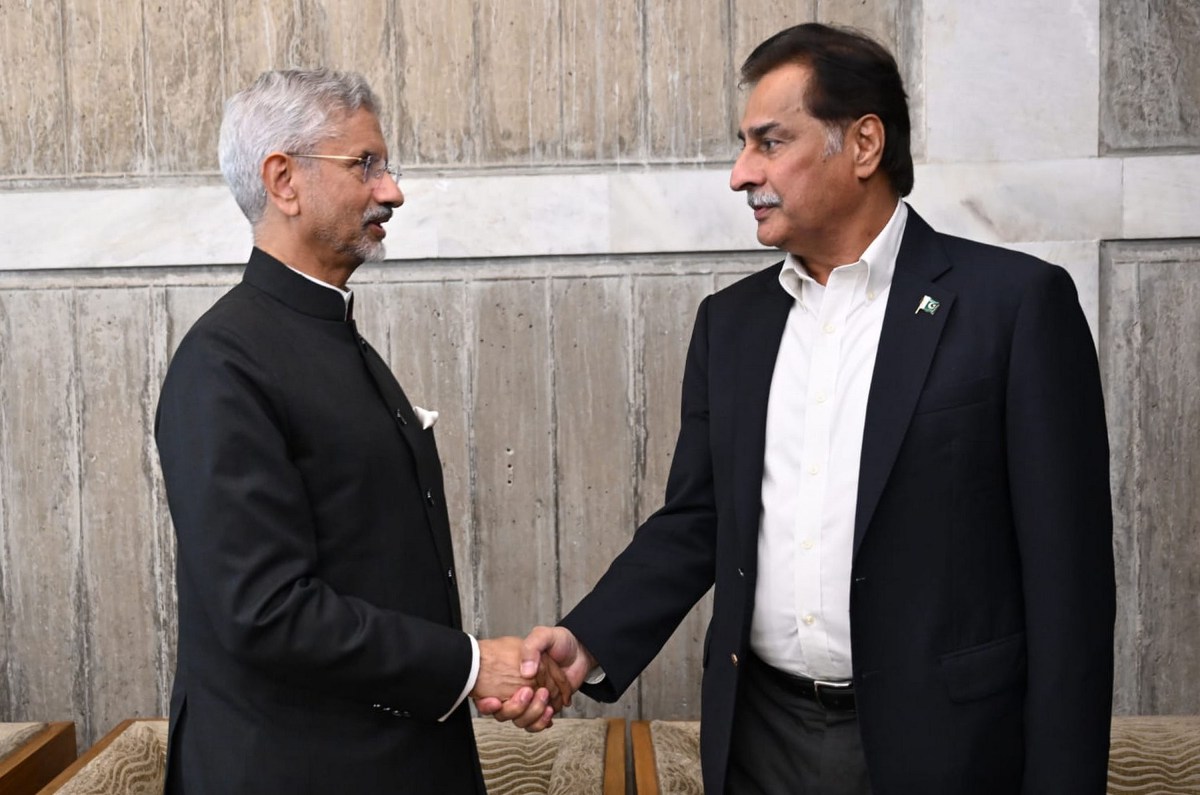
A particularly telling moment during the funeral ceremonies in Dhaka was the interaction between Speaker Sardar Ayaz Sadiq and Indian Foreign Minister Dr. Subrahmanyam Jaishankar, who was present on behalf of India. Noticing the Pakistani Speaker, the Indian Foreign Minister personally approached him to share a few gentle words. In a region where diplomatic encounters are often marked by caution and distance, this gesture carried quiet yet profound symbolism. It demonstrated recognition of Sardar Ayaz Sadiq’s conciliatory image and reflected an acknowledgment that respect for democratic office can transcend bilateral tensions.
In that brief exchange, something occurred that formal diplomacy has struggled to achieve for years. The tense atmosphere eased, and the burden of long-standing hostility seemed to lift for a moment. It was as though the frozen ground of South Asian politics showed the first signs of thaw. Such moments, though informal and fleeting, often serve as the earliest signals of change. History suggests that regional peace rarely begins with grand declarations; it starts with human gestures, mutual respect, and shared spaces of empathy.
It is not unrealistic to view this encounter as a potential precursor to renewed regional engagement. Organisations such as SAARC, long paralysed by political disputes, remain essential for addressing shared challenges of poverty, climate change, trade, and security. South Asia, home to nearly one-quarter of humanity, cannot afford perpetual estrangement. Even a small candle of goodwill, lit during a moment of collective grief, has the potential to illuminate a path toward dialogue and cooperation.
The decision to send Speaker Sardar Ayaz Sadiq to represent Pakistan at this solemn moment thus reflects wisdom, foresight, and cultural sensitivity. It honoured South Asian tradition, reaffirmed democratic values, strengthened ties with Bangladesh, and subtly opened space for regional reconciliation. In an era dominated by harsh rhetoric and rigid postures, such gestures remind us that dignity in grief, humility in conduct, and humanity in politics remain among the most powerful instruments of peace.