
Analysis
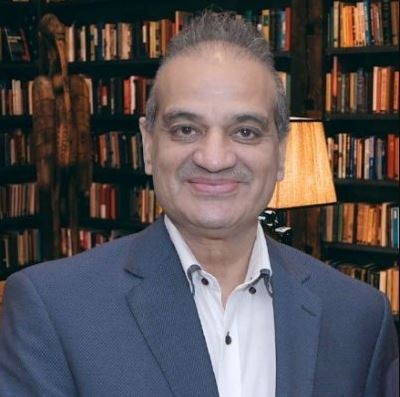
Ansar Mahmood Bhatti
The recent visit of the Norwegian Ambassador to Pakistan to the Supreme Court to witness the proceedings involving lawyer Iman Mazari and her husband has triggered a significant diplomatic and political debate, raising questions about diplomatic norms, judicial transparency, and Pakistan’s engagement with the international community on issues of rule of law and human rights.
Following the ambassador’s attendance at the court proceedings, Pakistan’s Ministry of Foreign Affairs summoned the Norwegian envoy and conveyed a formal demarche, expressing displeasure over what it termed an “unwarranted” action. Notably, Norwegian foreign ministry representative has defended the act of the ambassador, while Pakistani media has extensively highlighted and debated the development from multiple angles.
Supporters of the ambassador’s gesture argue that European countries, including Norway, have long championed the principles of rule of law, judicial independence, and human rights. Although Norway is not a member of the European Union, it accords immense importance to democratic values and regularly aligns itself with international human rights norms. From this perspective, the ambassador’s presence in court is seen not as interference, but as an expression of concern for legal transparency and due process.
Critics, however, believe the visit crossed diplomatic boundaries and warranted a formal response from the Foreign Office. They argue that foreign diplomats must exercise restraint in domestic legal matters, particularly in politically sensitive cases. This divergence of opinion has deepened the debate on where the line should be drawn between diplomatic observation and perceived interference.
It is important to note that this is not the first-time foreign diplomats have observed judicial proceedings in Pakistan. History offers a notable precedent in the case of former Prime Minister Zulfikar Ali Bhutto, whose trial was witnessed by several foreign observers and diplomats. At that time, their presence did not trigger such strong official reactions, despite the fact that a dictatorial regime was in place. This historical context strengthens the argument that observing court proceedings and commenting on them are two entirely different actions.
According to available information, the Norwegian Ambassador did not make any public or private remarks on the proceedings. He merely attended the hearing as an observer. In diplomatic practice, observation without commentary is generally considered permissible, particularly when proceedings are open to the public. Viewed in this light, the Foreign Office’s reaction appears premature and, in the eyes of some analysts, unnecessary.
There are also reports suggesting that the decision to summon the ambassador was not taken independently by the Foreign Office but was instead influenced by powerful quarters. If true, this has placed Foreign Office officials in a difficult position. Diplomats within the ministry, speaking on condition of anonymity, have reportedly expressed concern that while the directive may have originated elsewhere, it is the Foreign Office that must now justify the decision both domestically and internationally.
These officials caution that Pakistan’s missions abroad may face challenges defending the move, especially in countries where court monitoring by diplomats and human rights observers is considered routine. The episode, they fear, could complicate diplomatic engagements with European capitals and international rights bodies.
In today’s global landscape, the European Union remains one of the few collective bodies that consistently speaks about human rights, democratic norms, and the rule of law. The United States also claims to champion democracy and human rights, but its approach is often criticized as selective, acting forcefully where it aligns with strategic interests and remaining silent elsewhere.
The EU, despite raising its voice on rights issues, is also part of a global political nexus largely dominated by the super powers. As a result, it often balances principle with pragmatism. This balancing act is evident in its past and present dealings with Pakistan.
A notable example is the 2002 general elections in Pakistan. The EU deployed an election observation mission headed by John Cushnahan, the Member EU parliament from Ireland, that produced a comprehensive 100-page report, describing the elections as highly flawed and rigged. In response, the EU initially distanced itself from Pakistan. However, within a short span of time, relations were normalized, and the European Union resumed engagement with the very government it had earlier criticized. In 2003, during my visit to Brussels, I personally met John Cushnahan and raised this apparent reversal with him; he could only express his disappointment over the EU’s backtracking.
A similar pattern emerged following Pakistan’s 2024 general elections. The EU once again prepared an expert report highlighting serious concerns and irregularities. Yet, the Pakistani government has not made the report public to date. Interestingly, the EU itself has not strongly pushed Islamabad to release the document, reflecting its cautious and calculated approach.
Despite persistent concerns over governance, rule of law, and human rights, Pakistan continues to enjoy the EU’s GSP Plus trade status. There has been little tangible improvement in these areas, yet the likelihood of renewal of GSP Plus remains strong. This underscores the reality that such decisions are often political rather than strictly merit-based.
Against this backdrop, the reaction to the Norwegian Ambassador’s court visit appears disproportionate to many observers. They argue that if Pakistan continues to engage with Europe on trade, development, and diplomatic cooperation, it must also be prepared to tolerate symbolic gestures rooted in concern for judicial transparency.
The episode highlights a broader dilemma facing Pakistan’s foreign policy establishment: how to balance sovereignty and sensitivity with openness and international engagement. While protecting national institutions is essential, overreaction risks projecting insecurity and undermining Pakistan’s own stated commitment to rule of law and justice.
Whether this incident becomes a footnote or a turning point in Pakistan’s diplomatic conduct will depend on how pragmatically the situation is handled in the days ahead.