At the same time, there is another dimension that cannot be ignored. Iran’s policy of supporting proxy groups in various countries has long been a source of concern for the West and regional actors alike. While Iran may view these relationships as strategic assets, they contribute to instability and mistrust
Opinion
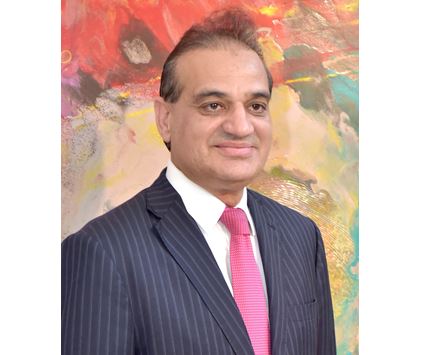
Ansar Mahmood Bhatti
The recent meeting of the Foreign Ministers of Pakistan, Saudi Arabia, Turkey, and Egypt has emerged as a significant and timely development in an increasingly volatile Middle Eastern landscape. At a time when geopolitical tensions are running high and conflicts risk spiraling into broader confrontations, this gathering carries the promise of restraint, dialogue, and a renewed commitment to peace. The joint stance adopted by these influential countries sends a strong signal that diplomacy, not coercion, must guide the future of the region.
At the heart of the meeting was a clear and unequivocal message: the path forward lies in dialogue. The foreign ministers collectively rejected the use of force as a tool of policy and called upon all parties to refrain from coercive means. This consensus is particularly noteworthy given the diversity of interests and strategic alignments among these nations. Their ability to converge on such a fundamental principle reflects both the gravity of the current situation and a shared understanding that continued escalation would have disastrous consequences for the entire region.
A major highlight of the discussions was the strong condemnation of recent attacks on Iran, which were termed unjustified and destabilizing. Equally, the ministers denounced attacks on Gulf countries, emphasizing that no nation should be subjected to aggression. This balanced approach is crucial. By condemning all forms of aggression regardless of the target the participating countries avoided the pitfalls of selective outrage and demonstrated a principled commitment to international norms.
Pakistan, in particular, played a leading role in shaping this narrative. Its stance was firm yet measured, advocating for de-escalation while emphasizing respect for sovereignty. This is precisely the kind of leadership expected from Pakistan, especially given its status as the only nuclear power in the Muslim world. With such capability comes responsibility, and Pakistan appears to be stepping up by promoting stability rather than confrontation.
An important aspect of the meeting was the recognition of the restraint shown by Gulf countries, especially Saudi Arabia, the United Arab Emirates, Qatar and Kuwait. Pakistan lauded their patience and calculated responses, which have so far prevented the conflict from escalating further. In a region often marked by rapid retaliation and tit-for-tat actions, such restraint deserves acknowledgment. It highlights that even in the face of provocation, measured responses can help contain crises rather than inflame them.
The meeting also indirectly addressed the broader question of power politics and the misuse of strength. There is a growing concern globally that powerful nations often act unilaterally, assuming they can impose their will without consequences. This approach has repeatedly proven flawed. The situation with Iran is a case in point. Attempts at regime change widely believed to have been a strategic objective of the United States have not succeeded. Nor were they likely to. Iran is not Venezuela; it has deep-rooted institutions, a resilient political structure, and significant regional influence.
On the issue of Iran’s nuclear program, the discussion becomes even more nuanced. There is a widely accepted principle in international law: every country has the right to access nuclear technology for peaceful purposes. Iran is no exception. Denying this right outright would set a dangerous precedent and undermine the framework of global nuclear governance. However, this right comes with responsibilities. Transparency, compliance with international agreements, and confidence-building measures are essential to ensure that peaceful intentions are not misinterpreted.
At the same time, there is another dimension that cannot be ignored. Iran’s policy of supporting proxy groups in various countries has long been a source of concern for the West and regional actors alike. While Iran may view these relationships as strategic assets, they contribute to instability and mistrust. The combination of advanced nuclear capabilities and active proxy networks creates a perception of a potentially dangerous mix, one that alarms not just Western powers but also neighboring states. If Iran seeks broader acceptance and reduced tensions, it may need to reassess this aspect of its foreign policy.
The meeting also sheds light on a deeper, more structural issue within the Muslim world the lack of unity. Despite frequent references to the concept of the “Ummah,” the reality is starkly different. The Muslim world today is fragmented, divided by political rivalries, sectarian differences, and competing national interests. Institutions such as the Organization of Islamic Cooperation (OIC) and the Arab League have largely failed to play meaningful roles in resolving major conflicts. Their ineffectiveness has been particularly evident in recent crises, including the situation involving Iran.
This raises an important question: do these organizations still serve a purpose? There is a growing argument that they either need comprehensive reform or should be replaced by more effective, action-oriented groupings. Instead of large, unwieldy bodies that struggle to reach consensus, there may be merit in creating smaller coalitions of committed countries willing to take concrete steps toward peace and stability. The recent meeting of Pakistan, Saudi Arabia, Turkey, and Egypt could be seen as a step in this direction a pragmatic alignment of states that are serious about addressing regional challenges.
Another dimension that warrants careful consideration is the evolving relationship between Pakistan and the United States. If current developments suggest that Washington is taking a more supportive stance toward Pakistan, it should not be misinterpreted as a fundamental shift in US policy. Historically, US engagement with Pakistan has been shaped by strategic interests, often fluctuating with changing geopolitical priorities. Any present alignment may well be temporary, driven by immediate concerns rather than long-term commitments.
This is particularly relevant in the context of Pakistan’s nuclear program. The United States has consistently maintained a cautious, and at times critical, position on nuclear proliferation. There is little reason to believe that this stance has fundamentally changed. Therefore, Pakistan must tread carefully. It should avoid overreliance on transient diplomatic goodwill and instead focus on strengthening its own strategic autonomy.
In this context, Pakistan’s role as a responsible nuclear state becomes even more important. Being a nuclear power is not just about deterrence; it is also about setting an example in conflict resolution and regional cooperation.
The gathering of Pakistan, Saudi Arabia, Turkey, and Egypt represents more than just a diplomatic event it is a statement of intent. It signals that key players in the Muslim world are willing to take responsibility for regional stability. It also highlights the need for a more realistic and pragmatic approach to international relations, one that recognizes the limits of force and the value of dialogue. Whether this initiative will lead to lasting peace remains to be seen, but it is undoubtedly a step in the right direction.