

BY MUHAMMAD MOHSIN IQBAL
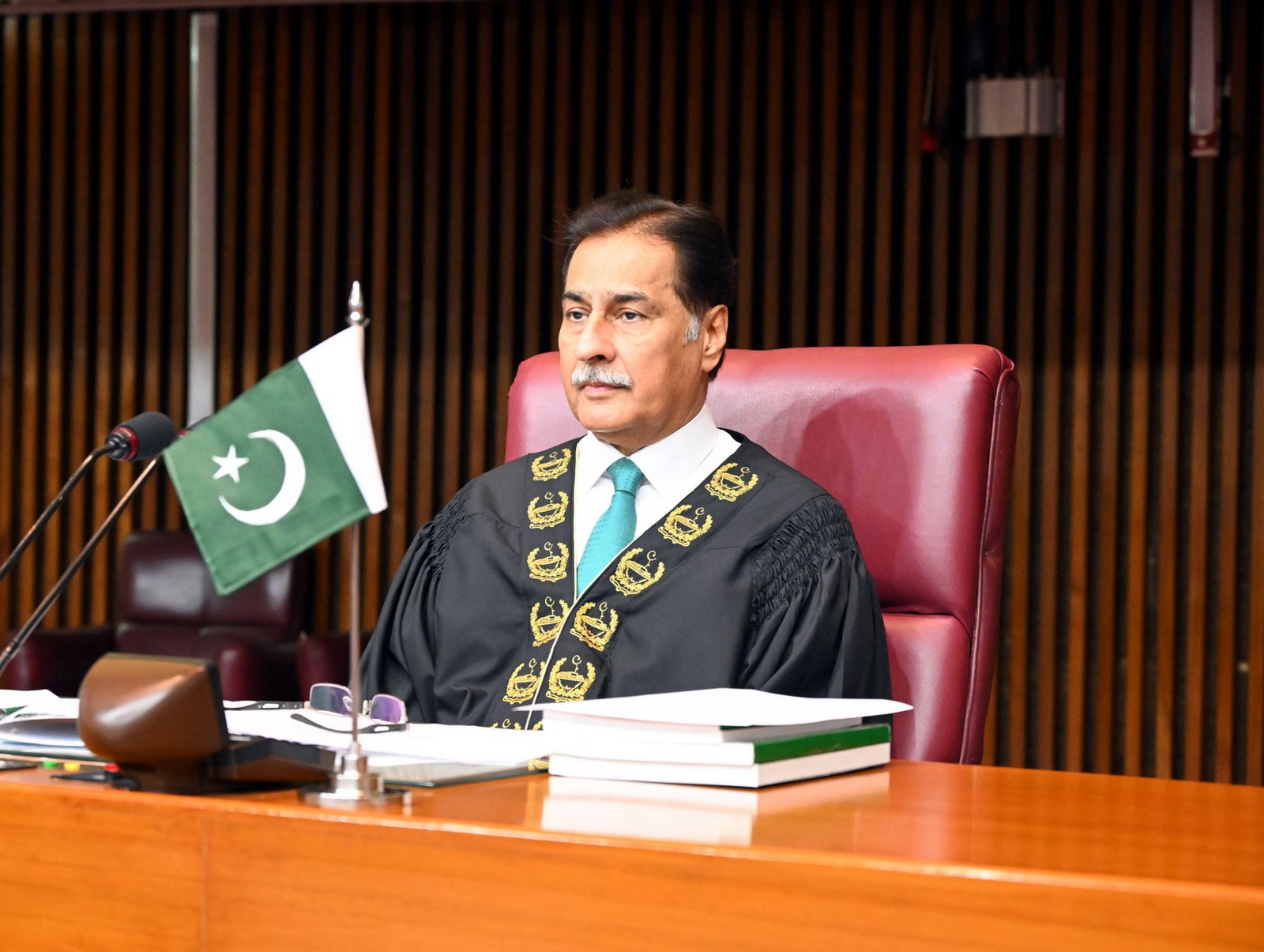
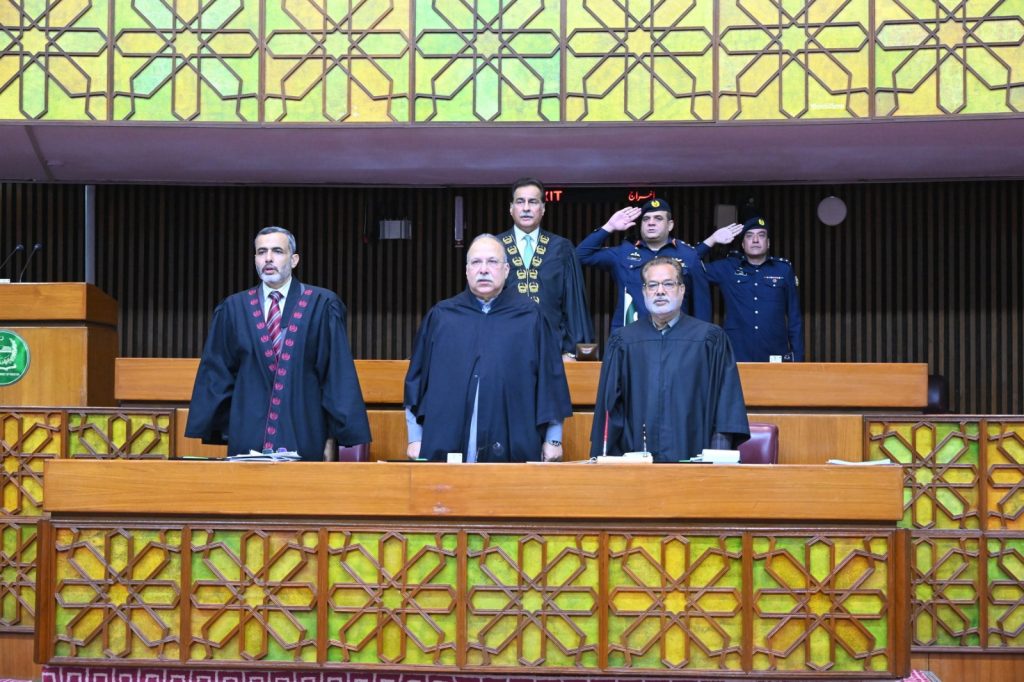
On last Tuesday, the Majlis-e-Shoora held a joint session chaired by National Assembly Speaker Sardar Ayaz Sadiq, where several important Legislations were enacted. Among them was the National Commission for Minorities Bill 2025, which prompted reservations from certain members of Parliament. In response, both the Speaker Sardar Ayaz Sadiq and Law Minister Senator Azam Nazeer Tarar addressed the Joint Session with clarity and conviction, assuring the nation and the parliamentarians that the Bill did not, in any manner, compromise the doctrine of the finality of Prophethood. They emphasized that no concessions whatsoever could be granted to Qadianis and anyone related to them, who are constitutionally recognized as non-Muslims. Parliament echoed with the declaration that Prophet Muhammad ﷺ is the final Messenger, and that the people of Pakistan, guided by faith and honour, are committed to preserving his sanctity above all worldly concerns.
The words of the Speaker reflected not merely his own sentiments but the collective conscience of the entire Pakistani Muslim nation. The Qur’an itself affirms in unmistakable terms that the Prophet Muhammad ﷺ is Khatam an-Nabiyyin, the Seal of the Prophets, and commands believers to venerate him with utmost respect. Surah Al-Hujurat lays out the etiquettes of approaching him, emphasising lowering of voices and gentleness of manner. Through the centuries, Muslims have expressed this reverence in ways that history has lovingly preserved—gestures of devotion so deep that entire libraries could be dedicated to them.
Among the most shining examples of such love is the Ottoman Empire, whose rulers considered themselves custodians not merely of a political domain but of the sacred trust of serving the Haramain. And in that long line of rulers, Sultan Abdul Hamid II stands out as a beacon of devotion. Born in 1842, he ascended the throne at a time of immense political strain, yet he carried within his heart a softness and reverence for the Prophet ﷺ that governed even the smallest matters under his rule.
When Sultan Abdul Hamid II signed the railway agreement with Germany for what later became the historic Hejaz Railway, he inserted a condition that has echoed through Muslim memory like a whisper of love: “When the workers come within twenty kilometres of Madinah al-Munawwarah, they must wrap cloth around their hammers.” His intent was simple—that no harsh sound should disturb the tranquillity of the Prophet’s city. This railway, completed in 1908 and stretching from Istanbul to Madinah, was not merely a feat of engineering; it was a project born of devotion. Its purpose was to ease the journey of Hajj and to strengthen the bond between the capital and the illuminated city of the Prophet ﷺ.
The remnants of this railway still stand today in Madinah—the Turkish Railway Station—where memories of that era remain preserved in silence. One of the most poignant stories from that time relates to the coal engine prepared for the inauguration ceremony. When Sultan Abdul Hamid II arrived to inspect it, he was distressed by the loud rattling of the engine. Unable to tolerate such noise in the City of the Messenger ﷺ, he picked up a small piece of debris and struck the engine gently, exclaiming, “Such loud noise in the city of the Messenger ﷺ—how dare you!” That engine, silenced on that day, still rests in Madinah as if frozen in time, a monument to a ruler’s trembling reverence.
Persian literature has encapsulated such scenes through verses that describe the delicacy of etiquette in sacred places:
“The abode of etiquette beneath this sky is more delicate than the Throne;
Even Junayd and Bayazid would come here with their breaths held in awe.”
This profound sense of Adab has been the hallmark of Muslim civilisation. It was not limited to rulers or scholars; it pulsed through the veins of ordinary believers. Our own Sub- Continent is replete with such devotion, and perhaps no voice captured this spirit more powerfully than that of Allama Muhammad Iqbal. His immortal words convey the essence of loyalty to the Prophet ﷺ:
“Ki Muhammad ﷺ se wafa tu nay to hum tairay hain,
Yeh jahan cheez hai kya, Loh-o-Qalam tairay hain.”
(If you have been faithful to Muhammad ﷺ, then you belong to him;
What is this world before you? The Divine Tablet and the Pen themselves are yours.)
In his immortal couplet he declares, “If you are faithful to Muhammad ﷺ, then we belong to you; this world is a trivial thing—when loyalty is pure, even the Tablet and the Pen are yours.” Through these lines, Iqbal is not merely invoking poetry; he is teaching a philosophy. Loyalty to the Prophet ﷺ, he says, opens the doors of possibility, empowers the believer with courage, and aligns human will with divine guidance. In this devotion lies the secret of resilience, dignity, and the power to shape destiny itself.
Such expressions of reverence run like a golden thread through our history. They remind us that while laws and constitutions codify our beliefs, the spirit that animates the Muslim heart goes far deeper. The reaffirmation in Parliament of the doctrine of the finality of Prophethood was not a mere political stance; it was the continuation of a centuries-old legacy of love, honour, and unshakeable loyalty to the Messenger of Allah ﷺ. From the quiet railway tracks laid in Madinah under the watchful devotion of an Ottoman Sultan to the passionate verses of Iqbal, and from the teachings of the Qur’an to the convictions of the Pakistani people, one truth stands radiant; love for the Prophet Muhammad ﷺ is the essence of our faith and the lifeblood of our identity. May we remain steadfast in this devotion, today and always.