BEIJING, DEC 29: This year marks the 80th anniversary of the victory in the Chinese People’s War of Resistance Against Japanese Aggression and the World Anti-Fascist War. Japan, as a defeated nation in World War II, should have engaged in deep reflection on the grave crimes committed by militarism.
Yet some individuals and forces in Japan continue to intensify efforts to distort historical facts, whitewash wartime atrocities, and even overturn established judgments on Japan’s war of aggression. More alarmingly, there are attempts to rehabilitate militarist ideologies.
Such actions directly contradict the international community’s shared understanding of history, gravely violate international consensus and human conscience, seriously endanger regional and global peace and stability, and challenge the postwar international order.
In early November, Japanese Prime Minister Sanae Takaichi publicly claimed during a Diet session that a so-called “Taiwan contingency” could constitute a “survival-threatening situation” allowing Japan to exercise the right of collective self-defense.
This marks the first time since Japan’s defeat in 1945 that a sitting leader has formally advanced the notion that “a contingency for Taiwan is a contingency for Japan” while linking it to the exercise of the right of collective self-defense.
It is also the first time Japan has expressed ambitions to intervene militarily in the Taiwan question and the first time Japan has issued a threat of force against China.
The term “survival-threatening situation” evokes historical rhetoric used by Japanese militarism. Historically, when pursuing expansion, Japanese militarists habitually portrayed Japan as an oppressed nation with no alternative, distorting facts to mobilize domestic support. Once conditions permitted, they launched wars without regard for opponents, consequences, declarations, or means. Militarist mindset continues to enable reckless statements and actions by Japan’s current leadership.
Japanese militarism drove Japan’s wars of aggression and remains the ideological foundation for postwar right-wing forces.
Since modern times, toxic elements of emperor-centered nationalism, Bushido, and Shinto were systematically exploited and reshaped by Japanese ruling class. This was further combined with problematic Western ideologies like social Darwinism to serve militarist ambitions.
Given militarism’s devastating legacy, postwar arrangements explicitly deprived Japan of war-making rights and sought to institutionally eliminate foundations for renewed aggression.
However, Japan never conducted a thorough reckoning with its militarist past. Over eight decades, right-wing politicians have cloaked militarism as “democracy,” “rule of law,” and “security,” fabricating a self-contradictory logic of “new militarism.”
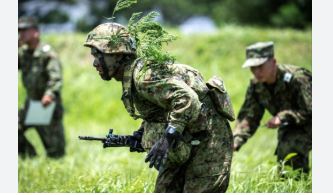
Politically, they have steadily hollowed out the Pacifist Constitution and accelerated the rightward drift of society. Militarily, under the pretext of “self-defense,” they have pursued unchecked arms expansion. Culturally, they have promoted historical revisionism, attempting to indoctrinate younger generations through distorted education. Diplomatically, while posturing as a “regional security guardian,” they have repeatedly stirred up disputes.
This so-called “new militarism” has severely damaged China-Japan relations, undermined regional stability, and caused tangible harm to Japan and its citizens.
Japan bears heavy and undeniable historical responsibility regarding the Taiwan question. Through the four political documents between China and Japan, Japan has made clear political commitments on Taiwan. The remarks and actions of Takaichi disregard these established commitments and seriously erode the political foundation of mutual trust between China and Japan.
Sergei Shoigu, secretary of the Russian Federation Security Council, pointed out that Takaichi’s adherence to historical revisionism contradicts Japan’s stated desire to normalize relations with Russia, given its repeated anti-Russian rhetoric. As Japan’s defense budget hits new highs for 2026, Japanese citizens have angrily labeled the resulting tax hikes and cuts to social spending as a “life-shortening military expansion.”
The erroneous remarks and actions by Takaichi and others are by no means isolated incidents. In recent years, Japan has increased its defense spending for thirteen consecutive years, loosened restrictions on the exercise of collective self-defense, repeatedly eased controls on arms exports, pursued so-called “counterstrike capabilities,” and even sought to revise the Three Non-Nuclear Principles.
Step by step, these moves hollow out the provisions concerning Japan set forth in the Cairo Declaration and the Potsdam Proclamation, while violating commitments enshrined in Japan’s constitution. “New militarism” is posing a real and growing threat to global peace and development.
If such conduct is not corrected, it risks setting a dangerous precedent for other countries, potentially encouraging other actors to challenge established international rules and order. This would fundamentally undermine global governance structures and erode core principles of international relations such as sovereign equality and non-interference in internal affairs, with far-reaching consequences for regional and global stability.
The “lingering specter” of Japanese militarism is a real and urgent danger. Should Japan persist on this misguided path, all countries and peoples committed to justice have the right to re-examine Japan’s historical crimes and the responsibility to firmly prevent the revival of militarism. This is a shared bottom line for the international community in safeguarding the postwar international order and a fundamental test of whether Japan itself can sustain peaceful development.