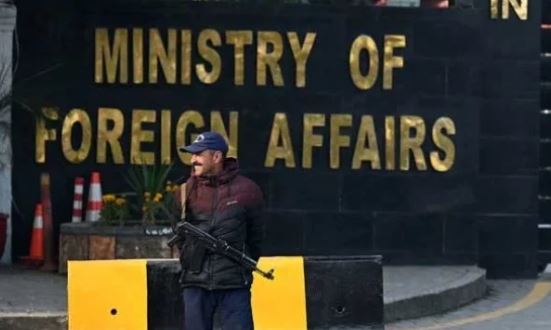
ISLAMABAD, JAN 17: Pakistan on Saturday condemned India over the profiling of mosques and management committees in the Indian Illegally Occupied Jammu and Kashmir (IIOJK), terming it “blatant intrusion into religious affairs”.
In a statement, the Foreign Office said that the actions reflected “yet another coercive attempt to intimidate and marginalise the Muslim population” in the territory.
“The forcible collection of personal details, photographs and sectarian affiliations of religious functionaries amounts to systematic harassment, aimed at instilling fear among worshippers and obstructing the free exercise of their faith,” the FO added.
The statement comes just days after a US-based research group made startling revelations about the plight of minorities in India.
The India Hate Lab said that hate speech against minorities, including Muslims and Christians in India, rose by 13% in 2025, with most incidents occurring in states governed by Prime Minister Narendra Modi’s Hindu nationalist Bharatiya Janata Party.
In today’s statement, the FO said that India’s latest move formed part of a broader pattern of “institutionalised Islamophobia driven by the Hindutva ideology of the occupying Indian government”.
“The selective targeting of mosques and Muslim clergy lays bare the discriminatory and communal character of these policies,” it added.
Islamabad said that the people of IIOJK had an inalienable right to practice their religion without fear, coercion or discrimination.
The FO reiterated its unwavering solidarity with the Kashmiri people, saying it would continue to raise voice against all forms of religious persecution and intolerance targeting Kashmiris.
Rights groups, including Amnesty International and Human Rights Watch, have said that abuse of minorities has seen an increase in India since Modi took office in 2014.
Since then, the Indian government has enacted several controversial laws, including a religion-based citizenship law, anti-conversion legislation that challenges freedom of belief, the 2019 removal of Muslim-majority IIOJK’s special status, and the demolition of Muslim-owned properties.
Hate speech and discriminatory treatment have not been confined to Muslims, as evidenced during the recent Christmas celebrations in India.
Violent mobs attacked and vandalised Christmas decorations in parts of the country in December last year.
A mob armed with wooden sticks vandalised Christmas decorations and installations ahead of the Christian festival in Chhattisgarh.
In another such incident, the Vishva Hindu Parishad Bajrang Dal vandalised a school during the Christmas preparations in Assam’s Nalbari district.
Members of the far-right party also torched and damaged festival items, while they also staged a protest against Christmas celebrations in Nalbari.