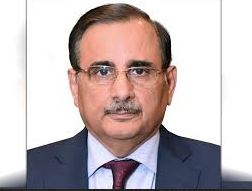
Anjum Nisar warns mounting losses, rising fiscal support, weak governance strain national exchequer
ISLAMABAD, JAN 11: The Federation of Pakistan Chambers of Commerce and Industry’s Businessmen Panel (BMP) has expressed serious concern over the deteriorating financial health of state-owned enterprises (SOEs), warning that mounting losses, rising fiscal support and weak governance continue to strain the national exchequer and crowd out resources needed for industrial growth and economic stability.
Former FPCCI President and Chairman of the Businessmen Panel (BMP), Mian Anjum Nisar, said the sharp increase in SOE losses during FY2024-25 highlights the urgent need for structural reforms, improved governance and policy consistency in the national interest.
According to official data, SOEs posted a combined net loss of Rs122.9 billion in FY2024-25, a staggering 300 percent increase compared to the previous year’s loss of Rs30.6 billion. During the same period, the government provided Rs2.1 trillion in fiscal support to these entities, reflecting a more than 37 percent rise from the Rs1.5 trillion extended in the preceding year. Meanwhile, aggregate revenues of SOEs declined by Rs1.4 trillion to Rs12.4 trillion, largely due to reduced profitability in the oil sector and persistent inefficiencies in key public enterprises.
Mian Anjum Nisar said the continued reliance on budgetary support for loss-making SOEs is unsustainable and detrimental to private sector growth. “When trillions of rupees are diverted annually to plug inefficiencies in state-owned entities, very little fiscal space is left for development spending, industry support, infrastructure and export promotion,” he said. “This imbalance ultimately weakens the competitiveness of Pakistan’s economy.”
The BMP chairman noted that losses remain concentrated in a small number of entities, particularly in the transport and power distribution sectors, where structural issues, poor governance, political interference and high financing costs have persisted for decades. He stressed that repeated bailouts without meaningful reform only deepen fiscal risks and undermine investor confidence.
Referring to the rising debt and contingent liabilities of SOEs, which stood at Rs11.7 trillion by the end of FY2024-25, Nisar warned that unchecked accumulation of liabilities poses a serious threat to macroeconomic stability. “This debt is effectively a hidden burden on taxpayers and future generations. Without decisive action, it will continue to fuel inflation, weaken the currency and limit the government’s ability to support productive sectors,” he said.
The BMP also expressed concern over the government’s taxation approach, particularly the practice of charging higher taxes on non-filers as a source of easy revenue rather than expanding the tax base. Nisar said this strategy discourages economic activity and formalisation, while failing to address the root causes of low tax compliance.
“Instead of penalising the same segments repeatedly, the government must focus on broadening the tax base through documentation, simplification of tax laws and reducing discretionary powers,” he said. “A fair and predictable tax regime is essential for industry growth, investment and job creation.”
Mian Anjum Nisar welcomed the government’s efforts to improve oversight through the SOEs Act, 2023, and the move towards IFRS-based financial reporting by February 2026. However, he stressed that compliance alone will not be enough unless accompanied by professional management, independent boards and performance-based accountability.
“The adoption of international accounting standards is a positive step, but reforms must go beyond reporting,” he said. “SOEs need autonomy, transparent procurement, strict audit enforcement and, where feasible, strategic partnerships with the private sector to improve efficiency.”
The BMP chairman urged the government to categorise SOEs into strategic, commercial and non-commercial entities, with clear policies for privatisation, restructuring or closure of chronically loss-making units. He said non-commercial SOEs providing public services should have clearly defined subsidies reflected transparently in the budget, rather than accumulating hidden losses.
From an industry perspective, Nisar emphasised that savings generated through SOE reforms should be redirected towards productive uses, including reducing energy costs, improving infrastructure, supporting SMEs and incentivising exports. “Industry cannot compete regionally when energy prices are high, financing is expensive and policy uncertainty prevails,” he said.
He also called for stronger coordination between fiscal, industrial and trade policies to ensure long-term growth. “Pakistan needs a coherent economic strategy that prioritises productivity, value addition and export diversification. This cannot be achieved unless wasteful spending is curtailed and resources are allocated efficiently.”
The Businessmen Panel further recommended accelerating pension reforms for SOEs, as unfunded pension liabilities of around Rs2 trillion represent a major legacy risk. Nisar said early action is essential to prevent these obligations from becoming another fiscal shock.
Concluding his remarks, Mian Anjum Nisar said the private sector is ready to play its role in economic recovery, provided the government creates a stable, transparent and business-friendly environment. “Pakistan’s economic challenges require tough decisions, not temporary fixes,” he said. “Reforming SOEs, broadening the tax base and supporting industry are not optional choices—they are essential for sustainable growth and national economic security.”
The BMP reiterated its commitment to engaging with policymakers and stakeholders to promote reforms that serve the national interest, strengthen industry and place Pakistan on a path of durable and inclusive economic growth.