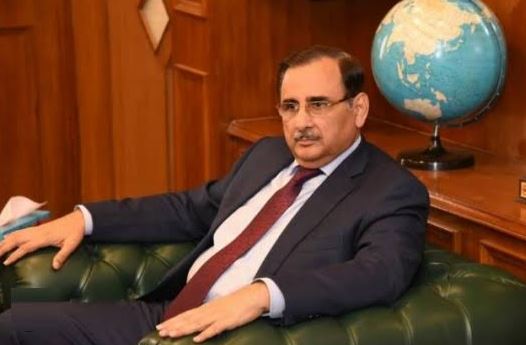
ISLAMABAD, DEC 28 /DNA/ – The Businessmen Panel of the Federation of Pakistan Chambers of Commerce & Industry has issued a stark warning over the sharp decline in Pakistan’s exports, criticizing government policies for failing to support domestic industries and exporters.
Former President of the Federation of Pakistan Chambers of Commerce & Industry and Chairman of the Businessmen Panel, Mian Anjum Nisar, said that the current trajectory threatens not only the country’s trade balance but also the stability of the Pakistani rupee and the overall economy.
Addressing business leader, Mian Anjum Nisar expressed deep concern over recent export figures, revealing that Pakistan’s exports have fallen by 36 to 38 percent, with food and rice exports suffering the most. “These numbers are alarming and reflect systemic failures in policy-making. Our exporters are struggling to compete internationally while facing rising costs and regulatory hurdles,” he said.
According to official data, food exports from July to November have dropped to $1.95 billion, down from $3.15 billion in the same period last year, while rice exports alone plunged from $1.5 billion to $769 million, marking a staggering 49 percent decline.
Mian Anjum Nisar noted that these figures are not isolated but indicative of deeper structural weaknesses in the country’s trade, agricultural, and industrial policies.
High production costs, rising energy tariffs, and an overly complex taxation system are among the primary factors cited by Mian Anjum Nisar for the decline. “Our exporters are bearing the brunt of policies that are disconnected from ground realities. Energy costs remain prohibitively high, electricity tariffs continue to rise, and the taxation framework is unpredictable and burdensome. How can our industries compete on the global stage under these circumstances?” he asked.
Mian Anjum Nisar further highlighted that Pakistan’s agricultural sector is under significant stress. Per-acre yields of wheat, rice, and cotton have declined over the past two years, a trend he attributed to weak investment in research and development, inconsistent government policies, smuggling, and hoarding. He emphasized that these issues directly affect export potential. “Our textile sector, which accounts for about 60 percent of total exports, is particularly vulnerable. Declining cotton production and quality are hurting value addition and our position in international markets,” he said.
The former president of the Federation of Pakistan Chambers of Commerce & Industry also criticized the government’s handling of industrial and export incentives. Minor adjustments to power tariffs and short-term relief measures, he argued, are insufficient. “We need comprehensive, long-term reforms, not stopgap solutions. Exporters should be removed from the Final Tax Regime, refunds should be issued without delay, and energy costs must be rationalized. Without these measures, industrial activity will continue to suffer, and Pakistan will lose its global competitiveness,” he said.
Mian Anjum Nisar also condemned the Sindh government’s infrastructure cess, which has cost exporters approximately $9.15 billion over recent years, with little transparency regarding its utilization. “Businesses are being forced to pay large sums without accountability. This not only undermines trust but also raises the cost of exports, making Pakistani products less competitive internationally,” he added.
The Chairman of the Businessmen Panel warned that the decline in exports could have far-reaching economic consequences. Pressure on the Pakistani rupee, rising inflation, and higher production costs are likely outcomes if the current trend continues. “If exports continue to fall, the Pakistani rupee cannot remain stable. Depreciation will trigger inflation, which will further increase industrial costs and create a vicious cycle that will hurt both businesses and ordinary citizens,” he said.
Highlighting the role of small and medium enterprises in the export ecosystem, Mian Anjum Nisar stressed that these businesses are critical to Pakistan’s trade but face disproportionate challenges in financing and regulatory compliance. “Small and medium enterprises need better access to affordable credit and targeted support. They are the backbone of our export economy, and empowering them is key to reversing the downward trend,” he noted.
Mian Anjum Nisar also criticized the government’s failure to address structural inefficiencies in logistics, energy supply, and industrial support systems. He argued that without a strategic, long-term vision, Pakistan will continue to lag behind regional competitors such as Bangladesh, India, and Vietnam, which have strengthened infrastructure, improved productivity, and offered clear incentives to exporters.
Additionally, Mian Anjum Nisar raised concerns about Pakistan’s growing dependence on food imports, describing it as a risk to national food security. He said that without domestic production improvements and stronger support for export-oriented industries, the country faces increasing vulnerability to global price shocks and supply disruptions.
As Pakistan faces increasing economic uncertainty, the warnings from Mian Anjum Nisar and the Businessmen Panel of the Federation of Pakistan Chambers of Commerce & Industry underscore a growing disconnect between government policy and the realities faced by exporters. Without urgent structural reforms addressing energy costs, taxation, logistics, and industrial incentives, the export slump is expected to persist, jeopardizing growth, employment, and foreign exchange stability.