ISLAMABAD, JAN 1 /DNA/: The rise of China is not aimed at nullifying the contemporary global order but at reshaping it through gradual reforms and deeper multilateral integration. Guided by principles of equality, non-interference, and state-led development, China is increasingly offering the Global South opportunities and normative space beyond Western influence. This approach positions China as key driver of the emerging multipolar order.
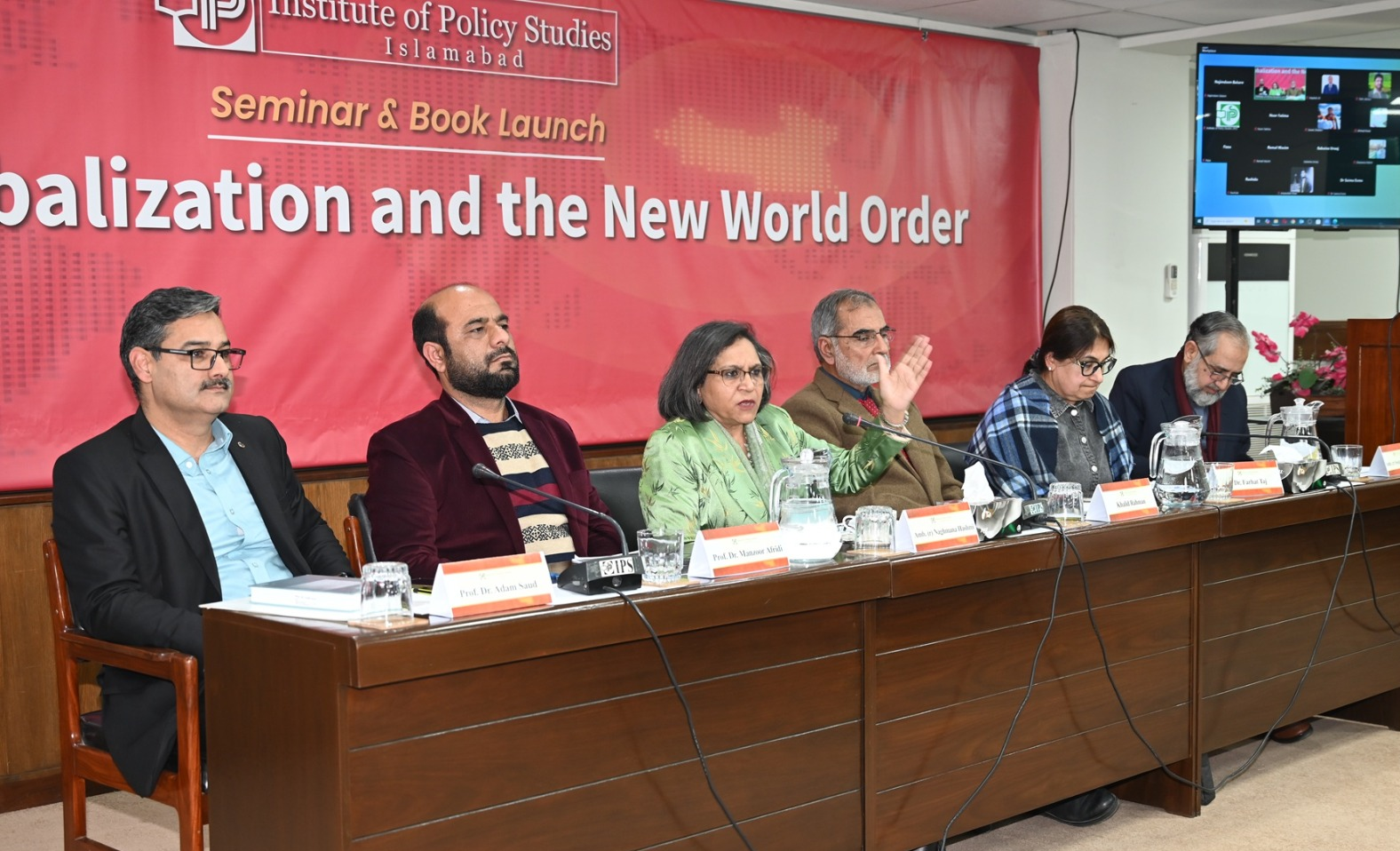
This was observed by practitioners and scholars at a seminar and book launch, titled “China’s Globalization and the New World Order,” held at the Institute of Policy Studies (IPS). The speakers included Khalid Rahman, chairman IPS, Amb (r) Syed Abrar Hussain, vice-chairman IPS, Amb (r) Naghmana Hashmi, former ambassador to China, the book’s co-editors Prof Dr Adam Saud and Dr Najimdeen Bakare, Prof Dr Manzoor Afridi, dean faculty of social sciences, IIUI, and Dr Farhat Taj, associate professor, University of Tromsø, Norway.
In his introductory remarks, Ambassador Abrar Hussain highlighted a shift in China’s approach to the global order. Moving beyond merely leveraging economic dividends, China is now seeking to shape global governance, focusing on the Global South and guided by equality, mutual respect, and inclusive governance. Its initiatives aim to drive a second wave of economic globalization and advance the Fourth Industrial Revolution. He noted, however, that China faces significant challenges, including a slowing domestic economy, new tariffs on high-tech exports, and geopolitical frictions.
Introducing the book, Prof Adam Saud highlighted that it offers a multi-layered and interdisciplinary examination of China’s rise within the international order and its implications for global governance.
The book goes beyond the traditional “status quo versus revisionist power” debate surrounding China’s rise. He observed that Western democracy is often presented as a universal model of governance, undermining any alternative governance systems. In contrast, China views itself as a civilizational state shaped by Confucian ethics and philosophies and promotes the idea of a “community with a shared future for mankind.”
Dr Najimdeen Bakare observed that China’s state-led development model presents a distinct normative alternative to Western development paradigms. Drawing on Ibn Khaldun’s theory of the rise and fall of civilizations, he argued that China is contributing both materially and epistemically to the reshaping of global norms.
Ambassador Naghmana Hashmi described the book as an essential reference for understanding China’s history, political orientation, and development trajectory. She was of the view that contemporary global institutions were designed to serve the interests of colonial or post-colonial powers, but that the rise of middle powers has exposed their structural limitations. Ironically, countries that once founded the current system are now retreating from their responsibilities, while historically marginalized countries are striving to preserve it.
Prof Manzoor Afridi noted that the book is aptly divided between how China views the world and how the world views China. He traced China’s transformation from its revolutionary phase to an integrated global actor, highlighting that it is now seen as a partner rather than a threat, particularly in its neighborhood. Despite its growing presence, China avoids power projection and adheres to its five principles of peaceful coexistence. He added that, alongside the familiar Washington Consensus, an emerging Beijing Consensus is reshaping global development through infrastructure and connectivity initiatives.