LONDON, FEB 26 /DNA/: The imprisonment and reported deteriorating health of former prime minister Imran Khan came under sustained scrutiny in the UK Parliament on Tuesday.
Peers across party lines pressed the Labour government to intensify diplomatic engagement with Islamabad and consider linking aid and trade to human rights benchmarks.
The issue was raised during oral questions led by Labour peer Baroness Alexander of Cleveden, who asked about discussions with the government of Pakistan regarding Imran’s incarceration.
Responding on behalf of the Foreign Office, Minister of State Baroness Chapman of Darlington reiterated that while Pakistan’s judicial processes are a matter for its own authorities, the UK had consistently raised concerns over fundamental rights.
“While Pakistan’s judicial processes are, of course, a matter for Pakistan, we are clear that the Pakistani authorities need to respect fundamental freedoms, including the right to a fair trial, due process, humane detention and access to appropriate medical treatment,” she said.
“This applies to Imran Khan as it does to all Pakistani citizens.”
The minister added that UK ministers and officials had “regularly raised” with their Pakistani counterparts the need to uphold Pakistan’s constitution and international human rights obligations, including in relation to Imran.
Family access and medical concerns
Several peers highlighted reports that Imran had been denied access to lawyers, family members and doctors, and was being held in solitary confinement.
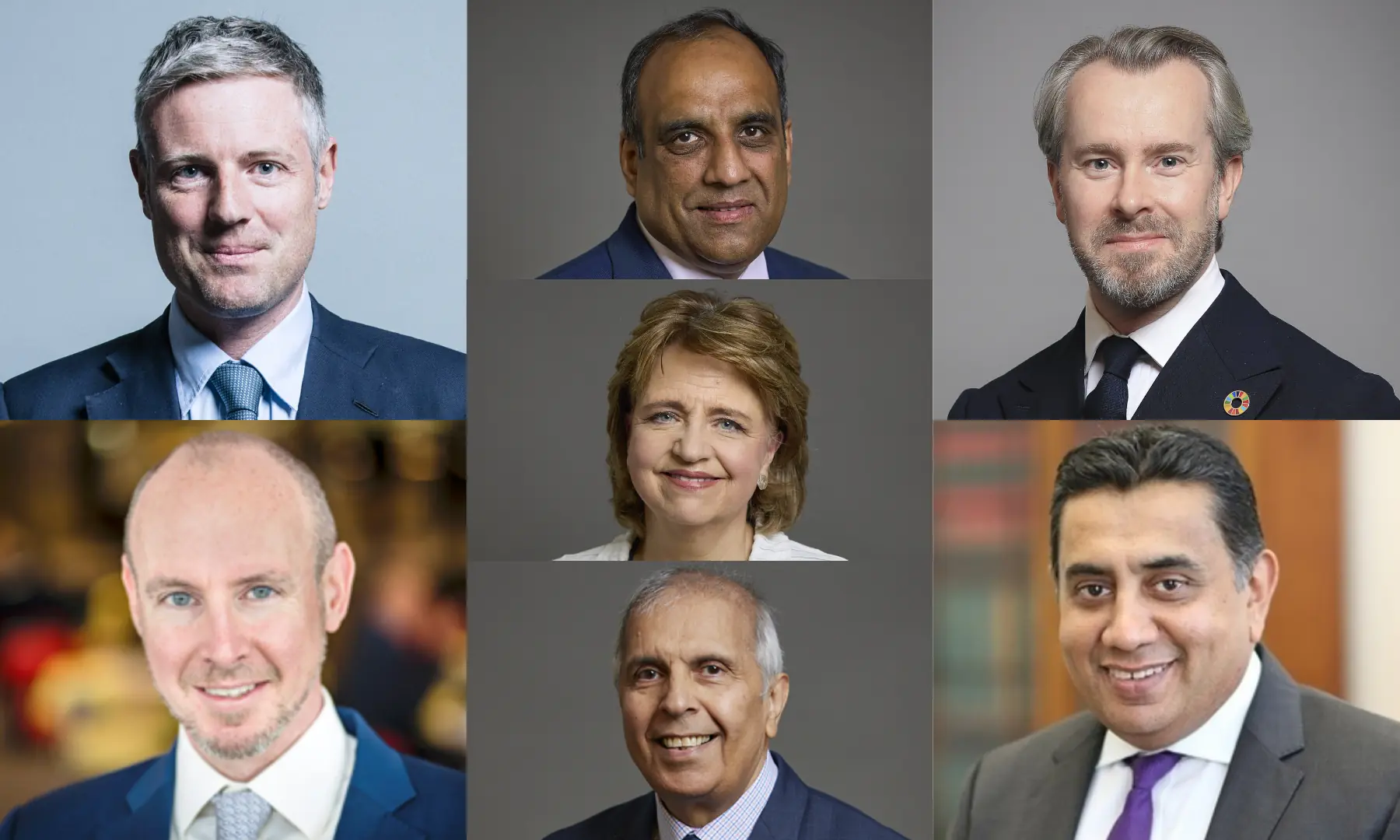
Conservative peer Zac Goldsmith — also the former brother-in-law of Imran — described the situation as “an international outrage”, later writing on X that peers had urged the UK foreign minister to “step up”.
During the debate, he said: “We understand that Imran Khan has been denied access to lawyers, denied access to his family, including his two sons, denied access to doctors, and that he has been kept in solitary confinement, with his health deteriorating rapidly.”
Goldsmith asked whether the UK should reconsider its aid contribution to Pakistan, noting that it has often been among the top recipients of British assistance. He suggested that aid should be contingent on Islamabad demonstrating a clear commitment to the Commonwealth Charter, including judicial independence and the rule of law.
In response, Baroness Chapman said the UK maintained a consistent position that all prisoners should have access to healthcare and family visits, and that this message would continue to be conveyed to Islamabad.
On development spending, she noted that the UK had already reduced its aid budget by 40 per cent and that further announcements regarding country allocations would follow shortly.
Comparisons with other cases
The debate also touched on comparisons with other high-profile cases.
The minister drew a distinction between the case of jailed Hong Kong media tycoon Jimmy Lai and Imran, noting that Lai is a British citizen, giving the UK specific consular responsibilities that do not apply in the same way to foreign nationals.
Labour peer Lord Sikka said there was “very soft criticism” when authoritarian acts were committed by countries regarded as Britain’s trade and defence partners.
Arguing that the government possessed the tools to exert pressure on “army generals controlling Pakistan”, he suggested ending aid and imposing trade sanctions. He asked what moral principle guided UK foreign policy in such cases, compared to its approach towards states such as China, Iran, Russia and North Korea.
In response, Baroness Chapman said it would not be right to end all aid to Pakistan, stressing that such a move was not the government’s position.
She said British assistance addressed genuine need and supported UK interests, including cooperation on climate issues and counter-terrorism, which she described as “absolutely in the interest of our country”.
Crossbench peer Lord Shaffaq Mohammed referred to the case of former prime minister Nawaz Sharif, who was allowed to travel to London for medical treatment in 2019 while serving a sentence in Pakistan.
He asked what the government’s response would be if Imran sought permission to travel to the UK for medical care. Baroness Chapman replied that any such request would fall under the jurisdiction of the Home Office and immigration authorities.
Conservative peer Lord Ahmad of Wimbledon asked whether the government could facilitate access for Imran’s sons to visit their father during medical treatment.
The minister said that, in principle, prisoners undergoing medical treatment should have access to family, but decisions relating to immigration and prison access ultimately rested with Pakistani authorities.
Military courts and trade ties
Concerns about Pakistan’s wider democratic trajectory and the role of the military also featured prominently.
Liberal Democrat peer Lord Purvis of Tweed said that several opposition figures had been prosecuted and sentenced following protests, and warned of “significant worry about the extent of state capture of the Pakistani economy by the military”.
He asked whether human rights would be explicitly integrated into the UK-Pakistan trade dialogue.
Baroness Chapman acknowledged “very real concerns” about the operation and transparency of military courts, and said that human rights were integral to the UK’s trading relationships.
“It would not be the right thing to do to end all aid to Pakistan,” she said.
“The need is there, British interests are there, and we work with Pakistan on counter-terrorism, which is absolutely in the interest of our country.”
Democracy and elections
The debate concluded with broader reflections on Pakistan’s political future.
Conservative peer Lord Hannan of Kingsclere said no British government could be indifferent to developments in Pakistan, describing it as a Commonwealth ally with 1.5 million Britons of Pakistani origin.
He argued that Pakistan would struggle to achieve stability and attract investment without the restoration of democratic norms.
Baroness Chapman said the UK had raised concerns about Pakistan’s 2024 elections and would continue to engage with Islamabad on inclusive politics and rule of law, while maintaining trade and development ties.
“There are many countries where we have concerns about rule of law and democracy and yet maintain close relationships,” she said, adding that Britain does not limit its foreign relations only to countries that mirror its own governance model.