DNA
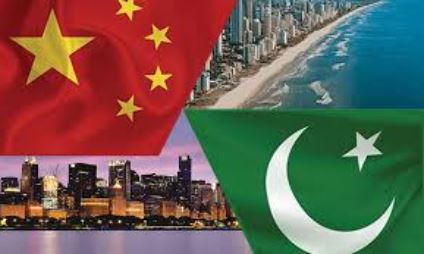
ISLAMABAD: The Institute of Regional Studies (IRS), in collaboration with the Embassy of the People’s Republic of China, hosted a dialogue on “China’s Path to Development and Modernization: Lessons and Opportunities for Pakistan.”
The event featured young diplomats from the Embassy of China, led by Mr. Wang Shengjie, Counselor and including Mr. Zhang Duo, Attaché; Mr. Yang Taofei, Attaché; Ms. Wang Yiqiu, Third Secretary; Mr. Li Zhen, Third Secretary; Mr. Zhang Datuo, Second Secretary; Ms. Jiang Lezan, Third Secretary; and Mr. Zhang Pengfei, Attaché. Other panelists included Dr. Usman Chohan, Mr. Zeeshan Ahmed, Dr. Furqan Rao, Dr. Mehmood Hassan, Mr. Tahir Dhindsa, Barrister Zopash Khan, Mr. Assadullah Khan, young and emerging scholars and influencers who exchanged views with the delegates, aimed at deepening understanding on the development, governance of China and exploring opportunities in China’s modernization drive 2035; as well as the targets to be achieved with another very effective Five-Year Plan 2026-2030 focused on high-quality development, self-reliance in technology, boosting of domestic consumption and opening wider for global business and exchanges.
Ambassador Jauhar Saleem, President IRS, delivered the opening remarks, highlighting China’s remarkable achievements in poverty alleviation, economic growth, and modernization. He noted that China’s national strategies, particularly its Five-Year Plans, provide valuable lessons for developing countries such as Pakistan seeking sustainable and equitable development.
A central feature of the dialogue was the display and discussion of the Fifth Volume of “Xi Jinping: The Governance of China.” Published in July 2025, the volume compiles 91 speeches and writings of President Xi Jinping from May 2022 to December 2024, along with photographs documenting key moments of governance. Divided into 18 thematic sections, the book presents China’s defining features of modernization, its practical pathways, and achievements under the leadership of the Communist Party of China (CPC). The earlier series, already translated into more than 40 languages and distributed in over 180 countries, continues to shape global understanding of China’s governance philosophy. Since China’s development has evolved, so has its role in the world, and the new editions of President Xi’s work provide the guidance, ideas, and inspiration accordingly.
The delegation shared perspectives on China’s people-centric diplomacy, people-centered governance, the four initiatives, the Belt and Road Initiative, and reforms in the Communist Party of China (CPC). They emphasized that China’s development model is rooted in inclusivity, self-reform, and cultural harmony, while initiatives such as CPEC continue to serve as vital pillars of Pakistan-China friendship.
Notable Pakistani experts, scholars, and educationists contributed their views on governance, policymaking, and business opportunities. They underscored the importance of consistency in national policies, competence-based education, and people-centric approaches to development.
The dialogue also explored how Pakistan could benefit from China’s experience in long-term planning, inclusive policymaking, and technological investment.
The session concluded with a reaffirmation of the enduring Pakistan-China partnership and the shared commitment to modernization, cultural exchange, and mutual progress.