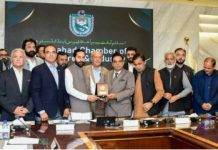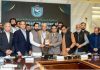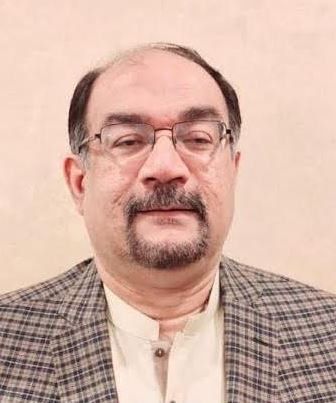
LAHORE, JAN 3 /DNA/ – Pakistan Furniture Council Director Shahbaz Aslam has raised serious concerns over the government’s decision to allow duty- and tax-free imports of Chinese goods into Gilgit-Baltistan, warning that the move could severely damage local manufacturing while encouraging smuggling and informal trade networks across the country.
Reacting to the recent notification allowing conditional tax exemptions on imports through the Sost Dry Port, Shahbaz Aslam said that while the policy may be presented as a regional facilitation measure, its broader economic consequences cannot be ignored. He cautioned that Pakistan’s manufacturing sector, including furniture and allied industries, is already operating under extreme pressure due to high energy costs, expensive raw materials, heavy taxation and limited access to affordable financing.
According to him, introducing even partially tax-relieved imported goods into the market creates an uneven playing field that undermines documented local producers. He said domestic manufacturers pay full customs duties, sales tax, income tax and face some of the highest electricity and gas tariffs in the region, making it impossible to compete with imported products entering under special concessions.
Shahbaz Aslam pointed out that Pakistan has learned hard lessons from similar region-specific tax exemptions in the past. He recalled that concessions granted to certain areas, despite being conditional on paper, often resulted in large-scale leakage of goods into settled markets. These practices, he said, not only weakened local industry but also caused long-term damage to the tax base and encouraged informal trade.
He expressed particular concern over enforcement challenges linked to the Gilgit-Baltistan route, citing difficult terrain, limited monitoring capacity and overstretched customs authorities. In his view, expecting strict compliance with consumption-only conditions is unrealistic when price differentials create strong incentives for diversion into mainland markets.
The Pakistan Furniture Council director emphasized that there is no supply shortage justifying tax-relieved imports of finished or semi-finished goods. He said that Pakistan’s furniture, wood products and construction-related industries have ample capacity to meet domestic demand, including requirements for development projects in Gilgit-Baltistan, if supported through proper logistics and transport facilitation.
Shahbaz Aslam also warned that such policies risk promoting under-invoicing and misdeclaration. Once parallel supply chains take root under the cover of regional exemptions, he said, they become extremely difficult to dismantle and permanently distort market prices.
While supporting the socio-economic uplift of Gilgit-Baltistan, he stressed that sustainable development should focus on infrastructure, local enterprise development, skills training and freight subsidies rather than import-based concessions that harm national industry.