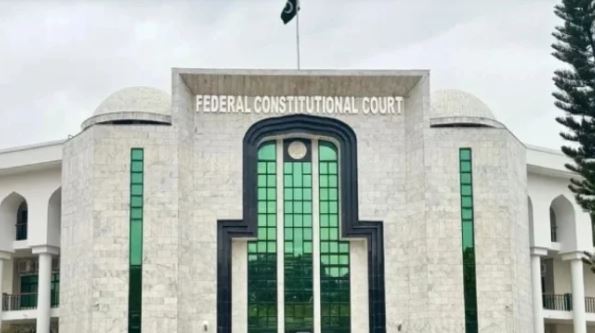
ISLAMABAD, MAY 4: Pakistan’s Federal Constitutional Court (FCC) has ruled against prolonged reserved judgments in the superior courts, declaring delayed verdicts beyond the stipulated time are “against the law”.
Justice Aamir Farooq authored the seven-page judgment following a hearing on a petition filed by the Pakistan Shipping Corporation against a decision by the Sindh High Court (SHC) in a pension dispute case.
Discover more
News broadcasting services
Geo News app
Sports news portal
In his judgment, Justice Farooq said that high courts were bound to issue reserved verdicts within 90 days, adding that rules of the Supreme Court and high courts carry the force of law, and their violations should have consequences.
The FCC held that any verdict announced after the prescribed period may be declared void on that basis alone, while stressing that judges and court staff are fully bound to procedural rules.
It added that even unintentional leaks by bench members before judgment delivery violate court regulations.
According to the ruling, bench heads may order a fresh hearing if a judgment or its key points are leaked prematurely. The same bench or a new one may conduct the fresh hearing on the case, it said.
The FCC further said that matters involving such irregularities in high courts would be referred to the chief justice.
In the Supreme Court of Pakistan, the matter would be sent to the judges’ committee for action.
The court noted an increasing trend of judgments being reserved and observed that litigants often face prolonged delays in awaiting outcomes of cases.
Verdicts are generally reserved in case of a lack of consensus among judges or legal complications in the case, it said.
The judgment also referred to the case where the SHC took around 10 months to announce a reserved decision.
In the same ruling, the FCC disposed of the Pakistan Shipping Corporation’s appeal against the SHC verdict and struck down observations made by the high court.
The court directed that copies of the judgment were to be circulated to all high courts for implementation.