LONDON, DEC 23: British newspaper Financial Times has described the Chief of Defence Forces (CDF) and Chief of Army Staff (COAS) Field Marshal Syed Asim Munir as one of the most effective strategic leaders to emerge amid rapid changes in the global order.
“First prize for adjusting to the tempo of Trump’s casual approach to the world has to go to Pakistan’s Field Marshal Asim Munir,” according to an analysis written by journalist Alec Russell in the FT.
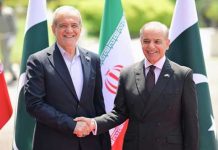
The report notes Field Marshal Munir as a leading example of a successful “multi-aligner”. “He [ Field Marshal] is the very model of a middle power multi-aligner, skipping from Washington to Beijing, Riyadh to Tehran.”
The FT report contrasted Pakistan’s approach with India’s experience, noting that New Delhi struggled to adapt to the changing global environment and Trump’s informal diplomatic style, making the middle-power strategy more challenging than expected.
“… All this is much to the frustration of India, which has not indulged Trump and is finding the middle power game is not as easy as it had hoped,” it added.
The report comes a day after the Washington Times described 2025 as a turning point in Pakistan-US relations, citing what it called a dramatic shift in Washington’s approach.
In early January, the US diplomatic and national security relationship with Pakistan was far from cordial, as Islamabad was viewed as being in lockstep with the Taliban, politically questionable and somewhat isolated diplomatically, but it has emerged as a partner of Washington by the end of 2025, according to an analysis written by retired brigadier general in The Washington Times.
Brig Gen Mark Kimmitt (retired), a former deputy assistant secretary of defence for Near East and South Asia and former assistant secretary of state for political-military affairs, wrote that despite a gradual recovery from the 2022-2023 floods and recent growth in gross domestic product, its economy still depended on external financing.
Analysts warned that Pakistan could face its “most severe” national security challenge in at least a decade and possibly since the 1990s. Yet by the end of 2025, Pakistan appears to have gone from pariah to partner. Few nations have experienced a reputational swing as swift or dramatic. Pakistan has emerged as a pillar of President Trump’s evolving foreign policy vision for South Asia.
Strategically, senior Trump advisers also regarded Pakistan with unease. Its close ties with China especially reinforced these concerns. The prevailing expectation among Trump’s emerging foreign policy circle was clear: Double down on India, strengthen the Quad as its Indo-Pacific anchor and, in India’s long-standing interests, sideline Islamabad, it noted.
“The first sign that the icy relationship was beginning to thaw was a series of discreet counterterrorism exchanges, suggesting Islamabad was finally willing to engage in substantive cooperation.
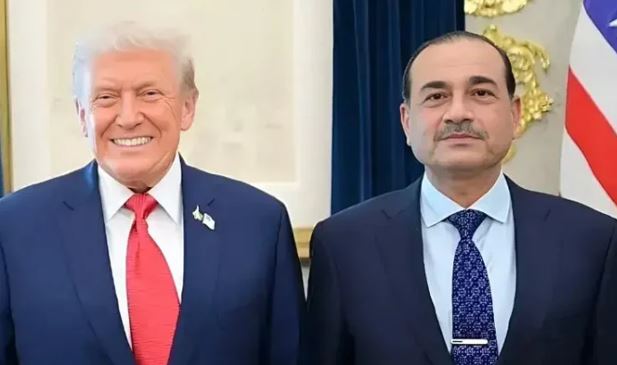
Emerging as the star of Trump’s inner circle is Field Marshal Munir, whose relationship with the president took on a chemistry that advisers half-jokingly described as a budding bromance. In Washington’s newly fluid court politics, Field Marshal Munir became a man whom insiders portrayed as a figure of “deliberate mystery, a disciplined dark horse who tightly manages his public image.” Pakistan, sensing its moment, leaned confidently into the attention,” the article said.
Mark Kimmitt further wrote that the reward for Field Marshal Munir was a lunch meeting at the White House, a first for any head of Pakistan’s military in history. The cameras loved the spectacle. Trump loved it even more, and the narrative surrounding Pakistan shifted almost overnight from suspicion and caution to fascination and celebration.
Less than two months later, Field Marshal Munir returned to the US for a red carpet visit to Central Command headquarters for high-level talks with its outgoing commander, Gen Michael Kurilla, and Chairman of the Joint Chiefs of Staff Gen Dan Caine.
At the beginning of 2026, Pakistan sits near the centre of Trump’s emerging grand strategy for South Asia and the Far East.