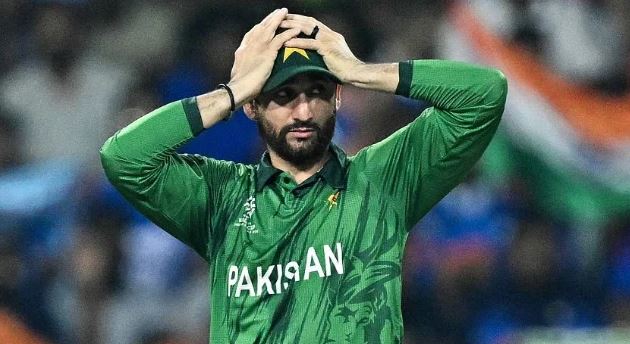
ISLAMABAD: Former Pakistan fast bowler Mohammad Amir has predicted that current skipper Salman Ali Agha may not remain Pakistan’s T20I captain after the ICC Men’s T20 World Cup 2026.
The remark follows a string of disappointing performances in the tournament, including Tuesday’s Super Eights defeat to England at the Pallekele International Cricket Stadium.
Speaking on Geo News’ programme Harna Mana Hai, Amir questioned whether the current captain would continue in the role beyond the competition and hinted that significant changes could be imminent.
“I think Salman Ali Agha will no longer remain the T20 captain after this World Cup. In my opinion, no one else truly deserves it at the moment. As things stand, I don’t see a suitable replacement right now. I also believe that for many players, this T20 World Cup will be their last,” Amir said.
Former Pakistan captain Rashid Latif was equally forthright in his assessment, claiming that Babar Azam is “no longer a player of this format”.
He questioned why the right-hander was recalled to the side six months after being dropped over concerns about his strike rate.
Latif noted that the team management had previously stated Babar would return once his scoring rate improved.
“Where did it improve? Why did you bring him back?” he asked, describing the decision as an injustice by the board and coaching staff.
He also criticised Pakistan’s batting tempo, arguing that modern T20 cricket demands players who can shift gears and control a chase.
According to Latif, when a batter consumes 20 to 25 deliveries without accelerating, pressure builds at the other end and forces incoming players into high-risk strokes.
He stressed that set batters must take responsibility and bat deep, particularly when partners are struggling to score freely.
Host Tabish Hashmi observed that the team had devised a plan three years ago to dismiss Babar in a particular manner, yet he continues to fall in a similar fashion.
He questioned whether the responsibility lies with the player, the coaching staff or the broader system.
Latif compared Pakistan’s approach with opposition batters who keep the scoreboard moving under pressure.
He said successful players are able to “play from both ends” and maintain control of the chase, whereas Pakistan’s batters often fail to accelerate at the right time, allowing pressure to mount.
Ahmed Shehzad also highlighted concerns over decision-making during the innings, pointing out moments when quick singles or doubles could have eased the pressure but were not taken.
He further questioned why a player with more than a decade of international experience continues to struggle against quality leg-spin.
Referring to an incident against England leg-spinner Adil Rashid on Tuesday, Shehzad noted that Babar nearly lost his wicket to a googly.
“Is this improvement?” he asked, arguing that unless players acknowledge their weaknesses and adapt to the evolving demands of T20 cricket — particularly power-hitting and calculated risk-taking — progress will remain elusive. He described a lack of acceptance as Babar’s “biggest downfall”.
Amir agreed with the assessment, stating that Babar had failed to read the variation correctly.