
By Azhar Jatoi
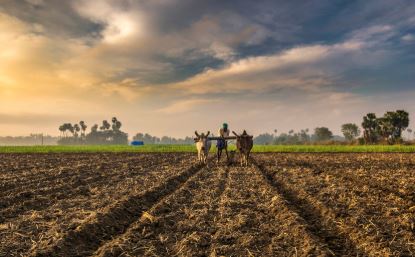
Agriculture has long been described as the backbone of Pakistan’s economy, employing nearly 42 per cent of the workforce and contributing about 24 per cent to the national GDP. Yet this backbone is under growing strain. With Pakistan’s population projected to reach over 400 million by 2050, the pressure on food systems is intensifying at a pace few sectors are prepared for. Low agricultural productivity, already compromised by climate stress, pests and diseases, threatens to widen the gap between food demand and supply.
For decades, the most common response to pest outbreaks has been the widespread use of chemical pesticides. While often effective in the short term, their long-term consequences are becoming increasingly visible. Excessive pesticide use has degraded soil fertility, increased production costs, harmed beneficial insects and raised serious concerns about human and livestock health. Despite heavy spraying, crop losses often persist.
“There is a misconception that more pesticides automatically mean better yields,” says one senior agriculture official. “In reality, farmers are spending more, damaging their land, and still losing crops.”
It is within this context that the Centre for Agriculture and Bioscience International (CABI), through its global programme PlantwisePlus, has been working closely with Pakistan’s government to promote safer and more sustainable plant protection practices. One of the most significant recent developments has been the government’s approval of new bio-pesticide registration guidelines, a move widely seen as a turning point for the country’s plant protection industry.
“This is a step change,” says Country Coordinator PlantwisePlus Dr. Naeem Aslam. “The approval of bio-pesticide guidelines opens the door for safer products that protect crops without compromising soil health, biodiversity or human safety.”
CABI’s support has gone beyond policy. Working through federal and provincial agriculture departments, the programme has helped establish rearing facilities for biological control agents, with full ownership transferred to government institutions. These facilities are creating new opportunities not only for safer crop protection, but also for job creation and the production of healthier food for local communities.
One of the most promising biological control interventions introduced under PlantwisePlus is the use of Trichogramma chilonis, a tiny parasitic wasp used to manage destructive pests such as the tomato fruit borer (Helicoverpa armigera). Though almost invisible to the naked eye, the wasp plays a powerful role in pest control by targeting the pest at its earliest stage.
Trichogramma chilonis acts as an egg parasitoid, laying its eggs inside the eggs of moth pests. This prevents the larvae from ever emerging, the stage responsible for the most severe crop damage. Within seven to fourteen days, a new generation of adult wasps emerges, ready to continue the cycle. A single female can parasitise up to 50 pest eggs during her short lifespan. “Stopping the pest before it hatches is the most effective control,” Dr Naeem explains. “It breaks the cycle without harming the environment.”
The first Trichogramma Rearing Facility (TRF) was established in 2022 in Madran, Khyber Pakhtunkhwa. Today, the facility is fully operational and supplying Trichogramma cards to farmers across the region. The work on the facility started in 2018, followed by training of the extension staff and the farmers. For farmers, the impact has been tangible. A farmer from Madran describes how the intervention changed his approach. “Yaseen bhai (Agriculture Extension Officer) brought these cards for us last year. They came to our fields and gave us the cards. There were eggs on them, and we placed them on the eastern side of our field. They stapled them under the leaves. Earlier, we used to spray pesticides, but these cards gave us very good results.”
PlantwisePlus has followed global protocols in rolling out the intervention, supporting not only the mass production of Trichogramma but also a comprehensive strategy to educate farmers on its correct use. Field demonstrations, follow-up visits and hands-on training have been central to building trust.
In 2023, the programme expanded southwards with the establishment of a second facility in Muzaffargarh, Punjab. The location was chosen to test the intervention across different ecological zones and crop systems. South Punjab, known for its fertile soils and diverse cropping patterns, also faces intense pest pressure.
A senior agriculture officers describes the facility as transformative. “This TRF is really impressive and has become a centre of excellence in all of South Punjab. We are producing extraordinary quantities of Trichogramma cards here.” Inside the facility, trained staff manage the delicate biological process with precision. They work on the Trichogramma host, which is Corsyra, a rice moth, collect its eggs and use them for parasitisation. Trichogramma’s life cycle is very short, about one week. Its eggs are pasted on cards and stored at temperatures between six and twelve degrees Celsius, before distribution to the farmers.
For farmers in Muzaffargarh, the shift away from chemical pesticides has brought both economic and psychological relief. “Earlier, pests like American Sundi, Lashkari Sundi and thrips would destroy our crops,” says one farmer. “We were worried all the time about arranging pesticide sprays. They were expensive, and sometimes we borrowed money. Then an agriculture officer told us about these cards and said they would produce friendly insects to kill harmful pests.”
Muhammad Farooq, an agriculture officer in Muzaffargarh, emphasises that proper training is essential. “When a farmer comes for the first time, we visit his field and train him how to use the cards. The side with eggs must face the leaf and be stapled underneath. Within three or four days, insects hatch and spread across the field. We distribute 50,000 cards every year free of cost. This method is low-cost and environmentally friendly.”
Encouraged by success in Khyber Pakhtunkhwa and Punjab, a Trichogramma Rearing Facility in Muzaffarabad, Azad Jammu and Kashmir, was set up, with the aim to offer biological control for long-term benefits. The Punjab government also allocated funds substantial in the 2024-25 provincial budget for setting up a Trichogramma Rearing Facility in Attock.
At the national level, PlantwisePlus aims to empower smallholder farmers to increase incomes, improve food security and reduce biodiversity loss through sustainable crop production. Increasing the uptake of lower-risk plant protection products is now seen as urgent.
Dr Naeem Aslam, Country Coordinator for PlantwisePlus Pakistan, remains optimistic. “Keeping in view the progress of these Trichogramma rearing facilities, governments are now taking initiatives to develop such facilities through their own budgets.”
The establishment of these three facilities marks an important shift in Pakistan’s agricultural journey away from heavy chemical dependence and towards safer, science-based solutions rooted in local capacity. More than just buildings or laboratories, they represent a growing confidence that sustainable food production is achievable. For farmers, policymakers and researchers alike, the message is increasingly clear: protecting crops does not have to come at the cost of health, soil or the environment. With the right partnerships and sustained commitment, Pakistan’s fields can be both productive and safe for today’s communities and generations to come.