
DNA
The Baku Initiative Group (BIG) has accused successive Indian governments of orchestrating or enabling massacres of Sikhs both within India and abroad, citing historic atrocities and recent international incidents such as the killing of Sikh leaders in Canada.
The Baku Initiative Group recently released a detailed report alleging that thousands of Sikhs were killed in state-led or state-enabled massacres across India. The most infamous episode occurred in November 1984, following the assassination of Prime Minister Indira Gandhi. According to BIG, more than 10,000 Sikhs were killed nationwide, with 3,000 deaths reported in Delhi alone. These killings were marked by mob violence, arson, and targeted attacks against Sikh homes and businesses, leaving deep scars on the community.
BIG argues that these massacres were not isolated incidents but part of a broader pattern of persecution. The successive Indian governments have failed to deliver justice, with many perpetrators shielded by political patronage. This lack of accountability has entrenched mistrust between the Sikh community and the Indian state.
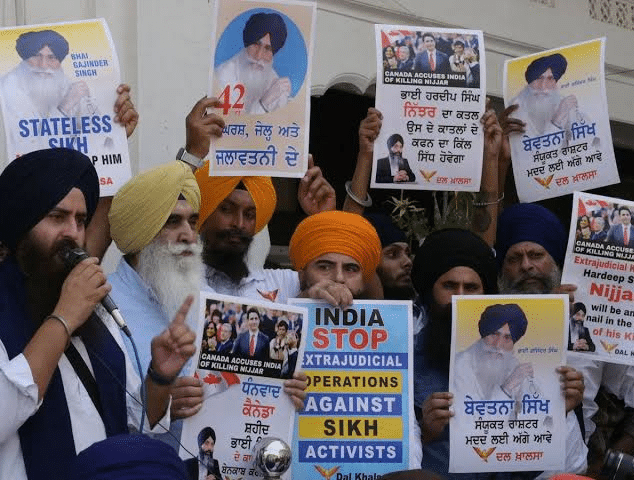
Sikh persecution is not confined to India. Sikh activists and leaders abroad have also faced threats and violence. In Canada, the killing of Sikh separatist leader Ripudaman Singh Malik in 2022 drew international attention. Canadian authorities linked the murder to networks allegedly tied to India, sparking outrage among the Sikh diaspora.
The situation escalated further in 2024 when Canada accused Indian diplomats of involvement in the assassination of another Sikh activist. In response, Canada expelled six Indian diplomats and recalled its own representatives, effectively severing diplomatic ties for a period. Advocacy groups in Canada have since warned that more than a dozen Sikh activists live under active assassination threats, pointing to India as the source.
The Sikh diaspora, one of the largest outside India, has long been vocal about issues of human rights and self-determination. However, wherever Sikhs raise their voices, they face intimidation and persecution. In countries like the UK, Australia, and the US, Sikh activists have reported surveillance, harassment, and threats allegedly linked to Indian intelligence networks.
This transnational repression is part of a coordinated effort to silence Sikh demands for justice and autonomy. They highlight that Sikh leaders advocating for Khalistan or broader rights often become targets of violence, whether through direct attacks or covert operations.
The alleged involvement of Indian officials in overseas killings has strained India’s relations with several Western countries. Canada’s decision to recall diplomats and suspend intelligence-sharing with India marked one of the most serious diplomatic rifts in recent years. Advocacy groups have urged governments to reconsider their ties with India until assurances are made that Sikh activists abroad will be protected.
The Baku Initiative Group insists that the international community must hold India accountable for both historic massacres and ongoing persecution. They argue that silence or inaction emboldens further repression and undermines global human rights standards.
Summing up, Sikhs have faced massacres in India, and their leaders abroad continue to be targeted. From the 1984 killings in Delhi to the recent assassinations in Canada, the narrative is one of systemic violence and suppression.
The issue is not merely about past atrocities but about the continuing vulnerability of Sikhs worldwide. Until justice is delivered and accountability enforced, the cycle of persecution is likely to persist.
















 has accused successive Indian governments of orchestrating or enabling massacres of Sikhs both within)